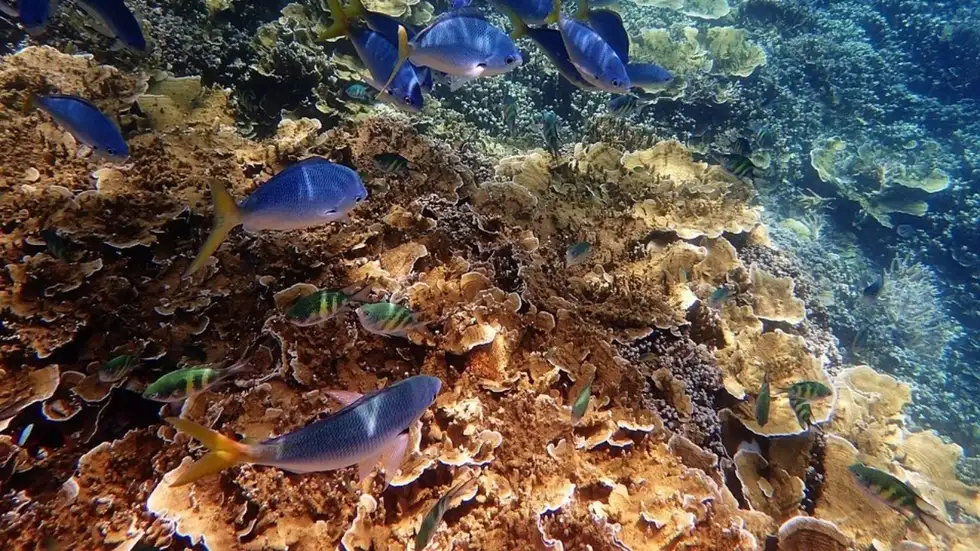
An Australian government-commissioned report revealed that the impacts of climate change on the iconic Great Barrier Reef could potentially become irreversible within decades.
The report, published by the Australian Academy of Science (AAS), assessed the potential futures of the Great Barrier Reef under different emissions scenarios, according to the Xinhua news agency.
It concluded that by 2050, the damage to the world’s largest coral reef could be irreparable, regardless of whether global carbon emissions stabilise or not.
______________________________________________________________________________
Read Also: Global Warming Kills 14 Per Cent Of World’s Corals In A Decade: Survey
______________________________________________________________________________
The report was ordered by the federal Department of Climate Change, Energy, the Environment, and Water, which engaged the AAS to convene three expert roundtables on climate impacts on the Great Barrier Reef, interventions, and the reef’s future.
Over 80 leading experts contributed to the report.
It was delivered to the Reef 2050 Plan Independent Expert Panel for consideration in its advice to the government on the resilience of the GBR and its connected systems.
“It reminds us that sticking to the current path, simply because we started on it, will not offer the best solution for the Great Barrier Reef,” noted Chennupati Jagadish, President of the AAS, in a statement.
“It highlights that in the medium-term, there are opportunities to slow the decline in the health of the reef, however, this requires Australia to take further action now.”
______________________________________________________________________________
Read Also: Is it possible to prevent Global Warming?
______________________________________________________________________________
The report presents several recommendations to enhance the management of the reef, including initiating a comprehensive review of the current system, placing more reliance on Indigenous knowledge of land management, and standardising and centralising ecological data from the Great Barrier Reef.
“Honest, open, and clear communication with the public is needed to prepare Australians for what is to come, given the Great Barrier Reef will continue to change as the environment becomes more challenging for its habitats and species,” it said.
NOTE – This article was originally published in weather and can be viewed here
Tags: #Australia's, #BarrierReef, #climate, #climatechange, #environment, #fish, #getgreengetgrowing, #globalcarbon, #gngagritech, #greenstories, #nature, #whether