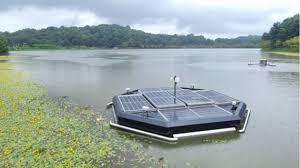
These autonomous water robots use real-time data to detect, treat, and prevent urban water contamination.

South Korean autonomous robot company ECOPEACE has announced it plans to expand its global operations for its water-quality management systems. To this end, the company is planning to launch new pilot projects in both Singapore and the United Arab Emirates (UAE) in the near future.
“As water systems become more complex, cities worldwide will need solutions that anticipate change, not just react to it,” stated In-Won Chae, CEO of ECOPEACE. “Water resources across the globe are under mounting stress from pollution, rapid urban growth, and climate-driven algae outbreaks. Traditional responses are no longer sufficient,” he added.
“Cities need efficient and smarter solutions that address the problems before they escalate,” he added. “We are pleased to support partners in Singapore and the UAE as they advance modern water-management practices,” he said.
In case you are unaware, Ecopeace combines sophisticated robots with artificial intelligence (AI) to clean up polluted waterways. Its systems primarily focus on algae removal to prevent disastrous bloom events before they become a crisis.
ECOPEACE to the rescue
These blooms are problematic as they deplete oxygen levels within affected waterways. This creates “dead zones” that suffocate aquatic life and can release potent toxins that are harmful to humans, pets, livestock, and wildlife.
In the worst-case scenarios, this can render fresh water sources unsafe to drink, and can also damage tourism and fishing. Algal blooms are often driven by a combination of heat and nutrient pollution from activities like nearby farming.
Traditionally, prevention of them is managed using a combination of manual sampling and responses after visible contamination becomes evident. It also requires significant expense in manpower and time.
ECOPEACE’s robots, on the other hand, offer an automated management system that can be used to predict and prevent algal blooms in real time. Its robots, called ECOBOT, are semi-submerged units that are completely autonomous.
They can physically detect and remove algae and are also able to remove contamination like oil films and other pollutants from water surfaces. When deployed, they use stainless-steel microfilters to clean water.
These robots are also able to self-clean and can provide electrochemical treatments to break down contaminants in situ. Most importantly, they are designed to run constantly, not in short, cleanup bursts.
Stopping algal blooms before they start
The robots also operate in conjunction with a suite of sensors that are constantly collecting data in real time. This data is fed into a sophisticated AI system that can adjust flow rates, treatment intensity, and filtration behaviour as needed.
The new pilots will be used as testbeds for the technology under two very different water management environments. Singapore, for its part, has one of the most advanced water governance programs on the planet.
It also has dense urban waterways, and is an ideal test for smart-city integration of ECOPEACE’s system. The UAE, on the other hand, tends to struggle with severe water scarcity throughout the year.
It suffers from high temperatures, making it a prime location for algal bloom development. The nation also has a history of heavy investment in infrastructure tech, and is strongly incentivised to reduce operational costs.
NOTE – This article was originally published in Interesting Engineering and can be viewed here