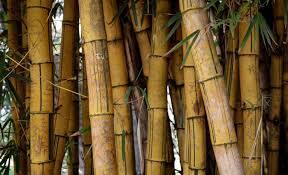

Bamboo is not supposed to grow naturally in Europe. The standard explanation is simple: Europe gets too cold, especially in winter.
The fossil record tells a different story. Bamboo leaves and pollen appear in rock layers from northern Italy to southern Poland.
The record stretches across roughly 30 million years and persists until surprisingly recent geological time. Europe also experienced cold winters through much of that span.
A long-lost native
The disappearance has puzzled botanists for more than a century. Dr. Angela P. Cuervo-Robayo at the Institute of Biology of the National Autonomous University of Mexico (UNAM) led a team that flipped the usual question.
Rather than reconstruct ancient climates from fossils, they reversed the approach using 16 modern bamboo species.
The team studied where each could survive in Europe under today’s climate, then under the climate of the last ice age.
The fossil trail runs deep through geological time. Bamboo persisted through warm Miocene jungles and cooler Pliocene woodlands, weathering dramatic climate swings across tens of millions of years.
Reading the leaf record
From there, the record goes quiet. That silence falls between 1.25 and 0.75 million years ago, during a stretch geologists call the Early-Middle Pleistocene Transition.
Ice ages had been pulsing through the planet, but during this interval the cycles grew longer and harsher.
The researchers selected species spanning bamboo’s ecological range. Eight came from the genus Bambusa, the towering tropical bamboos that dominate Southeast Asian forests.
The other eight came from Sasa, a hardy temperate group from cool Japanese mountains.
Conventional wisdom held that European bamboo died out because the continent simply got too cold.
The expectation was that cold-tolerant Sasa should have weathered the glaciers while tropical Bambusa would have collapsed.
________________________________________________________________________
Mapping ancient climates
For each species, the team logged its modern range and the local climate, including temperatures, rainfall, and seasonal patterns.
With that fingerprint, statistical tools scanned a map of Europe and flagged every spot where the climate matched. Under today’s climate, the model produced few surprises.
Several Sasa species found suitable habitat across Europe, just as landscapers cultivate them today from England to Greece. A few Bambusa pockets appeared along the Mediterranean.
The team then reran the exercise using reconstructed climate data from the Last Glacial Maximum.
This was roughly 21,000 years ago, when ice sheets buried much of northern Europe. The result was completely unexpected.
A puzzling reversal
Three Sasa species, the supposedly cold-hardy temperate group, lost their suitable European habitat entirely under glacial conditions.
Meanwhile, five Bambusa species, which today are unable to persist in Europe, had broad zones of suitability during the deep freeze. That outcome upends the former narrative.
If Sasa cannot tolerate a glacial Europe but Bambusa apparently can, temperature alone cannot explain why the entire bamboo family disappeared from the continent.
Their interpretation centers on how different aspects of the climate rearranged themselves during ice ages. Cold winters were only one piece of the puzzle.
Rainfall patterns probably reorganized, and seasonal contrasts likely sharpened. Areas that retained summer moisture moved southward, while interior regions dried out.
The vanishing forests
Many bamboo species depend on wet summers paired with mild winters. Glacial Europe splintered the climatic package bamboo needed for survival.
European fossil bamboo belonged to boreotropical flora, a warm-adapted plant community that stretched across the northern continents when global climates ran hotter.
Magnolias, gum trees, and bay laurels grew alongside it. But the flora retreated as the planet cooled through the Miocene and Pliocene.
Many members disappeared from Europe entirely. Others survived in North America and East Asia, where mountains run north to south and let species migrate ahead of advancing cold.
________________________________________________________________________
Beyond heat and cold
Europe’s mountains run mostly east to west, along the Alps, the Pyrenees, and the Carpathians.
These mountain chains trapped retreating plants against barriers they could not cross.
Bamboo held on longer than many of its boreotropical neighbors, in scattered pockets along the southern peninsulas.
The collapse during the Early-Middle Pleistocene Transition wiped out those last refuges at once. Until this study, the prevailing explanation leaned heavily on glacial cooling. But this was not the entire story.
Some bamboo species may have been capable of surviving glacial Europe. The ones actually growing there were not. The climate shifted toward conditions those particular species could no longer tolerate.
Lessons for the present
The lessons here cannot be ignored. Climate models predict that Europe’s temperatures will change in the coming century, but rainfall patterns and seasonal timing may be hard to forecast.
A plant might tolerate the projected temperatures of 2100 and still vanish, simply because its rainfall window or its winter humidity drifts elsewhere.
Models focused only on temperature will miss those cases. That creates a sobering possibility.
The extinction of European bamboo is no longer a vague casualty of cold weather patterns.
It now reads as a precise mismatch between what the bamboo family needed from the climate and what a rapidly reorganizing world provided.
The mismatch unfolded during one of the harshest transitions of the Pleistocene, and similar mismatches may shape the future.
The study is published in Advances in Bamboo Science.
NOTE – This article was originally published in Earth and can be viewed here