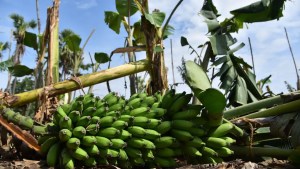
As climate change continues to wreak havoc across the globe, beloved fruits like bananas are feeling the heat — quite literally. Pascal Liu, a senior economist at the World Banana Forum, warns of an impending disaster in the banana industry due to climate-related challenges, explaining that a consumer crisis may soon be on the horizon, if things go unchecked.
Bananas, wrapped in their natural yellow packaging, have long been a staple in households globally — especially in our country. Next to mango, many regard bananas as the most important food crop in India due to its year-round availability, diverse varieties and affordability across all social classes. Additionally, bananas rank first in production and third in cultivation area among all fruit crops in India, comprising 13% of the total area and 33% of fruit production. While the nation currently exports only a fraction of its output, the government recently announced plans to scale exports to $1 billion within the next five years.
________________________________________________________________________
Read Also : BIOGAS IN INDIA—PATH TO A GREENER AND CLEANER FUTURE?
________________________________________________________________________
However, a chain of recent events signals trouble ahead. The UK, which imports about 5 billion bananas every year, has been experiencing significant supply chain disruptions due to shipping delays caused by stormy seas. As a result, several UK supermarkets witnessed banana shortages last week, the BBC reports.
While these short-term disruptions may not be cause for immediate concern, experts fear they are indicative of larger issues looming on the horizon. Severe weather and rising temperatures have been hurting banana outputs worldwide. However, one of the biggest threats to the yellow crop is the rise in fungal disease, which is another by-product of climate change-exacerbated rising temperatures.
Fusarium Wilt TR4 is a fungal infection that has devastated banana plantations worldwide, spreading from Australia and Asia to Africa and South America. Once it catches hold of a plantation, it spreads rapidly, almost always killing all the banana trees within it. Not only is it excruciatingly hard to eradicate, but the fungus has also mutated to infect Cavendish, the ‘Basrai’ variety that is a popular commercial commodity in India.
________________________________________________________________________
Read Also : Progress made on global agreement on chemical and waste management
________________________________________________________________________
“We know that the spores of this Fusarium Wilt are extremely resistant, and they can be spread by flooding, they can be spread by strong winds,” Liu elaborates. “So, this type of phenomenon will disseminate the disease much faster than if you had more normal weather patterns.”
Unfortunately, the challenges don’t end there. Rising costs of fertilisers, energy, and labour, coupled with a shortage of workers, further strain the industry. These factors contribute to an inevitable outcome: higher banana prices. Consumers may soon find themselves paying more for their favourite fruit as supply struggles to keep pace with demand.
But it’s not just about the cost. Since consumers are increasingly seeking out environmentally and socially responsible products, sustainability has come to the forefront of industry discussions. Even though banana growers are adapting to meet these demands, the burden of certification and compliance falls on producers, since it is expensive to control and monitor the crop.
________________________________________________________________________
Read Also : Solar-Powered Reactor Converts CO2 and Plastic Waste Into Sustainable Fuels
________________________________________________________________________
These sustainability-related expenses ultimately trickle downwards, levying a hefty burden on the consumers’ wallets. However, even if cumbersome, these regulations are necessary steps towards ensuring the long-term viability of banana production, Liu emphasises.
As the World Banana Forum convenes in Rome, stakeholders from across the industry will grapple with these pressing issues. From climate resilience to sustainable practices, the future of bananas hangs in the balance. Whether consumers will be willing to pay the price for their favourite fruit remains to be seen, but one thing is certain: the banana industry is ripe for change in the face of a changing climate.
NOTE – This article was originally published in weather and can be viewed here
Tags: #banana, #climate, #climatechange, #climatecrisis, #crop, #environment, #foods, #fruitcrops, #fruits, #getgreengetgrowing, #gngagritech, #greenstories, #plantation