A new study has found that biodiversity is organised like an onion: with dense, unique biodiversity at the centre and grading outward towards porous, mixed margins. The findings could reveal insights into the basic forces that assemble nature’s living mosaics and show conservationists where protection could have the biggest payoff

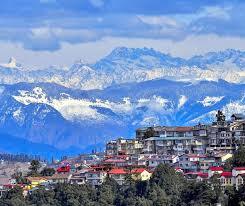
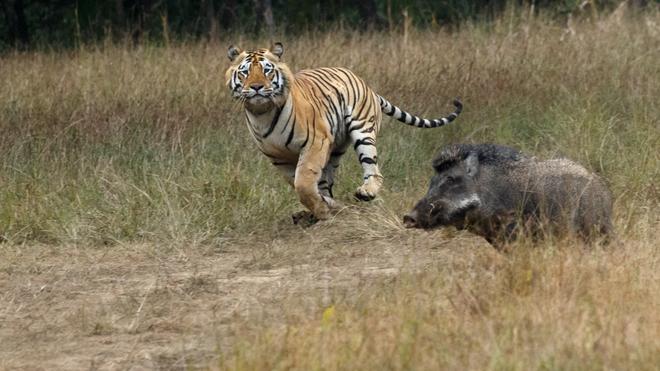
A newly uncovered corerule turns the earth’s messy quilt of species’ ranges into something organised in layers. | Photo Credit: Davidvraju (CC BY-SA)
For almost two centuries, biologists have divided the earth into large biogeographical regions. Each region hosts a unique mix of species shaped by its own history, climate, and barriers, such as oceans and mountains. Because those histories differ, many scientists assumed the inner layout of species inside every region would be idiosyncratic — that South America’s biodiversity, for example, would organise itself in a very different way from Africa’s.
________________________________________________________________________
At the same time, global rules clearly exist. Tropical zones almost everywhere teem with life while polar zones host far fewer species. The authors of a new study wondered: could there also be a universal rule inside each biogeographical region, one that transcended continents, oceans, and even entire branches of the tree of life?
New Study Findings
A recent study published in Nature Ecology & Evolution, involving researchers from Spain, Sweden, and the UK, discovered a universal pattern in biogeographical regions across various species, including birds, mammals, and amphibians. They utilized global databases and network analysis tools to identify biogeographical regions and characteristic species.
- Species were categorized based on their presence in specific biogeographical clusters.
- Four diversity types were assessed: species richness, biota overlap, occupancy, and endemicity.
- The world was divided into seven repeating biogeographical sectors, consistently observed across regions and taxonomic groups.
- The study found a layered organization of biodiversity, resembling an onion: dense core hotspots with unique biodiversity, transitioning to species-poor outer layers.
- Temperature and rainfall were found to predict the biogeographical sector of species in 98% of cases, indicating environmental tolerance as a survival factor.
________________________________________________________________________
Implications for Conservation
- The study offers insights into broad ecological trends, highlighting how biodiversity spreads from regional hotspots, influenced by environmental filters like climate and elevation.
- This understanding is vital for conservation efforts, particularly in regions like the Indian Himalayas, which are affected by climate change.
- Smarter conservation strategies could focus on key habitats and natural corridors rather than traditional protected areas.
- Experimentation and observation of changes in rainfall and temperature can guide conservation priorities.
- Some geographical gaps were noted in the study, such as limited data for dragonflies in Eurasia and trees in North America.
- Regions in the tropics and Global South, including parts of India, were also underrepresented, suggesting a need for further region-specific studies.
Overall, the newly discovered core-to-transition rule organizes species’ distributions into layers, providing a clearer framework for conservationists to protect biodiversity.
NOTE – This article was originally published in The Hindu and can be viewed here
Tags: #aqnimals, #biodiversity, #climate, #climatechange, #climatemight, #ecological, #environment, #evolution, #forest, #getgreengetgrowing, #gngagritech, #greenstories, #life, #nature