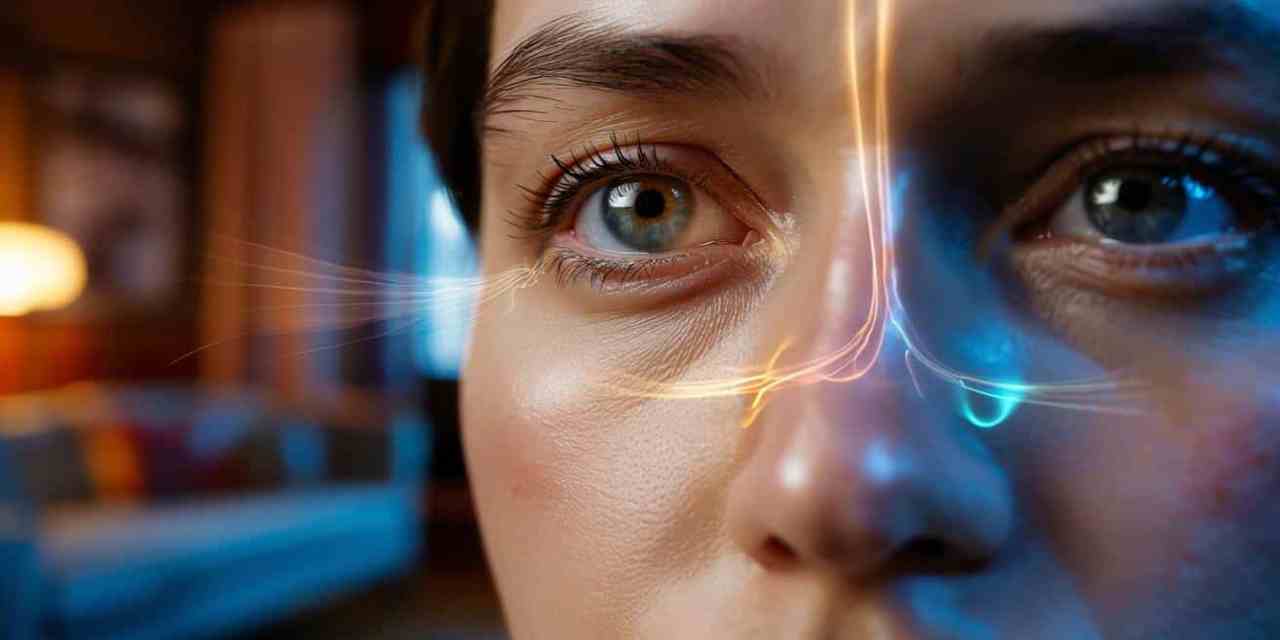

Each breath we take quietly reshapes our body, from heart rate to brain waves.
Now scientists say it subtly tweaks our vision too.
New research from Sweden suggests that every inhale and exhale is mirrored in our pupils, those dark circles at the centre of our eyes. The finding adds a surprising new player to the list of things that shape how we see the world: our own breathing rhythm.
Why pupil size matters more than you think
The pupil is often compared to the aperture of a camera, but in reality it does far more than just let light in. It constantly adjusts, second by second, to balance brightness, sharpen focus and support attention.
In bright light, pupils shrink to protect the retina. In dim rooms, they widen to grab every photon they can. That dance is automatic, controlled by the autonomic nervous system, the same circuitry that manages heart rate and sweating.
Scientists have long known three main factors that alter pupil size:
- Light levels: more light, smaller pupils; less light, larger pupils
- Viewing distance: focusing on something close usually tightens the pupils
- Mental state: emotions, stress and concentration can all cause subtle changes
Pupil size is not just a reaction to light. It is a live readout of what the brain is doing.
The new Swedish study adds a fourth factor to that list: the breathing cycle itself.
A Swedish team spots a hidden rhythm in our eyes
Researchers at the Karolinska Institutet, one of Europe’s leading medical universities, decided to test whether the timing of our breaths might be linked to the timing of our pupil changes. Their work, published in The Journal of Physiology in February 2025, suggests that the answer is yes.
The team, led by neuroscientists Martin Schaefer and Artin Arshamian, ran five separate experiments to stress-test the idea. They did not just look at people calmly breathing in a lab. They altered breathing style, speed, lighting, distance to objects and even added visual tasks, to see if the effect would persist.
Five experiments, one repeating pattern
Across the studies, volunteers were tracked with precise eye-tracking equipment while their breathing was monitored. The researchers looked at how pupils changed during:
- nose breathing versus mouth breathing
- fast breathing versus slow, controlled breathing
- changes in room lighting
- shifts in distance to a viewed object
- visual tasks that demanded focus
The same pattern kept turning up. Pupil size did not just respond to the environment or the task. It pulsed in time with the breath.
Across different lighting, distances and tasks, pupil size still followed the inhale–exhale cycle.
That regular, internal rhythm sets this mechanism apart from typical visual responses, which usually require a change in the outside world, such as movement or a light flash.
How breathing might talk to the eyes
The study did not directly map every nerve involved, but the scientists have a strong suspicion about the pathway. Breathing is controlled by brainstem circuits that also connect to the autonomic nervous system. That same system drives the tiny muscles that open and close the pupil.
When you inhale, signals ripple through the brain and body: heart rate shifts, blood pressure tweaked, neural activity changes. The researchers argue that the pupil is being swept along by these waves.
Breathing appears to act as an internal metronome, subtly coordinating brain activity and pupil responses without any outside trigger.
Past work has shown that breathing affects memory, emotional processing and reaction times. The Karolinska team suggests that vision and attention are part of that wider pattern. When your breath changes, your brain state shifts, and your pupils quietly follow.
Could breath control sharpen attention?
If breathing rhythm influences how the eyes behave, that raises an intriguing possibility: could breath-training become a tool for visual focus?
Many athletes, musicians and gamers already use controlled breathing to stay calm under pressure. Meditation apps coach users through slow, regular breathing to anchor attention. The new findings hint that these techniques might also be influencing how the visual system allocates resources.
| Breathing pattern | Likely effect on body | Potential impact on vision |
|---|---|---|
| Fast, shallow breathing | Increased arousal, raised heart rate | More frequent pupil changes, less stable focus |
| Slow, steady breathing | Calmer nervous system, lower arousal | Smoother pupil rhythm, potentially steadier attention |
| Irregular breathing | Fluctuating arousal and brain activity | Less predictable visual state, possible lapses in focus |
Future studies may test whether training people to synchronise breathing with demanding visual tasks, such as driving or air-traffic control, can reduce mistakes or fatigue.
Why this matters for brain and mental health research
In neuroscience labs, pupil size is frequently used as a quick, non-invasive indicator of brain state. Bigger pupils can signal higher alertness or mental effort; smaller pupils suggest rest or low engagement. If breathing alters pupil size, scientists need to factor that into their experiments.
For example, a subject performing a memory task may breathe differently as it gets harder. If researchers ignore breathing, they might incorrectly attribute a pupil change solely to mental effort, when part of it is driven by the changing breath pattern.
Accounting for breathing could make pupil-based brain research more accurate, especially in studies of stress, anxiety and attention.
The same idea could apply in clinics. Pupil responses are already used in some neurological exams. Understanding how breathing shapes those responses might help doctors design more reliable tests, or even spot subtle nervous system problems.
Everyday scenarios where this effect might show up
Even without lab equipment, there are moments when this breath–pupil connection might be felt, if not consciously noticed.
Picture a tense meeting where you are about to present. Your breathing becomes shallow and rapid. You may feel the room sharpen, lights seem harsher and faces stand out more. Part of that shift comes from stress hormones, but part could be the rhythm of your breathing nudging your pupils and attention into a more vigilant mode.
Now imagine you are reading in bed, taking slow, deep breaths as you wind down. The visual field feels softer, your gaze drifts more easily and you become less responsive to movement in the corner of your eye. Again, your breathing may be gently steering both brain and eyes toward rest.
Key terms worth unpacking
Pupil dilation means the pupil getting larger. This usually lets in more light and is often associated with arousal, interest, fear or cognitive effort. In the context of breathing, parts of the inhalation phase appear linked to slight dilation, reflecting a more alert brain state.
Autonomic nervous system refers to the network that runs background functions we do not usually control voluntarily: heartbeat, digestion, sweating and pupil size. Breathing sits in a curious middle ground. We can consciously slow or speed it up, but the body also runs it automatically. That dual nature makes it a powerful lever for influencing brain and body.
________________________________________________________________________
Risks, benefits and what comes next
The study does not suggest that breathing changes will damage your eyes or vision. The effects on pupil size are subtle, not the dramatic dilations seen after eye drops at the optician. For healthy people, the link is more of a tuning mechanism than a threat.
One clear benefit is the chance to use breath as a simple tool for managing attention. Students revising late at night, drivers on long motorway trips or coders staring at screens for hours might all gain from short, structured breathing breaks. Slow, even breaths could reset both mental and visual fatigue.
There are still open questions. Does long-term breath-training, such as in yoga or freediving, reshape how tightly pupils track the breath? Are people with anxiety, who often breathe differently under stress, showing stronger or weaker breath–pupil coupling? Could wearable devices one day track both breathing and pupil size to flag overload or burnout before we feel it?
For now, the message is simple: every breath is not just feeding your lungs. It is quietly editing what reaches your brain through your eyes, beat after beat, blink after blink.
NOTE – This article was originally published in Sophia Bistro and can be viewed here