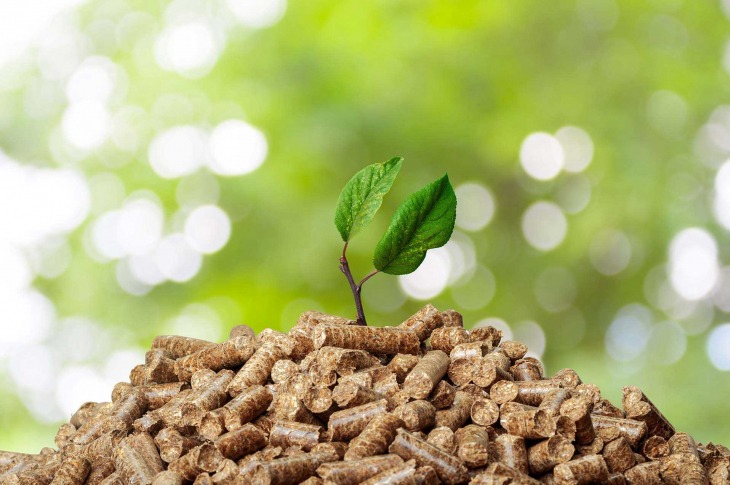
- Biomass briquettes can provide a cleaner alternative to coal and other fossil fuels for electricity generation
- Biomass sources are widely available and biomass briquettes do not require different power-generation equipment
- Setting up fragmented production facilities and using multiple waste sources can lead to large-scale biomass adoption
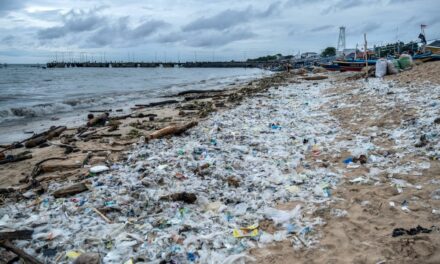
Fossil fuels — predominantly coal — continue to fulfill a majority of everyday power-generation requirements in many countries despite commitments under the 2015 Paris Agreement to reach net-zero emissions by 2050.
In industrial applications, coal-fired power plants still contribute most toward electricity generation.
One reason for the slow transition to alternative energy sources is that most need a different kind of power-generation equipment than the ones being used now.
Biomass briquettes are an exception.
This renewable energy source can be substituted for several fossil fuels without replacing the current equipment.
What are biomass briquettes?
Biomass is any plant or animal material that can be utilized as fuel. It includes wood and forest and agricultural waste.
As biomass is derived from plants and animal matter, it is a sustainable energy source.
Though biomass can be used directly as fuel, it is generally processed further — including into briquettes or pellets — to improve its usability and efficiency.
_______________________________________________________________________
Read Also : Another major NZ industrial plant switches to biomass
________________________________________________________________________
Advantages of using biomass:
Easy availability: Sources of biomass are available in plenty but not fully utilized.
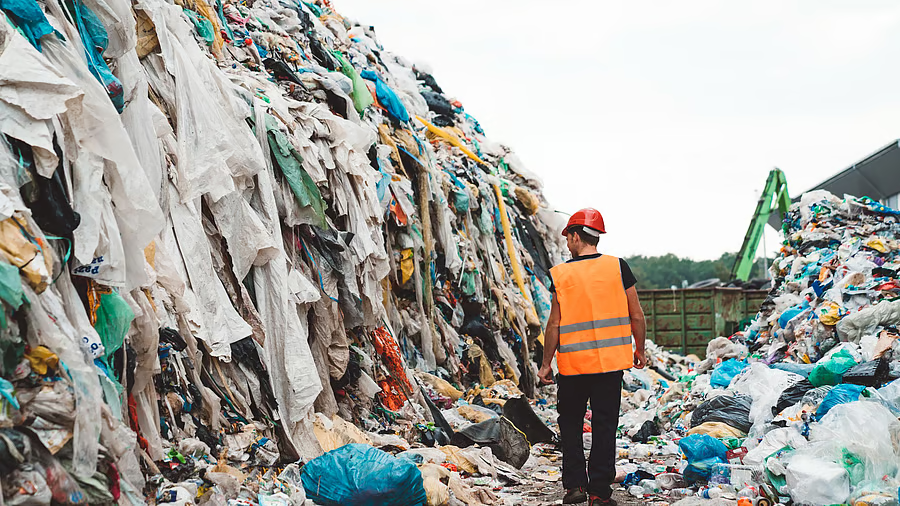
Agricultural residue and farm waste are generated in large quantities but remain unutilized as fuel. Often, these are disposed of through burning.
In addition to agricultural waste, forest waste can also be used to make biomass. Municipal waste is another common source available in large quantities and can be used for generating biofuel.
Carbon neutral and low on emissions: Being plant-based, many of these sources are also carbon neutral. The carbon emissions released during the combustion of biofuels match the amount of carbon dioxide the plants took from the atmosphere during their lifecycle. Biofuels also do not emit the harmful compounds usually released by the burning of coal and other fossil fuels.
Runs on existing equipment: The equipment designed for utilizing conventional fossil fuels can be used for biomass too, with some minor modifications or alterations, thus preventing significant investment in new equipment and infrastructure.
Downsides of relying on biomass:
While it may seem like biomass briquettes can be a good replacement for coal for generating power, these are some hindrances to their adoption on a large scale.
Low energy output: Compared to coal, the energy content of biomass briquettes is low. It varies between 3200kCal/kg and 4800kCal/kg. But for coal, the range is significantly higher, starting from 3000kCal/kg and going up to 8000kCal/kg for high-quality anthracite coal.
Fragmented availability: Even though biomass is available in large quantities, its production or reserves are scattered.
Seasonality: Forest and agricultural residue is not generated year-round, but cyclically or seasonally, post-harvest. This seasonal availability makes it necessary to collect the residue within a short period of time and store it for use throughout the period of unavailability.
_______________________________________________________________________
Read Also :What Is Biomass?
________________________________________________________________________
What is the solution?
The dynamics of biomass are different compared to other renewable energy sources. Overcoming the challenges that prevent large-scale adoption requires a non-traditional approach.
As in the case of conventional energy sources, economies of scale can be exploited to lower the cost of production. As a result, we see individual large-scale production facilities as the reserves are concentrated in bulk and at a particular location.
However, in the case of biomass, these are spread across regions and their availability is cyclical.
Fragmented production set up: Given the fragmented nature of biomass availability and the high cost of transportation, a fragmented setup may be the most optimal solution.
Small plants to convert raw biomass to briquettes can be set up to cater to areas covering a range of 100 to 200 square kilometers.
Biomass briquettes, which do not take up much space, can then be transported to a central warehouse for long-term storage or sent directly to the consumer.
Using multiple sources: Single-source waste (from one plant or crop) is primarily used to generate biomass briquettes.
However, given the seasonal variability, composite briquettes made from multiple waste sources (based on availability) can be manufactured year-round.
Trying this unconventional approach to promoting biomass briquettes may make this a practical and long-lasting alternative to coal for energy generation.