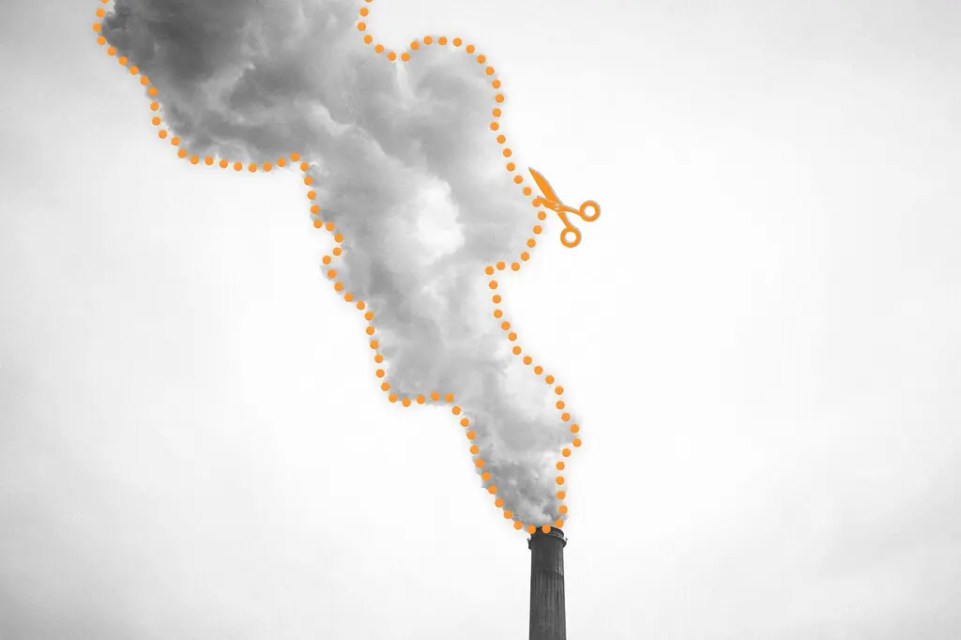
The technology to capture and bury carbon dioxide has struggled to ramp up and has real limits. But experts say it could play a valuable role.

World leaders at the annual United Nations climate talks have battled for years over whether they should “phase out” fossil fuels like coal or just phase them “down.”
Now, another phrase has taken center stage at this year’s summit in Dubai: Should countries agree to end the use of “unabated” fossil fuels?
That peculiar word choice might allow nations to continue to burn coal, natural gas or oil as long as they trap and bury the resulting carbon dioxide, and stop the gas from heating the planet.
One big dispute is over how big a role this technology, known as carbon capture and storage, should play in the fight against global warming. Some oil and gas producers say it should be central in planning for the future. Others, including many activists and world leaders, dismiss carbon capture as too unproven and too risky.
A few recent studies have found that carbon capture can be a valuable tool for curbing emissions from certain activities, like cement manufacturing. But its use is likely to be limited: It would be nearly impossible for countries to keep burning fossil fuels at current rates and capture or offset every last bit of carbon dioxide that goes into the air. The technology is expensive, and in many cases there are better alternatives.
Despite billions of dollars in investment, countries and industries have also struggled to get carbon capture projects up and running so far. Unless that changes quickly, experts say, the technology might not play more than a marginal role in climate efforts.
________________________________________________________________________
Read Also: Can’t we turn vegetarian to stem the decline in ecosystems?
________________________________________________________________________
Latest News on Climate Change and the Environment
Card 1 of 5
A year of record heat. It’s official: 2023 was Earth’s hottest year by far in a century and a half. To climate scientists, it comes as no surprise that unabated emissions of greenhouse gases caused global warming to reach new highs. The big question is whether 2023 foretells more years in which heat records are not merely broken, but smashed.
“Carbon capture and storage definitely could be a critical technology,” said Fatih Birol, executive director of the International Energy Agency. “But the history of carbon capture to date has largely been a disappointment.”
The (Limited) Role of Carbon Capture
In September, the I.E.A. published a detailed road map for what it would take to slash the world’s energy-related emissions to nearly zero by midcentury in order to lessen the risk of catastrophic climate disruptions.
In that road map, carbon capture accounted for just 8 percent of the world’s total emissions cuts between today and 2050. By contrast, the vast majority of reductions would come from countries shifting away from fossil fuels entirely: relying more heavily on wind and solar power for electricity and swapping out gasoline-powered cars for electric ones.
No Silver Bullet
The International Energy Agency sees carbon capture playing a small but important role in reaching global emissions goals by 2050.
DRIVERS OF EMISSIONS REDUCTIONS THROUGH 2050 IN THE I.E.A.’S NET ZERO ROAD MAP:
Wind and solar power
Bioenergy, nuclear, hydrogen and other fuels
Electrification of vehicles, homes and more
Behavior shifts and reduced demand
Energy efficiency
Carbon capture and storage
0%
25%
50%
75%
100%
Cost is one reason. In theory, companies could attach a carbon capture device onto almost any factory or power plant that burns fossil fuels today. But in practice, it’s often cheaper to shut down a coal plant and replace it with some combination of wind, solar and batteries, or to swap out a gas boiler for an electric heat pump.
________________________________________________________________________
Read Also: Almond Milk vs. Oat Milk: Which Is Better for You?
________________________________________________________________________
Still, there are cases where carbon capture might be the best option. One of them might be cement kilns, which release huge amounts of carbon dioxide as they transform limestone into cement. Some steel producers are exploring carbon capture as a way to reduce their emissions. Electric utilities might use gas plants with carbon capture to backstop intermittent wind and solar power.
Many researchers differ in their estimates of how much carbon capture is likely needed, but they all broadly agree on one thing: Total fossil fuel use will have to fall sharply no matter what to keep global warming at relatively low levels.
Under the I.E.A.’s road map, for example, oil, gas and coal would supply just 10 percent of the world’s energy in 2050, down from about 80 percent today. About half of those remaining fossil fuel emissions would be “abated” with carbon capture technology. The other half would largely be offset with carbon removal technologies, such as direct air capture, which is even less well-developed.
More recently, the agency issued a report warning fossil fuel producers against “excessive expectations and reliance” on carbon capture to maintain their current market share, noting that it would cost $3.5 trillion per year to capture or offset all of the emissions from today’s oil and gas output. Carbon capture, the agency concluded, “is not a way to retain the status quo.”
Carbon Capture Has Been Slow to Grow
Even if carbon capture only ends up playing a supporting role in the battle against climate change, the technology would still need to expand very rapidly to do so.
Right now, it’s not on track.
Worldwide, industrial firms capture about 45 million tons per year, mostly from small natural gas processing plants. Over the past few years, spurred on by new incentives in the United States and Europe, companies have proposed an additional flurry of large new projects that, if built, would increase capture capacity to more than 400 million tons per year by 2030
But that’s still well short of the 1 billion tons per year that countries would need to capture and store by the end of the decade in the I.E.A.’s net zero road map.
A Big Gap
Carbon capture and storage projects would need to rapidly scale up to meet the International Energy Agency’s net zero emissions scenario.
2022
Existing capture projects
2030
PROJECTED
Planned projects
Needed in I.E.A.’s scenario
0 metric tons
CO₂ per year
0.2 billion
0.4 billion
0.6 billion
0.8 billion
1.0 billion
And not every announced project will necessarily get built. Only a small fraction — amounting to 6 percent of capacity — have taken a final investment decision. Projects are complicated to plan, requiring coordination among different companies that capture, transport and ultimately bury the carbon dioxide.
________________________________________________________________________
Read Also: This ‘Cow-Free Milk’ Has Real Dairy Protein, but No Lactose or Cholesterol
________________________________________________________________________
“The operational complexity of these projects can be a big obstacle,” said Paola Perez Peña, a principal research analyst at S&P Global Commodity Insights. “A lot of projects have announced their intent to capture carbon dioxide, but you still need a storage site to be developed. And that can create a chicken or egg dynamic: Who will put the money down first?”
In the United States, lawmakers recently expanded tax credits for companies that capture carbon dioxide from smokestacks, and a growing number of ethanol, fertilizer and hydrogen companies are looking to use the technology. But in the Midwest, landowners and environmentalists have opposed new pipelines to transport the carbon dioxide to disposal sites. Companies that want to open new underground storage wells have criticized a slow federal permitting process.
Some experts say the technology could prove useful in China, which produces roughly half the world’s cement and steel. But apart from some demonstration projects, China still hasn’t developed a plan to deploy carbon capture on a large scale.
“China is facing a massive overhang with all the coal plants it has built, and many of them are still new, so absent taking those plants offline, there’s a considerable attractiveness to using carbon capture,” said Roman Kramarchuk, head of future energy outlooks at S&P Global Commodity Insights. “But we haven’t seen China develop a comprehensive policy yet.”

Brad Plumer is a climate reporter specializing in policy and technology efforts to cut carbon dioxide emissions. At The Times, he has also covered international climate talks and the changing energy landscape in the United States.More about Brad Plumer
Nadja Popovich is a data and graphics reporter on the Climate desk. She joined the team in 2017 and, since then, has covered climate science, energy policy and the real-world impacts of our warming world. She has won numerous design and journalism awards for her work.More about Nadja Popovich
NOTE – This article was originally published in nytimes and can be viewed here