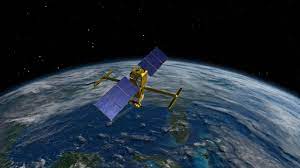
Earth and Venus are essentially the same size and distance from the Sun. They both have exactly the same amount of carbon.( Climate Change) The difference is that over time on earth the carbon has been trapped in the ground in the form of coal, oil, natural gas.
“Buy Organic Products Online at best prices at http://www.getgreen.co.in “.
Whereas, on Venus most of the carbon is in the atmosphere. The difference is that on earth the average temperature is 50 degrees, whereas on Venus it is 850 degrees. The reason is not only because it is slightly close to the Sun.
Mercury is the closest to the Sun and is around three times cooler than Venus. This is vague to our current strategy, especially developing nations. Taking as much ground-based carbon and ejecting it into the atmosphere. The climate change consequences are not local. They are global. Climate change is affecting all of us.
Read Also : Everything You Need To Know About Climate Change
Shashi Tharoor came to address the union. In his statement, he stated that the industrialization of the west was based on the deindustrialization of countries like India. But we have to still see what is at stake here. The climate crisis is causing reduced growing seasons changing the range of diseases, droughts. It also results in species extinctions fit severe storms. Developing nations like India to work together and share technologies that help them not make the same mistakes. The mistakes that the British made in the Industrial revolution of the 20th century.
Do the developing countries needs to change?
The first question that arises is that does developing countries need to change themselves. The Indian sky is not blue, it’s gray and opaque. You can go outside and feel the pollution feeling your lungs.
We think of the sky as a vast limitless expanse but the reality is it is a thin shell that continues to crack under the blunt hammer of our daily emissions. The accumulated amount of man-made global warming pollution that is up in the atmosphere.
In that thin shell is trapping the energy equivalent of 400,000 Hiroshima class atomic bombs exploding every 24 hours 365 days a year. You need to picture that in your mind to understand the seriousness of the problem. That is a lot of heat. And it is mostly in our ocean resulting in newer more catastrophic storms than we have ever seen.
The effect is everywhere in Houston. Now 14 of the 16 years have comprised the 21st century have broken temperature records. Global warming is resulting in microbial diseases. From countries around the equator, it is spreading to western countries. Higher latitudes previously sustained temperatures.
They were cool enough to be hostile to the diseases. While places like North America Britain have better public health systems. Women in some regions of South America are advised not to get pregnant for two years. That is the red flag for something that we need to realize. It is a serious problem that requires global effort towards fixing.
Read Also : Climate change: How infrastructure can weather the storm
If you are still not scared of the data presented in front of you then you don’t understand where we are as a species. The fact of the matter is from the economic perspective the cost of the climate crisis is building up.
Central bankers like governor Mark Carney said that the vast majority of the carbon reserves are unburnable. This is a great risk to the global economy. Developing nations are not held to strict environmental standards. So they will develop their infrastructure around unsustainable practices.
Equal environmental standards
Prevention of the locking in of outdated environmental actions is important. For this equal environmental standards must be enforced internationally. There is an alternative to working together with these developing nations. There are ways to provide a more sustainable set of environmental standards. However, in the history of the global warming crisis humans have been incredibly short-sighted.
Leaders of industrializing countries will place their country’s immediate priorities. This will take place before the vague undefined future of climate change in this world.
This means that the cheapest and faster method of industrialization will be more preferable to one that is possibly slower.
But the slower method is in the long term safer for the environment as a whole. We can not afford to look locally anymore. We have to look at the big picture.
In a report by the organization for economic cooperation and development argument took place. The potential economic and social impacts of environmental degradation are serious for developing countries. Given their dependence on national natural resources for economic growth.
Summary
Population in developing nations are more reliant upon connected to. It is affected by the environment than the population in the developed world. The most at-risk populations for negative impacts from environmental degradation are the rural poor and developing nations.
It is important to put strict environmental policies into action for preventing the population. So we can definitive stance that environmental standards indeed should be imposed. But we are in no way suggesting that the west has a right to impose these standards on developing nations and just leave them to managers alone.
The fact of the matter is that most of these nations lack the infrastructure and expertise to implement standards that are likely to be set. Many developing countries also have established some form of governmental structures that seeks to address their environmental problems.
However, there are inherent barriers within these governments such as corruption, bureaucratic inefficiencies, and lack of political will that are preventing visible differences from being seen.
Tags: #astronaut, #atmosphere, #climatechange, #coronavirus, #covid, #environment, #getgreengetgrowing, #globalwarming, #gngagritech, #greenstories, #internationalspacestation, #moonmission, #planetearth, #pressure, #savetheplanet, #solarplanets, #solarsystem, #stayhome, #temprature