
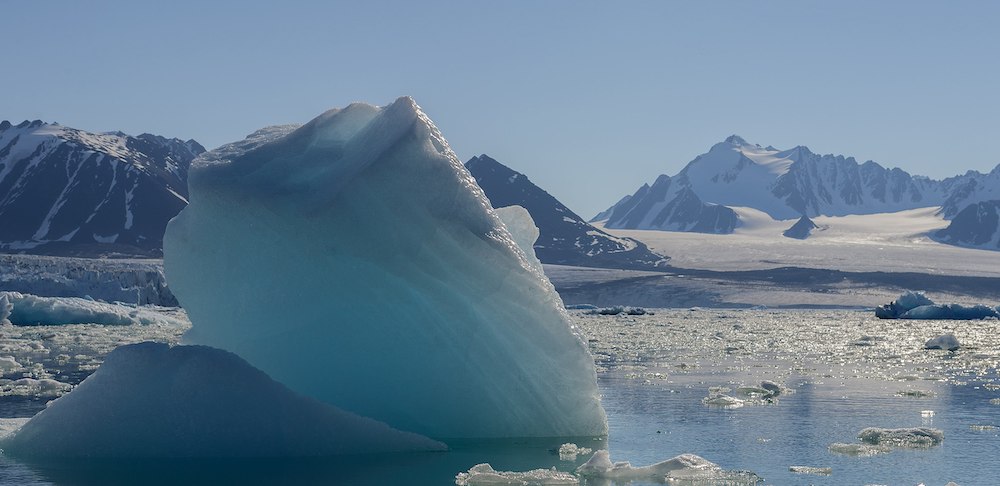
Both of Earth’s poles are experiencing unprecedented heatwaves and climate scientists around the world warn that the alarming events are a sign of the devastating effects of climate change.
________________________________________________________________________
Read Also : “Earth is just not our Environment; We Are The Environment..
________________________________________________________________________
Antarctica, which is usually cooling down at this time of year, experienced record-high temperatures that were up to 40 degrees Celsius (104 degrees Fahrenheit) warmer that unusual.
Temperatures in some areas of the North Pole, which usually warms gradually this time of year, were 30 degrees Celsius higher than normal. Such warm weather is very uncommon for this time of year.
Heatwaves at Earth’s poles extremely concerning
Usually, the Earth’s poles experience opposite weather patterns, with one cooling as the other warms.
Walt Meier, scientist at the National Snow and Ice Data Center, expressed his shock at the even to NBC News.
“They are opposite seasons. You don’t see the north and the south (poles) both melting at the same time…It is pretty stunning.”
________________________________________________________________________
Read Also : The longest-living animals on Earth
________________________________________________________________________
This increase in temperature in the Earth’s poles is a sign that climate change has seriously altered the Earth’s climate.
Speaking to The Guardian, Michael Mann, director of the Earth System Science Centre at Pennsylvania State University, expressed his concern about the unprecedented heatwaves:
“The warming of the Arctic and Antarctic is cause for concern, and the increase in extreme weather events – of which these are an example – is a cause for concern as well…”
“The models have done a good job projecting the overall warming, but we’ve argued that extreme events are exceeding model projections. These events drive home the urgency of action,” he stated.
High temperatures at the Earth’s poles could result in the melting of polar ice caps, leading to catastrophic events for the planet, such as higher sea levels and even further warming of the Earth’s climate.
Many extreme weather events last year
The year 2021 was marked with a number of extreme weather events, notable heatwaves and forest fires, such as the fires that raged across the Greek island of Evia in August.
The severity and frequency of these extreme weather events have exceeded predictions by climate scientists.
Mark Maslin, Professor of Earth System science at University College London, STATED TO the Guardian that he and his colleagues “were shocked by the number and severity of the extreme weather events in 2021 – which were unexpected at a warming of 1.2C. Now we have record temperatures in the Arctic which, for me, show we have entered a new extreme phase of climate change much earlier than we had expected.”
________________________________________________________________________
Read Also : What Kind of Life Do we Want On this Earth?
________________________________________________________________________
The effects of climate change are perhaps most notable in the Earth’s poles, where any unseasonable and dramatic change in temperature has a major impact on polar ice caps.
NOTE – This article was originally published in Greekreporter and can be viewed here




