
There has been much dismay over the Green Party leadership’s compromise with ‘big coal’ that led to the demolition of the village of Lützerath. Will this drive the environmentalist party to breaking point?
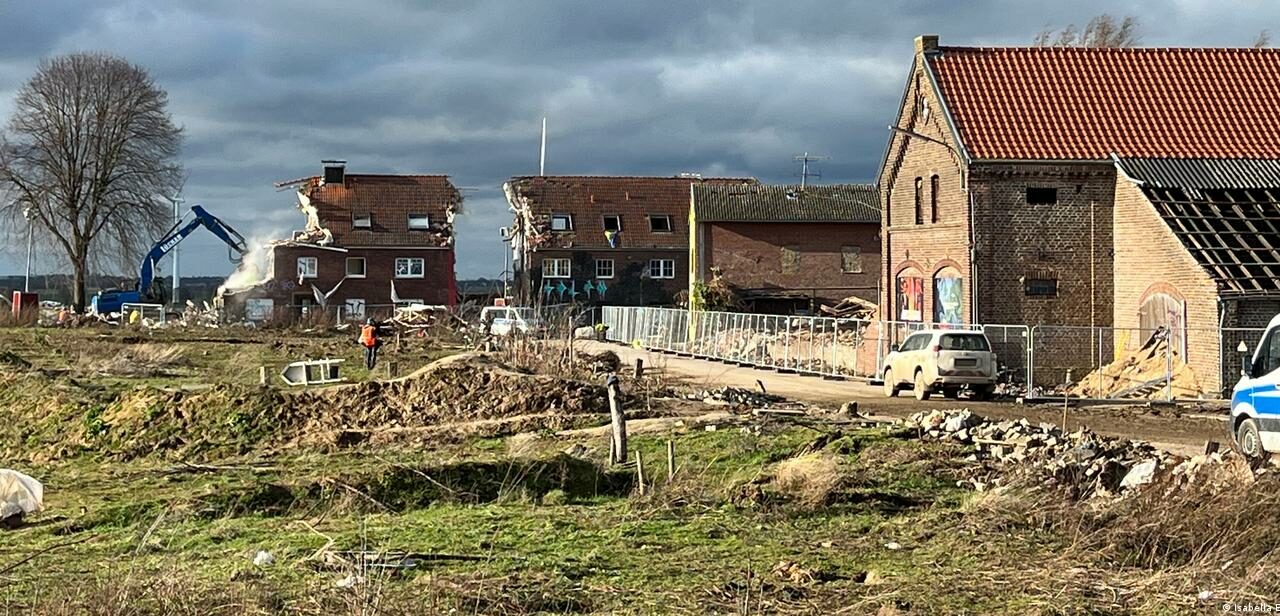
After losing the battle for the little village of Lützerath, many Green Party supporters are feeling betrayed. Climate activists fought hard to prevent the demolition of the village in the lignite mining area in North Rhine-Westphalia (NRW), but despite international support, police evacuated them by force and the expansion of the opencast lignite mine is going ahead.
Among those disappointed is Luisa Neubauer, leader of the “Fridays for Future” climate movement in Germany. “I don’t know if the Green Party leadership is aware of what it has done,” she told public broadcaster ARD. Neubauer is herself a member of the Greens and now she fears that many members may turn away.

Between a rock and a hard place
The Green Party is part of Chancellor Olaf Scholz’s center-left coalition but is also in government with the center-right Christian Democrats (CDU) in North Rhine-Westphalia, Germany’s most populous state. At both the federal level and in NRW, the Greens control the economy ministry.
_____________________________________________________________________________________________________________________________
Read Also:9 TIPS TO SAVE YOURSELF FROM DELHI AIR POLLUTION
_____________________________________________________________________________________________________________________________
In October 2022, federal Economy Minister Robert Habeck (Greens) and the North Rhine-Westphalian Economy Minister Mona Neubaur (Greens) struck a deal with energy giant RWE to phase out coal by 2030, eight years earlier than planned, sparing five villages from demolition — but in return to allow the Garzweiler open-cast mine to expand and mine the coal below Lützerath. Climate activists argue that the deal simply means that the emissions have been brought forward.
Within days, this compromise was given the stamp of approval at a Green party conference in Bonn, leaving many rubbing their eyes in disbelief: The party of climate protection voting for coal mining?

The youth wing of the party is feeling disenchanted. In the run-up to the 2021 general election, the Green Party’s chancellor candidate Annalena Baerbock stressed the significance of climate protection. “She repeatedly said during the election campaign: this is the last government that can still influence the climate crisis. She set the bar high,” Green Youth chairman Timon Dzienus told the weekly Die Zeit. “So yes: If the government fails to meet the climate targets and limit emissions in all sectors, the Green Party, in particular, can suffer great damage.”
Election promises broken?
The “deal negotiated with the energy company RWE threatens to break with the principles of our party,” 2,000 Green Party members wrote in an open letter to Habeck and Neubaur. “We are also breaking with the Paris climate agreement, the government’s coalition agreement and are losing the last bit of trust from the climate justice movement.”
_____________________________________________________________________________________________________________
Read Also:NASA IMAGES REVEAL MASSIVE DROP IN POLLU…
_____________________________________________________________________________________________________________
This dramatic appeal led Green Party leader Ricarda Lang to defend the RWE deal once again: “If we don’t make compromises, then nothing at all would happen in climate protection,” she claimed. “Very few other parties have a serious interest in this.”
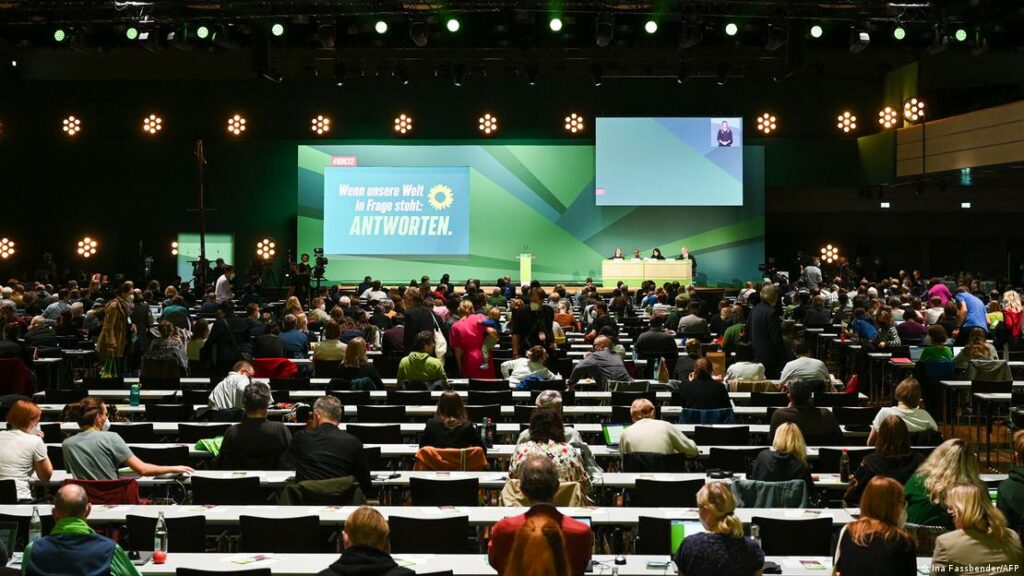
Political scientist Gero Neugebauer agrees. Even after painful decisions like the one on Lützerath, the Greens remain the party with the highest reputation for climate and environmental protection in Germany, he told DW. “The very fact that this is the Greens’ unique selling point, shows the weakness of the other parties, which fail to embrace climate policy as an important issue,” he says.
Neugebauer doesn’t believe that the controversy surrounding Lützerath is hurting the Greens as much as it would appear. There has not been a major row within the party, he says, and the critics lack prominent support.
Shadows of the past
The Greens have painful memories of a fundamental policy shift in the late 1990s, when the Greens’ foreign minister at the time, Joschka Fischer, forced the pacifist party to support German military involvement in Kosovo. Within days, hundreds of members left the Greens.
Some political observers also compare the Green Party’s Lützerath compromise to the Social Democrats’ watershed moment of 2003: The center-left SPD implemented “Hartz IV” a business-friendly labor market reform that cut back on welfare. Many members and voters saw this as the party’s perceived betrayal of working-class interests and turned away. Hartz IV, to many in the SPD, was “the fall from grace.”
Germany’s Green party: How it evolved
Germany’s Greens have been trailblazers for ecological movements around the world. But since the 1980s they have become increasingly mainstream.
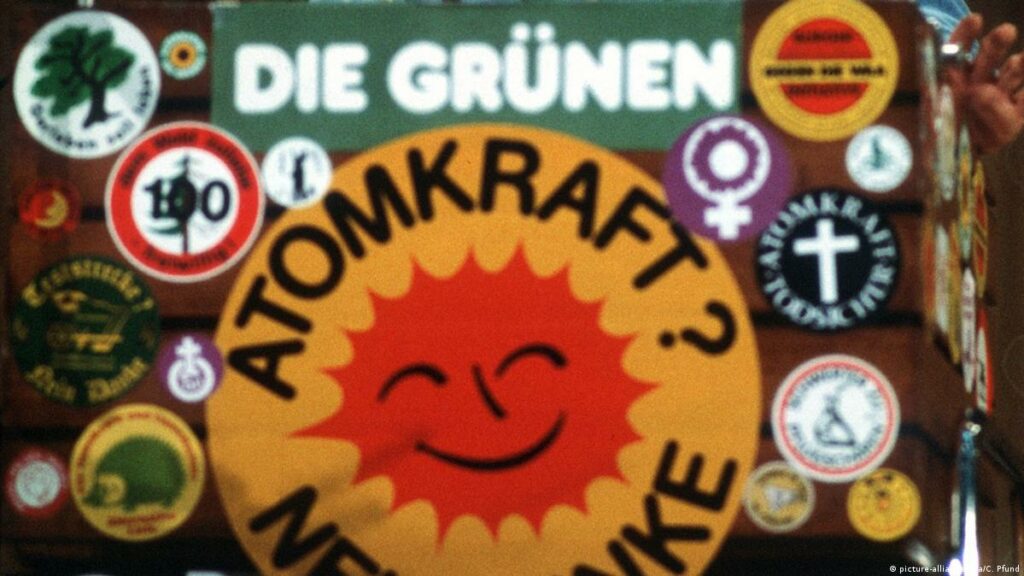
1980: Unifying protest movements
The Green party was founded in 1980, unifying a whole array of regional movements made up of people frustrated by mainstream politics. It brought together feminists, environmental, peace and human rights activists. Many felt that those in power were ignoring environmental issues, as well as the dangers of nuclear power.
Attracting high-profile leftists
The influential German artist Joseph Beuys (left) was a founding member of the new party. And its alternative agenda and informal style quickly attracted leftist veterans from the 1968 European protest movement, including eco-feminist activist Petra Kelly (right), who coined the phrase that the Greens were the “anti-party party.”
Party ambiance at party meetings
From the start the Green party conferences were marked by heated debate and extreme views. Discussions went on for many hours and sometimes a joyous party atmosphere prevailed.
________________________________________________________________________________________________________________
Read Also: MILLIONS OF VEGETABLES THROWN AWAY AS LA…
________________________________________________________________________________________________________________
Greens enter the Bundestag
In 1983 the Greens entered the German parliament, the Bundestag, having won 5.6% in the national vote. Its members flaunted their anti-establishment background and were eyed by their fellow parliamentarians with a certain amount of skepticism.
Green Party icon Joschka Fischer
Joschka Fischer became the first Green party regional government minister in 1985 when he famously took the oath of office wearing white sports sneakers. He later became German foreign minister in an SPD-led coalition government. And was vilified by party members for abandoning pacifism in support of German intervention in Kosovo in 1999.
Unification in a united Germany
With German reunification, the West German Greens merged with the East German protest movement “Bündnis 90” in 1993. But the party never garnered much support in the former East Germany (GDR).
Pro-Europe
Today’s Green voters are generally well-educated, high-earning urbanites with a strong belief in the benefits of multicultural society and gender equality. And no other party fields more candidates with an immigrant background. The party focuses not only on environmental issues and the climate crisis but a much broader spectrum of topics including education, social justice, and consumer policies.
Turning conservative
Environmental topics are no longer the exclusive prerogative of the Greens, whose members have morphed from hippies to urban professionals. Winfried Kretschmann personifies this change: The conservative first-generation Green politician became the party’s first politician to serve as a state premier. He teamed up with the Christian Democrats and has been reelected twice to lead Baden-Württemberg.
Celebrating harmony
Party co-leaders Robert Habeck and Annalena Baerbock symbolize the new pragmatism and confidence of the Greens in the 2020s. They support the Fridays for Future movement and cater to the high number of new young party members who are not interested in the trench warfare between fundamentalists and pragmatists that marked the Green party debates of the early years.
But even after events in Lützerath, the Greens have not seen a marked drop in support: They still get between 18% and 20% in opinion polls — neck-and-neck with the SPD and four times as strong as the smallest coalition partner in Scholz’s government, the neoliberal FDP.
Political scientist Neugebauer says the party still seems very much united, not only in the Lützerath case but also on other issues such as further arms deliveries to Ukraine. He argues that the many new, young members of the party, Neugebauer says, “experience the Greens as a pragmatic party in government that takes responsibility, while being the only party that represents the goals of the climate movement.”
Between 2015 and the end of 2021, Green Party membership more than doubled from about 60,000 to 125,000 now, and most of the new members are young. And even if radical environmental activists like those in Lützerath turn their back on the Greens, political scientist Neugebauer believes they would not join any other party instead.
Pragmatism may even pay off for the Greens, says political scientist Marc Debus, arguing that the ability to compromise shows a willingness to take responsibility. “In this way, they can become attractive to moderate voters and possibly win votes they have lost elsewhere,” Debus told public broadcaster WDR.
NOTE – THIS ARTICLE WAS ORIGINALLY PUBLISHED IN DW AND CAN BE VIEWED HERE
Tags: #climate, #climatechange, #climatecrisis, #climatejustice, #CLIMATEPROTECTION, #environment, #getgreengetgrowing, #globalwarming, #gngagritech, #greenstories