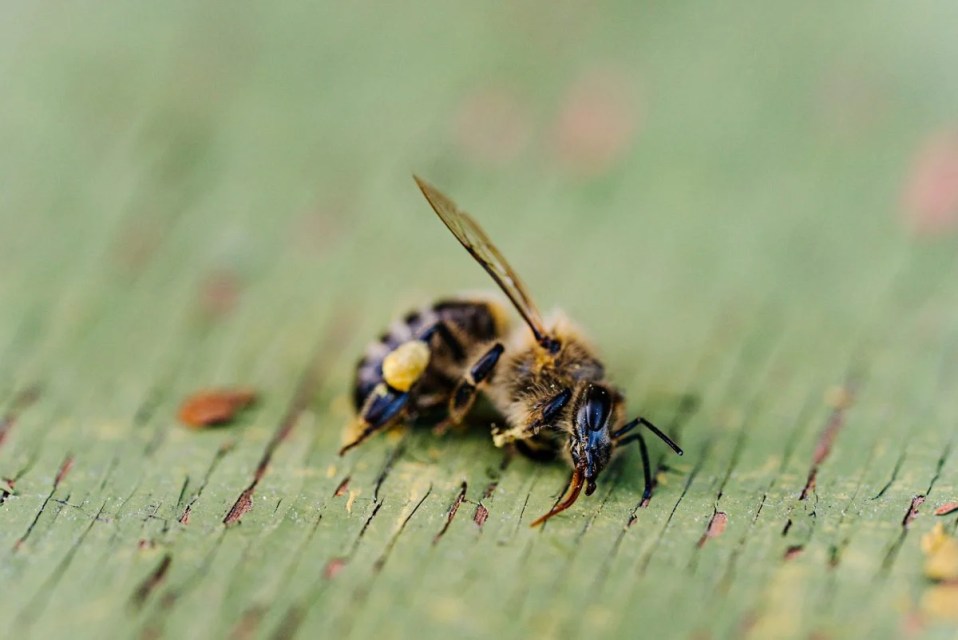
Insects exposed to low levels of chlorothalonil suffer major reproductive harm. Its continued use threatens pollination and ecosystem balance.
New research from Macquarie University has revealed that a commonly applied agricultural chemical, used on Australian fruits and vegetables to combat fungal infections, is causing serious harm to beneficial insects essential for pollination and maintaining ecosystem balance.
Published in Royal Society Open Science, the study shows that chlorothalonil, among the most widely used fungicides globally, significantly disrupts insect fertility and survival, even at the minimal concentrations typically found on produce.
“Even the very lowest concentration has a huge impact on the reproduction of the flies that we tested,” says lead author Darshika Dissawa, a PhD candidate from Macquarie’s School of Natural Sciences.
“This can have a big knock-on population impact over time because it affects both male and female fertility.”
________________________________________________________________________
Read Also: Dumped Milk, Smashed Eggs, Plowed Vegetables: Food Waste of the Pandemic
________________________________________________________________________

Reproductive effects appear at very low doses
The research team exposed fruit flies (Drosophila melanogaster) to concentrations of chlorothalonil that reflect typical levels found on crops such as cranberries and wine grapes. At even the lowest tested concentration, the flies experienced a 37 percent reduction in egg production compared to those not exposed.
According to supervising author Associate Professor Fleur Ponton, the severity of the decline came as a surprise.

________________________________________________________________________
Read Also: How the pandemic has accelerated the next generation of farming
________________________________________________________________________
Chlorothalonil remains widely used in Australia
“We expected the effect to increase far more gradually with higher amounts. But we found that even a very small amount can have a strong negative effect,” Associate Professor Ponton says.
Although banned in the European Union, chlorothalonil is extensively applied to Australian crops including orchards and vineyards, often preventatively when no disease is present.
The findings add to mounting evidence of what researchers call the “insect apocalypse” – a global phenomenon that has seen insect populations plummet by more than 75 percent in some regions in recent decades.
Call for reduced pesticide use and better regulation
“We need bees and flies and other beneficial insects for pollination, and we think this is an important problem for pollinator populations,” Associate Professor Ponton says.
________________________________________________________________________
READ ALSO : HOW THE ‘ORANGE AREAS’ DISPUTE IN CENTRAL INDIA LEAVES DALIT, ADIVASI FARMERS WITHOUT LAND…

The research highlights a critical knowledge gap in pesticide regulation, with fewer than 25 scientific papers examining chlorothalonil’s effects on insects despite its widespread use.
The researchers recommend more sustainable practices, including reduced application frequency to allow insect population recovery between treatments.
NOTE – This article was originally published in scitechdaily and can be viewed here