Critically endangered Hainan gibbons
- Population of world’s rarest primate grows from fewer than 10 in 1970 to more than 30(Critically endangered Hainan gibbons)
- Expanding gibbons’ habitat a way to beat risks posed by low birth rate, climate change

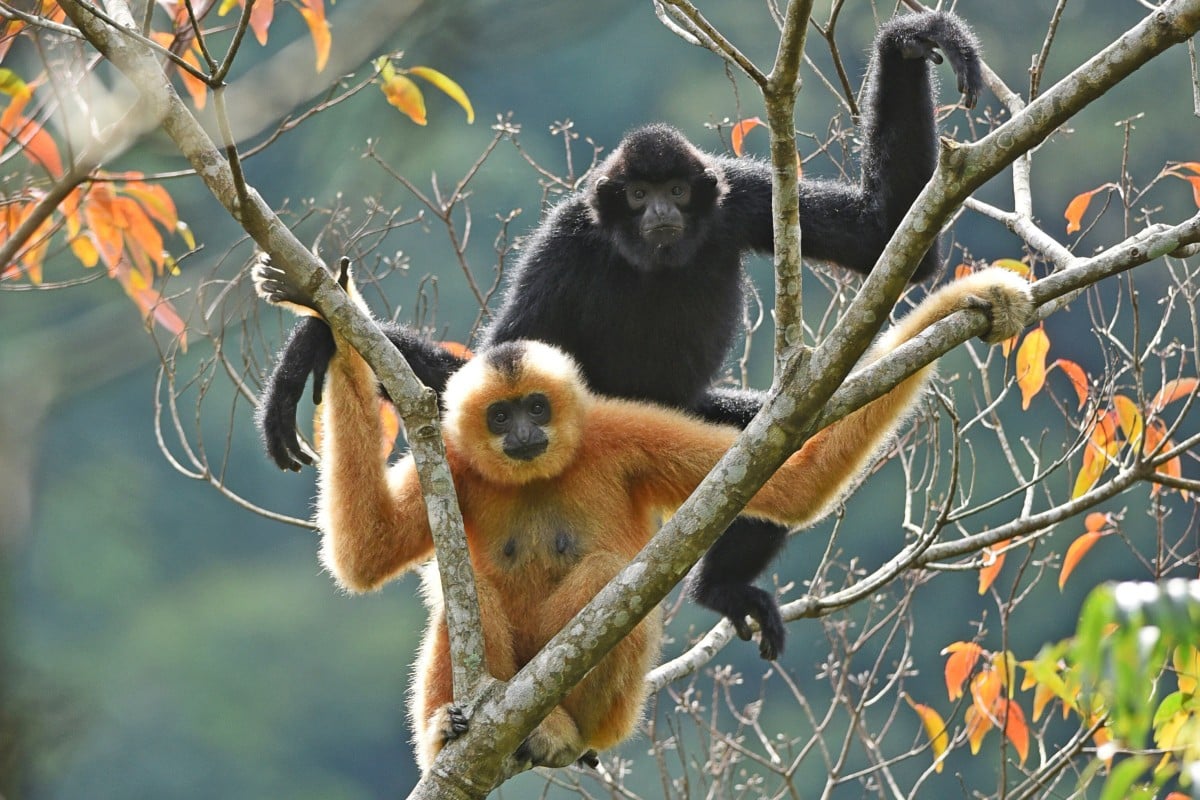
The critically endangered Hainan gibbon is only found on its namesake island in mainland China. Photo: Kadoorie Farm and Botanic Garden and Bawangling National Nature ReserveConservationists working to save the world’s rarest primate are seeing a glimmer of hope after the population of Hainan gibbons exceeded 30.
“Even though the numbers are still small, you can see a future for this animal,” said senior conservation officer Philip Lo Yik-fui of Hong Kong-based Kadoorie Conservation China, which was driving efforts to protect the gibbons and expand their habitat.
They are really intelligent animals. When they look at you, it feels like they are trying to communicateConservation officer Philip Lo
The endangered animal is found only on Hainan, the tropical island off the southern coast of China. Adult males are jet black, while the fur of females turns a rich gold when they reach maturity.
“They are really intelligent animals. When they look at you, it feels like they are trying to communicate,” Lo said.
In 1950, they numbered about 2,000. Two decades later, there were fewer than 10.Like other species of gibbons globally, the Hainan gibbon suffered from loss of habitat as forests were felled for agriculture. They were also hunted for use in traditional medicine and the pet trade.CORONAVIRUS UPDATEGet updates direct to your inboxSUBSCRIBEBy registering, you agree to our T&C and Privacy Policy
In 2003, when the conservation project began, 13 gibbons were found living in two family groups, usually comprising a male, two females and their offspring.
At the time, they were found only in a 16 sq km patch of forest high in the mountains of the sprawling Bawangling National Nature Reserve.
The area was far from ideal as juicy fruit such as figs and lychee preferred by the gibbons did not grow there, said Lo, who joined the project in 2007.
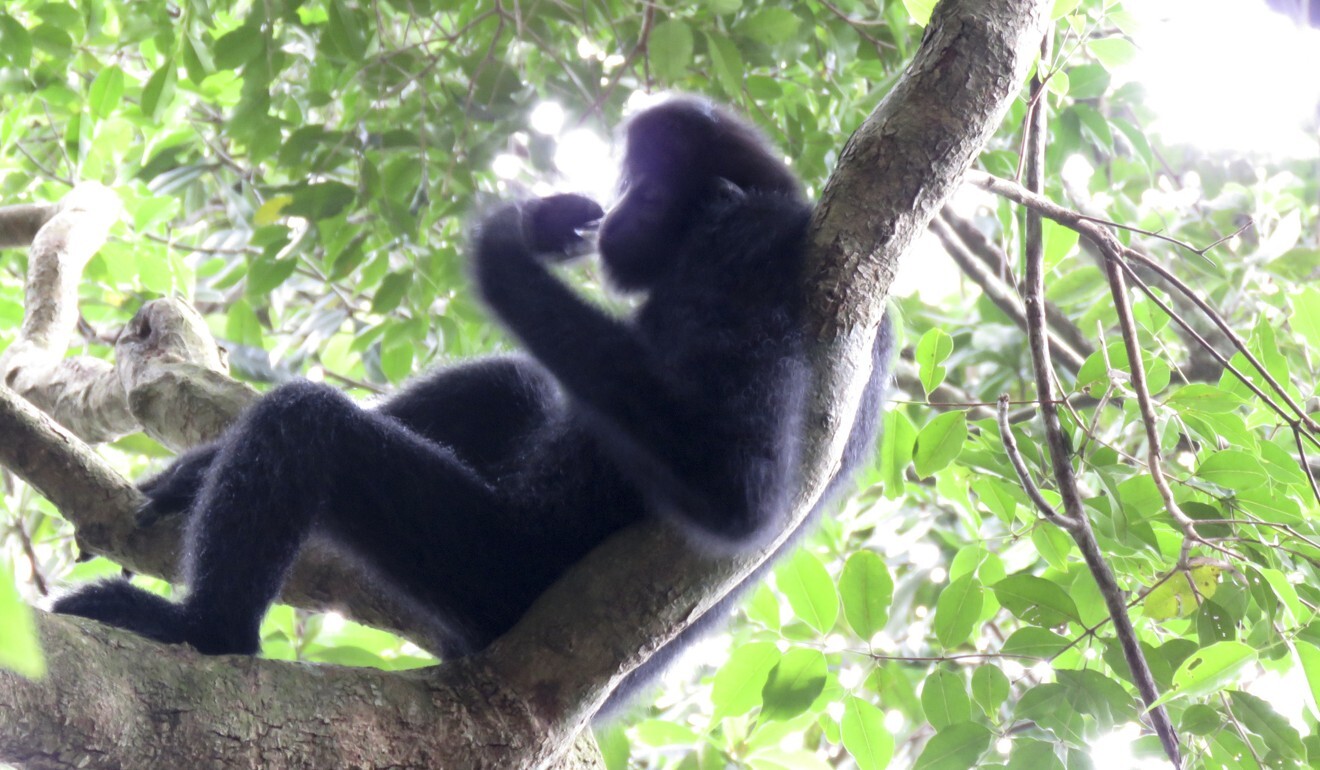
A male adult gibbon takes a rest in the canopy at the Bawangling National Nature Reserve in Hainan. Photo: Kadoorie Farm and Botanic Garden and Bawangling National Nature Reserve
Over the years, Kadoorie Conservation China, a department of Hong Kong’s Kadoorie Farm and Botanic Garden, has not only monitored the population of gibbons to prevent poaching and learn about them, but also planted more than 80,000 native fruit trees including wild lychee and different types of fig to help expand their habitat.
Observing the animals is tricky because gibbons are painfully shy and almost never came down from the trees, Lo said. The youngest ones will often distract approaching humans to help the rest move away.
Conservation efforts had paid off, as the Hainan gibbon was the only one of 19 recognised species of gibbons showing a stable increase in numbers, Lo said. The rest are in decline.
Lo said that while the gibbons were reproducing at a stable pace, the goal was to raise the population to more than 50, which would take them past the threshold of “critically endangered” to “endangered” on the International Union for Conservation of Nature’s (IUCN) Red List of Threatened Species.
Read Also : Five yoga asanas to strengthen the immunity and stave off coronavirus,
Helen Chatterjee, a professor of biology at University College London and a member of the gibbon specialist group in the IUCN, welcomed the progress made but said the genetic health of the Hainan gibbons remained a concern.
While it was great news that the gibbons were “doing normal gibbon things” – mating and forming new families – she said their low birth rate continued to pose a risk.
Fellow conservationist Samuel Turvey at the Zoological Society of London, who previously pushed the Chinese government to improve protection for the gibbons, agreed.
The surviving gibbons were either half-siblings or full siblings, he said, although that did not mean the population was doomed.
“It highlights the importance and urgency of encouraging population growth, for example through increasing forest cover and connectivity at Bawangling,” Turvey said.
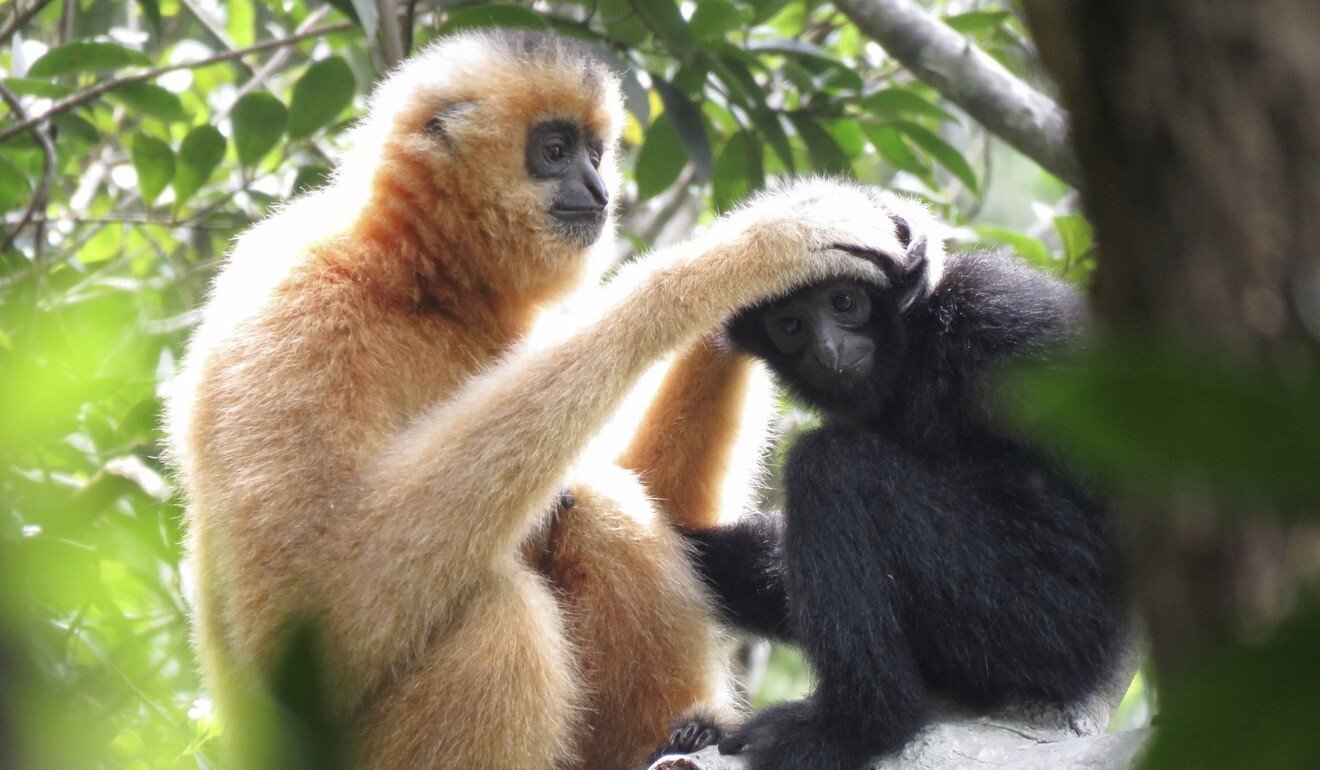
A female gibbon grooms a juvenile. Photo: Kadoorie Farm and Botanic Garden and Bawangling National Nature Reserve
Chatterjee suggested moving the gibbons to other rainforests in Hainan or even bringing in a different, closely related, species for a breeding programme to expand the gene pool. Both methods posed significant risks, she added, as neither had been tried before.
Climate change posed yet another threat, she said, as fruit supplies could be affected, while extreme weather events could devastate the forest.
In 2014, Typhoon Kalmaegi hit Hainan, causing landslides in the gibbons’ habitat and felling tress, which blocked the animals’ movement through the forest. The Kadoorie team hired tree climbers from Hong Kong to install ropes for the animals to use.
Turvey from the Zoological Society of London said a disease outbreak, a few bad breeding seasons, or the accidental death of one of the last breeding females could also be disastrous.https://www.youtube.com/embed/K5-pHOds9M4
Aware of the risks, Lo of Kadoorie Conservation China said: “Our biggest goal now is to help expand the gibbons’ territory so the whole species won’t be wiped out if natural disasters occur.”
He said local authorities, who were initially cool to the interest shown by conservationists from Hong Kong, had also thrown their support behind the effort. In January 2019, the Forestry Department of Hainan province announced it would set up the Hainan Tropical Rainforest National Park to further protect the gibbons.
The conservation team has also enlisted from the local community former hunters familiar with the forests to help monitor the gibbons.
“We try and instil a sense of pride in the locals, and the ex-hunters are really satisfied with their work now,” Lo said. “That is the main point of conservation work, it’s just as much about the people. And now people who were on opposing sides are teammates working together to protect the gibbons.”Help us understand what you are interested in so that we can improve SCMP and provide a better experience for you. We would like to invite you to take this five-minute survey on how you engage with SCMP and the news.
Tags: #animal, #animallovers, #animals, #cat, #cats, #catsofinstagram, #cute, #dog, #dogs, #dogsofinstagram, #getgreengetgrowing, #greenstories, #instagram, #love, #nature, #naturephotography, #of, #pet, #pets, #photography, #photooftheday, #wildlife, #wildlifephotography, #gngagritech