A rare sighting of a giant pangolin revives hopes for the species’ survival in West Africa, despite threats from poaching and deforestation
A giant pangolin has been spotted in Senegal’s Niokolo-Koba National Park for the first time in 24 years, reviving hope that the endangered animal has survived in the country.
“Nobody suspected that the pangolin is still alive in [this park],” says Mouhamadou Mody Ndiaye at the wildlife monitoring organisation Panthera.
_______________________________________________________________________
Read Also : Traditional Agriculture: An Efficient and Sustainable Farming Method
________________________________________________________________________
The giant pangolin (Smutsia gigantea) – the only one of Africa’s four pangolin species thought to be present in Senegal – previously inhabited a wide range of forests and savannahs spanning Senegal to western Kenya. But in recent decades, the scaly mammal’s population has declined due to extensive deforestation, along with poaching for its meat and scales. Reports suggest more than 8 million pangolins were poached in West and Central Africa between 2014 and 2021, making them one of the most frequently trafficked animals in the world.
Giant pangolins are shy, solitary and nocturnal – so unlikely to be found often outside of their burrows. A giant pangolin was last captured and formally identified in Senegal in April 1967. Three decades later, an ecological survey discovered two individuals. Since then, conservationists haven’t spotted a single giant pangolin.
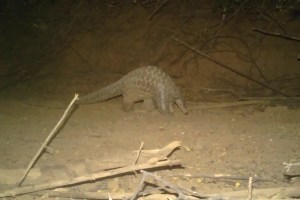
That is, until 8 March 2023, when one was snapped plodding along a dry riverbed at 1.37am. The snapshot was captured by one of 217 survey camera traps scattered throughout more than 4000 square kilometers of the Niokolo-Koba National Park.
________________________________________________________________________
Read Also : Organic Farming Solve the Climate Crisis
________________________________________________________________________
“When we saw the young pangolin it was very, very exciting,” says Ndiaye.
This sighting suggests Niokolo-Koba National Park could serve as the last stronghold for monitoring and conserving the pangolin in Senegal, says Alain D. T. Mouafo at the International Union for Conservation of Nature’s Pangolin Specialist Group. This is especially critical because there are many suspected “local extinctions”, or regions where the species is no longer active, he says.
“This sighting offers a glimmer of hope for their survival in West Africa and can be used to raise public awareness about the plight of pangolins,” says Mouafo, who hopes it can act as “a game changer for renewed conservation efforts”.
NOTE – This article was originally published in new scientist and can be viewed here