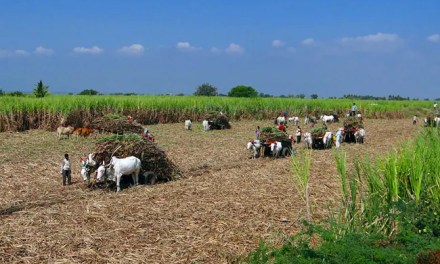
Scientists say massive tractors could be damaging up to a fifth of global land used to grow crops.

The weight of modern combine harvesters, tractors and other farm machinery risks compacting the soil, leading to flooding and poor harvests, according to researchers in Sweden.
________________________________________________________________________
Read Also: 13 Health Benefits of Cinnamon – Functional Food Pantry Staple?
________________________________________________________________________
And in their scientific paper, they raise a curious question.
How did giant dinosaurs, which outweighed machines, survive without trampling the soil to smithereens?
The researchers calculated that combine harvesters, when fully loaded, have ballooned in size from about 4,000kg in 1958 to around 36,000kg in 2020. (In contrast, the likes of brontosaurus weighed about twice the larger figure.)
In soil that has been squashed by a heavy weight, air is forced out and the soil becomes compacted.
This makes it difficult for plants to put down roots and draw up nutrients, and the land is prone to flooding.
________________________________________________________________________
Read Also: Best Ayurvedic Herbs To Boost Immunity
________________________________________________________________________
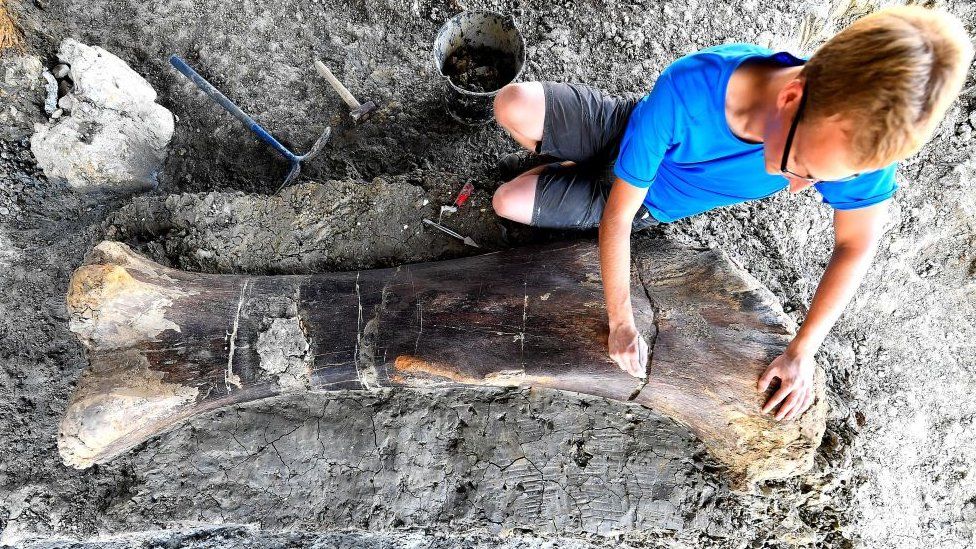 IMAGE SOURCE,GETTY IMAGES
The researchers think the growing weight of farm machinery poses a threat to agricultural productivity.
Their analysis, published in the Proceedings of the National Academy of Sciences, suggests combine harvesters could be damaging up to a fifth of the global land used to grow crops.
Thomas Keller, professor of soil management at the Swedish University of Agricultural Sciences in Uppsala, Sweden, says machinery should be designed not to exceed a certain load.
“Compaction can happen within a few seconds when we drive on the soil, but it can take decades for that soil to recover,” he said.
However, the heft of modern harvesters is outweighed by long-necked plant-eating dinosaurs such as brontosaurus, which once roamed the Earth.
This raises a conundrum: how did the extinct creatures thrive in the ecosystems they likely altered as they stomped across the ground?
Prof Thomas Keller suggests the giant plant-eaters might have stuck to paths, using their long necks to reach out for nearby vegetation.
“We think that maybe they didn’t just walk around randomly across the landscape,” he explained.