

Here you will find the detailed water footprint theory and indication why the idea is appropriate to consumers, enterprises, and government.(footprints)
What is water footprint?
The water footprint calculates the percentage of water used to generate each of the goods and services we use. It can be calculated for a single procedure, such as growing rice, for a product, such as a pair of jeans, for the power we put in our car, or for an entire multi-national corporation. The water footprint can also tell us how much water is being consumed by a particular nation or globally in a particular river basin or from an aquifer.
“Buy Organic Products Online at best prices at http://www.getgreen.co.in “.

After completing this action, you should be able to understand more critically about:
- how much water we utilize in the procedure of consumption
- what we imply by direct and indirect water use
- what we suggest by water implanted in trade
- how one might decrease one’s water footprint
The footprint theory allows us to calculate water use at various geographical plates and with these measures of benefit to several groups. A water (and carbon) footprint might be calculated for a person, household, town, region, nation, or globally. When evaluating water footprints for areas and countries, we also need to believe in terms of virtual water, i.e., the percentage of water symbolized in trade flows.
Direct and indirect water use
The water footprint glances at direct and indirect water use of a procedure, product, company, or sector, comprises water consumption and pollution throughout the full output cycle from the supply chain to the end-user.
It is also feasible to use the water footprint to calculate the percentage of water expected to generate all the goods and services consumed by the person or community, a country, or all of humanity. This also comprises the direct water footprint, which is the water used directly by the individual, and the indirect water footprint – the overview of the water footprints of all the products consumed.
Three water footprints
Green water footprint is water from precipitation that is stocked in the root zone of the soil and evaporated, occurred, or integrated by plants. It is especially relevant for agricultural, horticultural, and forestry products.
Read Also : Ignoring Link Between Climate Change And Increasing Threat Of Pandemics Is ‘Dangerous,’ Scientists Say
Bluewater footprint is water that has been sourced from ground or groundwater resources and is either evaporated, incorporated into a product, taken from one body of water, returned to another, or withdrawn at a different time. Irrigated farming, industry, and domestic water use can each have a blue water footprint.
Greywater footprint is the quantity of freshwater necessary to absorb pollutants to meet specific water quality standards. The grey water footprint considers point-source pollution released to a freshwater resource rapidly through a pipe or indirectly through runoff or leaching from the earth, impervious grounds, or other diffuse origins.
Estimation of the water footprint
The water footprint of a procedure is conveyed as a volumetric flow rate of water. A product is the entire footprint of systems in its detailed supply chain allocated by the number of product components. For consumers, businesses, and geographic area, water footprint is demonstrated as the amount of water per time, in particular:
- That of a customer is the sum of the footprint of all absorbed products.
- That of a population of a country is the sum for all of its member’s respective inhabitants.
- That of an industry is the footprint of all generated products.
- That of a geographically delineated region is the footprint of all procedures attempted in the region. The virtual water balance of an area is the net import of virtual water Vi, net, specified as the gross import Vi of virtual water from its gross export Ve. The water footprint of nationwide consumption WFarea,nat results from this as the national area’s water footprint and its virtual water equilibrium.
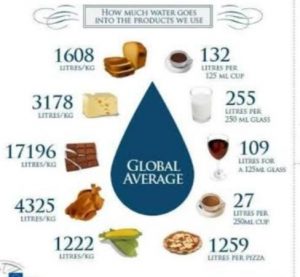
Water footprint of Product
The water footprint of a product is the total percentage of freshwater used to generate the product, summed over the production chain’s various stages. The water footprint of a product relates not only to the total volume of water used; it also relates to where and when the water is utilized. The Water Footprint Network conserves a global database on the water footprint of products: WaterStat. Nearly 70% of the water allowance worldwide is used in the farming area.
Water footprint of corporations
The water footprint of an industry, the ‘corporate water footprint’, is formulated as the total percentage of freshwater that is used directly or indirectly to operate and benefit a business. It is the total volume of water use to be correlated with the use of the business productions. The water footprint of a company comprises of water used for producing and manufacturing or for benefiting actions and the indirect water use in the producer’s supply chain.
The water footprint of a person relates to the sum of their direct and indirect freshwater design. The direct water aim is the water used at house, while the indirect water use associates with the total volume of freshwater that is used to generate the goods and duties consumed. The average global water footprint of a person is 1,385 m3 per year.
Also Read : Humanity Faces a Biodiversity Crisis. Climate Change Makes It Worse.
Important Facts and Figures
- The generation of one kilogram of beef needs nearly 15 thousand liters of water (93% green, 4% blue, 3% grey water footprint). There is an enormous difference around this global standard. The detailed footprint of a piece of beef relies on characteristics such as the category of production strategy, the configuration, and conception of the cow’s feed.
- The water footprint of a 150-gram soybean burger generated in the Netherlands is nearly 160 liters. A beef burger from the same nation sells for on average about 1000 liters.
- The water footprint of Chinese consumption is approximately 1070 cubic meters per year per capita. About 10% of the Chinese water footprint subsides outside China.
- Japan, with a footprint of 1380 cubic meters per year per capita, has nearly 77% of its total water footprint outside the boundaries of the nation.
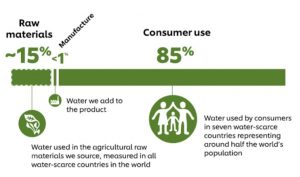
- The water footprint of US citizens is 2840 cubic meter per year per capita. Around 20% of this water footprint is insignificant. The largest outer water footprint of US consumption fabricates in the Yangtze River Basin, China.
- The multinational water footprint of compassion in 1996-2005 was 9087 billion cubic meters per year (74% green, 11% blue, 15% grey). The agricultural output provides 92% of this total footprint.
- Water shortage affects over 2.7 billion people for at least one month each year.
The accurate description of a water footprint varies according to what we are striving to measure. Still, a water footprint might be inferred. The percentage of water, directly and indirectly, used to benefit human consumption movements.
Image Source
https://images.app.goo.gl/hGzvoWmq35UQ9MXH7
https://images.app.goo.gl/1Csz9nQCEkZtnD2T9
https://images.app.goo.gl/izau6iBuJiQudccp6
Tags: #footprint, #freshwater, #geographical, #getgreengetgrowing, #globally, #gngagritech, #greenstories, #household, #humanity, #person, #plates, #product, #region, #town, #water




