Scientists involved in the study say the fossils could provide valuable insights into the type of species that once inhabited the region, as well as the environmental conditions that prevailed during the late Holocene.
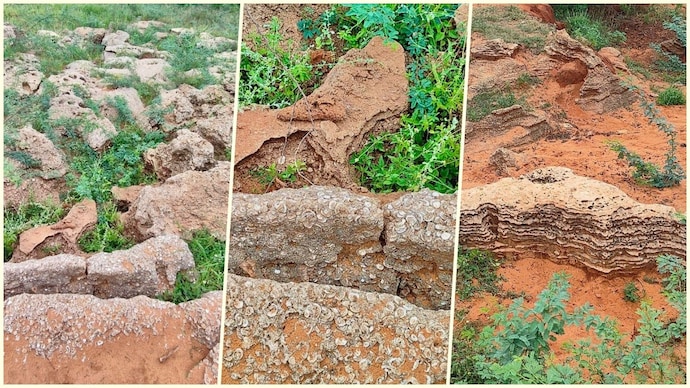
A chance discovery triggered by torrential rains has unveiled a remarkable window into India’s prehistoric past.
Fossils exposed in parts of Thoothukudi have been confirmed to be up to 12,000 years old, dating back to the Holocene period, Union Environment Minister Bhupender Yadav said.
The discovery came after intense rainfall in 2023 led to soil erosion, revealing buried fossil deposits across sections of the district.
________________________________________________________________________
Acting on a request from the local administration, the Zoological Survey of India (ZSI) conducted a detailed field survey of the exposed sites.

According to officials, the assessment has confirmed the presence of a previously unknown fossil bed, significantly enriching India’s record from the Quaternary Period. This period, spanning the last 2.6 million years, includes major climatic shifts, the rise of modern ecosystems, and early human development.
“These findings are crucial in helping us better understand India’s ancient biodiversity, environmental conditions, and climatic evolution,” Yadav said while sharing details of the discovery. He noted that such fossil beds act as natural archives, preserving evidence of life and landscapes that existed thousands of years ago.
________________________________________________________________________
WHAT FOSSIL HAS BEEN DISCOVERED IN TAMIL NADU?
Scientists involved in the study say the fossils could provide valuable insights into the type of species that once inhabited the region, as well as the environmental conditions that prevailed during the late Holocene.
By analysing the fossil composition, researchers can determine whether the area was once dominated by forests, grasslands, or even influenced by marine conditions.
The discovery is particularly significant because fossil records from this period in southern India remain relatively underexplored.
By the way, if you are interested in the rich ancient civilisation of Tamil Nadu, you must check out India Today’s ongoing series Time, Tide & Tamil, which chronicles the state’s fascinating journey from its ancient civilisational glory and cultural heritage to its uniquely influential modern politics. You can access the series here.

Experts believe the newly identified site could help fill critical gaps in understanding how ecosystems in the region responded to past climate changes.
Researchers also highlighted that these findings point to the role of natural events, such as heavy rainfall, in uncovering hidden geological treasures. However, they stressed the importance of protecting these sites from damage, as exposed fossils can deteriorate quickly if not preserved properly.
The Thoothukudi fossil bed is expected to undergo further scientific analysis, including detailed excavation and dating studies, to build a clearer picture of the region’s ancient past.
As India continues to expand its understanding of prehistoric life, discoveries like this not only shed light on bygone ecosystems but also offer clues to future environmental changes, making them as relevant today as they are historic.