Context: The discussion around gender, agriculture, and climate change is in focus, marks International Women’s Day, and 2026 has been officially declared the ‘International Year of the Woman Farmer’ by the UN.

About Gender, Agriculture, and Climate Change:
What it is?
- Gender-responsive agriculture recognizes that climate change does not impact everyone equally. In rural India, women form the backbone of the primary sector but face a triple burden: performing back-breaking farm labor, managing unpaid domestic care, and navigating climate-induced shocks (like droughts or floods) with fewer resources, land titles, or decision-making powers than men.
Data/Facts on Women in Climate Change and Agriculture:
- Workforce Dominance: Around 80% of rural women in India are engaged in agriculture, handling nearly 70% of all farm tasks.
- Sector-Specific Participation: Women contribute to 75% of crop production, 79% of horticulture, and a staggering 95% in animal husbandry and fisheries.
- Land Ownership Gap: Only about 13.9% of agricultural landholdings are registered in the name of women, limiting their access to credit and government subsidies.
- Feminization of Agriculture: Increasing male migration to cities has left women to manage farms independently, yet without formal farmer status.
- Climate Vulnerability: Female-led households in low-income countries lose significantly more income (est. billion globally to heat stress) because they lack the technology to adapt.
The Role of Women in Agriculture:
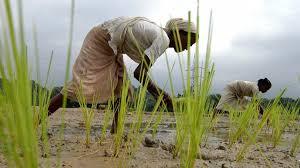
- Primary Cultivators: Women perform the most labor-intensive tasks like sowing, weeding, and manual harvesting.
Example: In the paddy fields of Chhattisgarh and Odisha, women are the primary workforce for manual transplantation and post-harvest processing.
- Livestock Managers: They are the chief architects of the dairy and poultry sectors, which provide critical income during crop failures.
Example: The Pashu Sakhis under the DAY-NRLM initiative provide doorstep veterinary services and manage livestock health in states like Rajasthan.
- Seed Guardians and Biodiversity Experts: Women traditionally preserve indigenous seeds that are often more climate-resilient.
Example: Women in the Deccan Development Society (Telangana) maintain community seed banks to preserve drought-resistant millets.
- Natural Resource Managers: They lead community efforts in water conservation and forest produce collection.
Example: Jeevika SHGs in Bihar have successfully adopted water-efficient techniques like drip irrigation and rainwater harvesting to tackle local water scarcity.
- Extension and Knowledge Disseminators: Women serve as community resource persons to train others in sustainable practices.
Example: Over 2 lakh Krishi Sakhis are currently being utilized by the Ministry of Agriculture to promote Natural Farming across rural India.
________________________________________________________________________
Initiatives Taken:
- Deendayal Antyodaya Yojana (DAY-NRLM): Has mobilized 10 crore women into 91 lakh SHGs to provide financial inclusion and livelihood support.
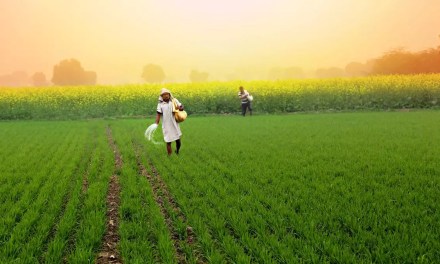
- Namo Drone Didi Scheme: Equipping 15,000 women SHGs with drones for precision agriculture (spraying pesticides/fertilizers) to reduce drudgery and increase income.
- Mahila Kisan Sashaktikaran Pariyojana (MKSP): A sub-component of NRLM specifically designed to empower women farmers through sustainable climate-resilient practices.
- Lakhpati Didi Scheme: Aiming to scale up the annual income of 3 crore (recently updated to 6 crore) women SHG members through entrepreneurship and market linkages like SHE-Mart.
Challenges Associated:
- Lack of Legal Recognition: Without land titles, women are often not recognized as farmers, excluding them from schemes like PM-KISAN.
Example: A 2021 Landesa study showed only 13% of women in UP and Odisha had legal documents despite doing the bulk of the farm work.
- Digital and Technology Divide: Modern tools and digital market platforms are often inaccessible due to lower literacy or lack of mobile ownership.
Example: Only 22% of rural women in India access the internet independently, hindering their use of real-time weather apps or e-NAM.
- Gendered Drudgery: Most farm machinery is designed for men (ergonomically and weight-wise), increasing the physical strain on women.
Example: The manual weeding process in paddy cultivation remains one of the most physically exhausting tasks for women due to the lack of small-scale weeders.
- Limited Decision-Making Power: While women do the work, the choice of crops and financial decisions often rest with the male members.
Example: In Maharashtra’s cotton belt, men typically decide on chemical inputs, while women manage the manual picking, often ignoring the health risks involved.
- Climate-Induced Migration Stress: As men migrate due to climate distress, women face an overload of domestic and farm work without extra labor.
Example: In Bundelkhand, recurrent droughts have forced massive male migration, leaving women to travel longer distances for water while also managing dried-up farms.
________________________________________________________________________
Way Ahead:
- Recognize ‘Farmer’ by Activity: Shift the legal definition of a farmer from landowner to tiller to ensure landless women get insurance and credit.
- Climate-Smart Drudgery Reduction: Promote gender-sensitive tools like cono-weeders and solar dryers through Custom Hiring Centres (CHCs).
- Hyper-Local Value Addition: Encourage processing units (e.g., flour mills, spice grinding) within villages to accommodate women’s limited mobility.
- Strengthen Land Rights: Implement reduced stamp duties for women and promote joint land titling as a mandatory requirement for housing schemes.
- Advanced Financial Products: Introduce parametric (weather-based) insurance and dedicated credit lines for women-led Farmer Producer Organisations (FPOs).
Conclusion:
Empowering women farmers is no longer just a social welfare goal but a strategic economic necessity to achieve a trillion economy. By shifting women from drudgery to decision-making, India can build a resilient agricultural system capable of withstanding the climate crisis. 2026 must be the year we finally recognize the woman in the field not just as a laborer, but as an entrepreneur and a leader.
NOTE – This article was originally published in Insights On India and can be viewed here