STORY HIGHLIGHTS
Uttarkashi tunnel mishap: 40 workers have been trapped in a tunnel in Uttarakhand for almost a week due to a landslide. Ongoing rescue efforts involve providing antidepressants to those trapped. Critics point out the risks associated with large-scale construction in this geologically sensitive region.
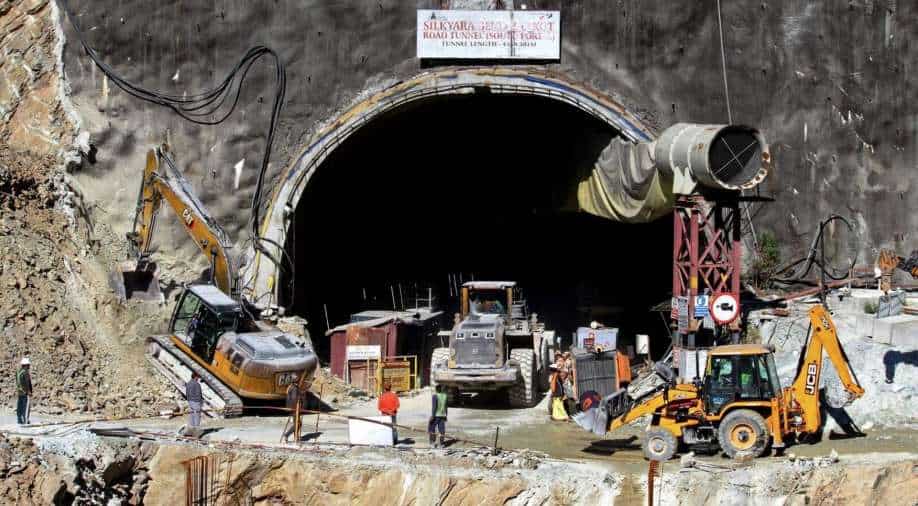
For nearly a week, 40 workers have been trapped in an under-construction tunnel in India’s mountainous state of Uttarakhand due to a landslide that demolished its entrance.
Rescue efforts, including attempts to insert wide pipes for the workers to crawl through, have been ongoing since November 12. The trapped labourers have been supplied with oxygen, food, and water through a pipe and are reported to be responsive, according to local authorities.
In the latest development, they have been given antidepressants to support them in managing the emotional impact of their ordeal.
The tunnel is a crucial segment of the flagship Char Dham highway programme, a project covering nearly 900 kilometres designed to enhance the travel experience for tourists and pilgrims visiting local Hindu temples.
This incident, the latest in a series of disasters in the Himalayan state in recent years, highlights the inherent risks of construction in this geologically sensitive region.
Critics contend that the construction of dams, roads, and other significant infrastructure in the area contributes to the increased frequency and severity of such incidents.
Over the years, scientists have scrutinised these large-scale infrastructure projects, citing the damage they bring about to the planet’s youngest mountain range.
______________________________________________________________________________
______________________________________________________________________________
“These areas need to be investigated first, the geology of the area needs to be understood before you start excavating an area. No proper environmental or geological assessment has been done there,” renowned geologist, Dr CP Rajendran told WION.
None of the local contractors digging these tunnels understand the geology of the area. The Char Dham project, in particular, has not undertaken any proper environmental assessment, he said.
The dangers of large-scale development are exacerbated by climate change, with scientists indicating that the Himalayas are experiencing warming at a significantly faster pace than the rest of the planet.
Asked if it was okay to undertake such a massive project like the Uttarkashi tunnel, Dr Rajendran answered with a “no”.
“You cannot have a massive project like this on a terrain like the Himalayas. These are not the Alps. The Himalayas are a young, dynamic, and growing mountain range, and the terrain itself is under tremendous pressure,” he added.
According to a 2021 study conducted by the Wadia Institute of Himalayan Geology (WIHG) and published in the Journal of Earth Systems, more than half of Uttarakhand, specifically 51 per cent, which includes Uttarkashi, is identified as being in ‘high and very high’ landslide-prone zones.
Experts argue that the mishap could also be attributed to the natural composition of the rocks.
The Silkyara tunnel is being built in an area comprising limestone and other soft rocks that have a tendency to collapse, explained Dr Rajendran.
“Since limestone is highly reactive to water, it tends to lose its rock mass in the long term and cannot handle the pressure from these big-scale construction activities,” he said.