The ancient thanksgiving rituals of the Kasada have been part of the lives of Indonesia’s Tenggerese people for centuries. Today, the increasingly unpredictable weather has made seeking divine blessings even more vital for this farming Hindu community.
The Tenggerese live in scores of villages in a national park on Mount Bromo, one of several active volcanoes in Indonesia that is popular with tourists. The park is located near the East Java city of Probolinggo, some 800 km (500 miles) south of Jakarta.

________________________________________________________________________
Read Also : Gardening for Kids: 7 Reasons Planting Seeds Enriches Their Lives
________________________________________________________________________


The community have held the Kasada festival since the 13th century Majapahit Empire to express their devotion and gratitude to their ancestors and gods.
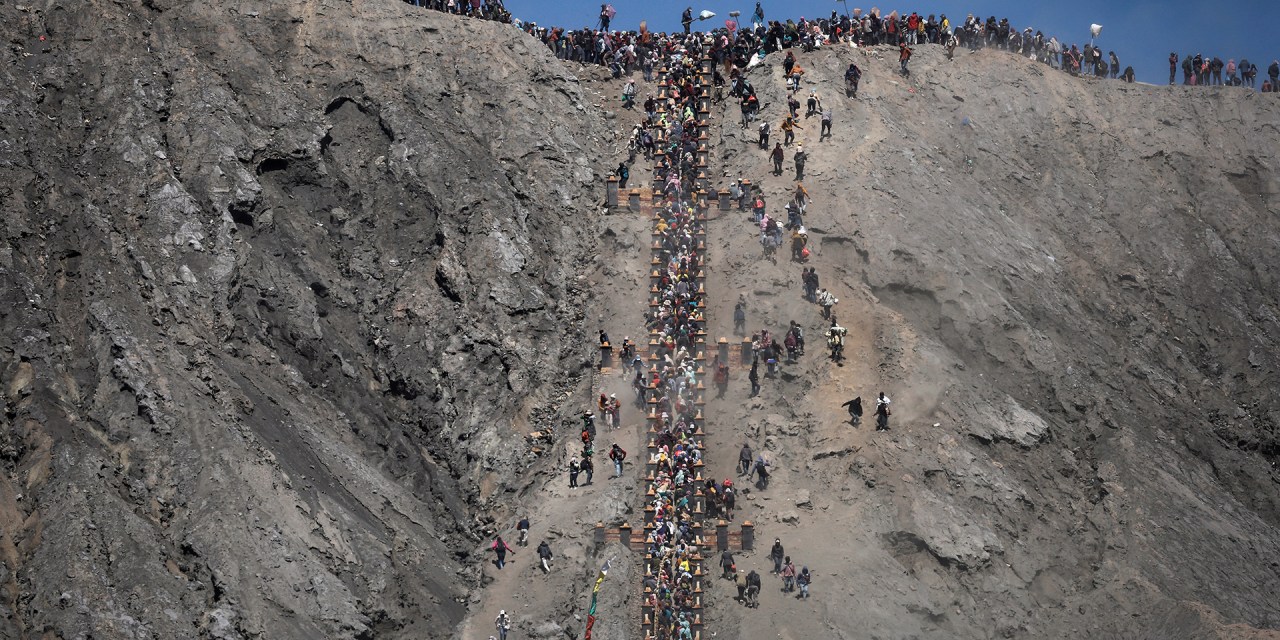
Carrying items that include vegetables, fruits as well as goats and other livestock, thousands of Teneggerese trek to the top of 2,329 meters (7641 ft) Mount Bromo, ending their ritual by hurling these offerings into the volcano’s crater.
Around midnight, thousands of worshippers gather at the bottom of Mount Bromo to start their procession, illuminated only by torches and moonlight.
This festival lasts all of Kasada, the ninth month of the Tenggerese Hindu calendar. Once the full moon rises, the Tenggerese Hindus start their hike towards the top of their sacred mountain.
These offerings to the ancestors and Hindu gods, which often consist of cigarettes, money, spring onions and livestock, cannot be bought or gifted.
Once they reach the top of the volcano, the pilgrims light incense, pray, and chant before they throw their offerings into the crater.
As pilgrims throw their offerings into the crater, some non-believers wait along the crater slopes with nets, hoping to catch some of them.
This ceremony, held to honor the god Sang Hyang Widhi, dates back to the 13th-15th century.
Luhur Poten Temple, made out of volcanic rock from the surrounding mountains, rests at the bottom of Mount Bromo, named after Brahma, the Hindu God of Creation.
“We pray for bountiful land for the year ahead, for the plants to grow healthy,” said Asih, a 64-year old farmer in Ngadirejo village near Mount Bromo, who like many Indonesians only goes by one name.
________________________________________________________________________
Read Also : GARDENING BEGINNER’S GUIDE
________________________________________________________________________
Asih said she used to be able to harvest her cabbage farm three times a year, but due to the scarce rains, she can now only manage one harvest.


“When there are no more rains, we cannot grow another cycle of crop,” Asih said. “Now they are parched like this,” she said, pointing to the withered vegetables. “Once they are dried out, the roots will not grow anymore.”
________________________________________________________________________
Read Also: India goes a step further in fighting climate change; officially updates NDC under Paris…
________________________________________________________________________
Last year, about two-thirds of Indonesia – including all of Java – experienced the most severe dry season since 2019 due to the El Nino weather phenomenon that lasting longer than usual and causing drought that hurt crops and exacerbated forest fires. This year, meteorologists expect more rain, but many farmers are still struggling.
Farmers in Mount Bromo rely on rain and rain-fed lakes for irrigation, but the drier weather has forced farmer Irawan Karyoto, 56, to plant less lucrative spring onions instead of potatoes in his 2-hectare (5 acre) plot.


Both Asih and Irawan were part of the procession of Tenggerese that offered prayers at the temple at the base of the volcano. Asih also brought her 5-year-old granddaughter.
Clutching their offerings, the worshippers then walked across sand dunes to climb to the volcano’s crater.
“To respond to what the Almighty has conveyed through nature, the people must adapt and they should not forget to pray,” said Suyitno, a Tenggerese spiritual leader.
NOTE – This article was originally published in reuters and can be viewed here