https://images.livemint.com/img/2020/05/04/600×338/LSleadpic_1588607357263_1588607357496.jpg
India as a country has billions of people from diverse cultures. India is looking for civilization to develop its rightful place in the world. India’s growth story has changed its perception of the world. From a land of snake charmers- people perceive it as a land of global entrepreneurs. Across what goes unnoticed are the efforts of the Indian farmers. The industry is keeping pace with its ever-increasing numbers and ensuring food security for the nation.
________________________________________________________________________
“Buy Organic Products Online at best prices at http://www.getgreen.co.in “.
________________________________________________________________________
Indian agriculture is the most misunderstood sector. Three sectors drive any economy:
- Services sector
- Manufacturing sector
- Agricultural sector
India is at number eleven in the service sector. Number twelve in the manufacturing sector and number two in the agricultural sector. How many Indians do know this?
It has been projected that a very high level of pesticide residue is found in food commodities. In 2005 and 2006 the ministry of the agricultural department started its monitoring. And similar reports are found in all other countries of the world UK, the USA, and Australia.
_______________________________________________________________________
Read Also : ELEGANT & EFFICIENT: BEST PRACTICES IN AGRICULTURE
________________________________________________________________________
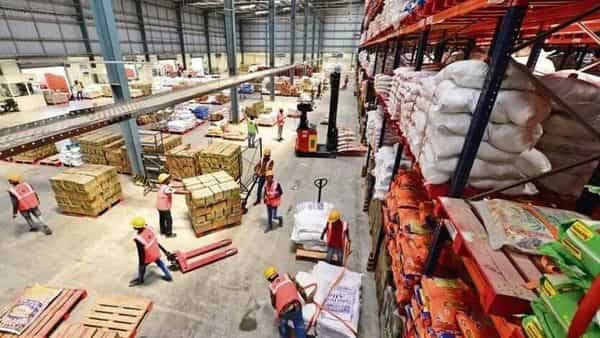
What is one of the major problems faced by Indian Agriculture in India? Storage facility problem. Agriculture being the seasonal activity makes it impossible to grow crops in all seasons. So the crops are grown in a particular season and stored in warehouses for later use. And what if this storage facility is not available? Crops will get wasted. Let us get into more depth about storage facilities in Indian Agriculture.
Storage in Indian Agriculture

In the absence of a storage facility, everyone will be starving in the offseason. The sad truth is that India’s storage facilities are insufficient. Because of this insufficient storage facility, 16% of our agricultural produce gets wasted. Insufficient storage makes it hard to meet the demand of people during the off-season. As a result of this the price of several crops increases. These sudden and sometimes unrealistic high prices are met with unrest and protest among people. Because citizens find it expensive to put together a simple meal. To solve these problems we need a better storage facility. But we are aware that the efficiency of the public sector has been great with this initiative in the past.
But, why can’t the private sector build storage facilities? The private sector promises reasonable prices to customers. So why can’t they make this promise happen?
The answer is the private sector is not incentivized to build these warehouses. This is because of a 64-year-old act called the essential commodities act. According to the ECA, the supply and storage of an essential commodity are regulated. This means the government is saying that you can’t store more than we tell you to.
Why does the government regulate storage?
The government regulates storage because every time there is rice in the price of the crop, it is because supply is too little and demand is too high. To increase supply if a stocking limit had to be imposed on these warehouses. Asking these warehouses to get rid of whatever extra stock that they were piling up. That means the supply would increase and the prices would start moderating. However, did this work as expected? Not really. We can consider a case of an onion price hike in the year 2019.
In the year 2019 the price of onion sold from seven rupees to Rs 200 per kg. Which is quite a steep hike.
So, how does such a steep hike happen? To know this let us go back to the story of how onions were grown.
______________________________________________________________________
Read Also : Smart Farming: The Future of Agriculture
______________________________________________________________________
Onions were grown during two seasons, the rabi season which is during April and May. And the Kharif season is during October and November. In August of 2019, India was stuck with a very heavy monsoon. Storage of a lot of Onions took place in these warehouses. Disastrous flooding came as a wind of danger and destroyed the stored onions. As a result of this, onion prices increase from Rs. 7 per kg in January to Rs. 80 per kg in September. To increase supply the government imposed a stocking limit asking warehouses to get rid of whatever stocks of onions they had.
This worked initially and prices moderated to the extent. After this people were eagerly waiting for the next season in October and November. In this season people expected harvesting of Onion. However, the rain gods weren’t kind at all. Many of these fields experience flooding as well. As a result of this very few crops started making their way to the market. And since the government had earlier imposed a stocking limit asking these warehouses to get rid of whatever they had. Or whatever extra onion they had piled up. Warehouses of India were almost depleted of onions which is why the price sold Rs. 200 per kg.
India was so depleted on onions at one point that we had to import onions. So the law came forward to prevent price hikes. Further, increased prices and didn’t encourage private investors to invest in storage.
Change in the law
This law needed change and that’s what the government of India decided to do. After 65 years, the government has thought to do away with the stocking provisions.
- This a great leap towards freeing up the agriculture market.
- To encourage private investors to invest in the storage facilities.
- And, to reduce the fluctuation in prices that we often encounter.
Tags: #agri, #agriculture, #agriculturelife, #agro, #farm, #farmer, #farmerlife, #farmers, #farmerslife, #farmersmarket, #farming, #farmlife, #food, #getgreengetgrowing, #gngagritech, #greenstories, #india, #johndeere, #love, #nature, #organic, #Tractor, #tractors, insufficient storage, insufficient storage problem