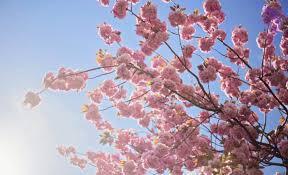

Some of Japan’s cherry trees are no longer reaching full bloom, with entire displays failing after unusually mild winters, according to new research.
The study reframes spring not as an earlier arrival but as a weakened one, where warmer seasons can quietly erase the spectacle itself.
Where the fading begins
In Kagoshima on Kyushu, Japan’s southwestern main island, Tokyo cherry trees still flower, but many no longer fill out.
Toshio Katsuki analyzed decades of observations at Japan’s Forestry and Forest Products Research Institute
The results showed that warmer southern conditions directly produced these diminished displays.
In those same locations, blossoms appeared later than expected and opened unevenly.- leaving gaps where dense color once spread across entire trees.
Uneven and incomplete flowering points to a deeper disruption in how trees respond to seasonal change, setting up the need to understand what winter no longer provides.
Buds rely on winter chilling
Cherry trees need winter chilling, a long stretch of seasonal cold, before warmer days can unlock a strong spring response.
Without that reset, buds do not finish their resting phase, and spring warmth arrives before many flowers are ready.
The result is a mixed signal inside the tree, where some buds open late, some stall, and some simply drop.
That helps explain why warmer winters can erase the very spectacle that warmer springs once seemed to amplify.
Climate change and bloom failure
Across much of Japan, warming first showed up in Tokyo cherry as an earlier spring, not a failed one.
By 2009, long Japanese records had already established blossoms as a climate signal, because higher temperatures kept pushing spring displays earlier.
Southern Japan now breaks that rule, because missing winter cold delays blooming even when spring itself runs warm.
The change matters beyond one island, because it shows climate damage can arrive as failure, not just earlier timing.
Peak bloom is harder to predict
Festival calendars revolve around full bloom, the moment 80% of blossoms open, because that is when the display looks complete.
When winter cold runs short, that synchronized rush breaks apart and the gap between first flowers and peak bloom grows longer.
At colder sites, trees usually reached that peak within five to nine days, but milder sites often stretched far beyond that.
Some years in the south never cleared the official threshold at all, which makes the festival date harder to predict.
Buds that are failing
Delayed timing was only part of the damage, because many buds never opened at all after mild winters.
Across 12 sites in 2024, opening rates stayed between 68% and 98% above the cold threshold, then collapsed below it.
At one warmer Kagoshima site, only 53% of flower buds opened, while a cooler comparison site reached 98 percent.
Leaf buds suffered too, and fewer leaves meant less energy for the following year’s flowers as well.
Economic and emotional toll
Blossom viewing has shaped spring in Japan for more than 1,000 years – tying parks, travel, and family rituals together.
When flowering thins or drifts late, hotels, restaurants, and local festivals lose the brief surge they count on.
“Its loss would not only cause economic damage, but also deeply harm people’s spirits,” Katsuki said.
That warning gives the findings emotional weight, because the issue reaches far beyond scenery or tourist spending.
Trouble heads north
Today’s southern problem could travel north as Japan warms, because safe winters may stop delivering enough cold.
Researchers flagged Kyoto, Tokyo, and Osaka as places where milder winters could eventually weaken the famous displays.
They also pointed to other popular viewing sites, including southern South Korea and Washington, D.C., as future pressure points.
That wider map turns a local bloom problem into a warning for cities that built spring around one tree.
Species that grow in warmer conditions
Keeping festivals alive may require planting different cherries – not just guessing bloom dates more accurately.
Researchers suggested trees with lower cold needs, because they can complete winter rest before warmer conditions interrupt development.
One candidate comes from southern Japan, where the cherry species Cerasus jamasakura grows naturally in warmer conditions.
Any swap would change the look of familiar parks, which is exactly why cities need time to plan.
Why continuous records matter
Japan’s blossom forecasts rest on a national record that makes this change visible today.
Since 1953, the Japan Meteorological Agency has logged flowering and full bloom at standardized observation trees.
That continuity let researchers compare warm Kagoshima against cooler Kumamoto, about 87 miles north, and spot a reversal.
The same records can now help parks decide where classic cherries still work and where adaptation has to begin.
Japan’s cherry trees are showing that climate change does not only move spring forward, it can also break it apart. What happens next depends on how fast winters warm and how cities adapt.
The study is published in the International Journal of Biometeorology.
NOTE – This article was originally published in Earth and can be viewed here