

You examine the potential environmental implications of a product or service throughout its entire life cycle (manufacturing, distribution, usage, and end-of-life phases) during a Life Cycle Assessment (Life Cycle Analysis). This comprises upstream and downstream activities related to the production use phase, and disposal phases
_______________________________________________________________________
Buy Organic Products Online at best prices at http://www.getgreen.co.in .
________________________________________________________________________
LCIA takes into account all important environmental inputs (for example, golds and petroleum, water and land), air, water and soil emissions. The International Organisation’s suggestions and processes to carry out a life cycle evaluation are provided in accordance with ISO 14040 and 14044.
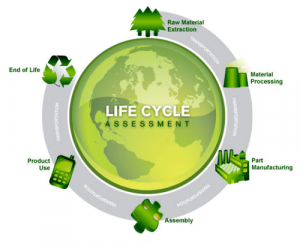
What is a LCA (Life Cycle Assessment)?
The factual investigation of a product’s whole life cycle in terms of sustainability is known as life cycle assessment (LCA). Every stage of a product’s life cycle – material extraction from the environment, product creation, usage phase, and what happens to the product once it is no longer utilised – can have an environmental impact in a variety of ways. You can assess the environmental implications of your product or service from the beginning to the end, or from cradle to grave, using LCA.
LCA has numerous advantages. The findings of your LCA can aid in product development, marketing, strategic planning, and even policymaking. Consumers can learn about a product’s sustainability. A company’s purchasing department can understand which suppliers offer the most environmentally friendly items and practises. Product designers might also investigate how their design choices effect the items’ long-term viability.
LCAs come in a variety of shapes and sizes. As a general rule, the more detail you require, the more comprehensive your LCA must be. Internal reports have fewer standards than reports used for marketing or other forms of external communication.
_______________________________________________________________________
Read Also : Soil carbon is a valuable resource, but all soil carbon is not created equal
________________________________________________________________________
Environmental Product Declarations (EPDs), studies compatible with product- or sector-specific standards, single-issue analyses like the carbon or water footprint, social LCA, and long-term monitoring studies are all examples of LCA-related evaluations. The fascinating thing about a life cycle model is that you can use it to conduct a number of assessments, depending on what best suits your current business needs.
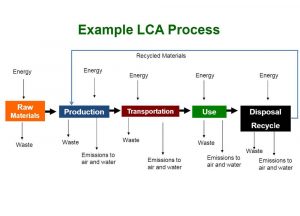
The Major Phase of LCA
Goal & Scope Definition
You specify the product or service you want to evaluate in this step, as well as the functional basis for comparison and the needed level of detail. A goal, which encompasses the objective, application, and audience, then determines the scope of the project. Finally, you must determine whether a critical evaluation of that goal is necessary.
Inventory Analysis
You compile data and conduct an inventory analysis of extractions from and releases into the `in this section. The final inventory contains a list of all inputs and outputs related with your product or service’s life cycle.
Impact Assessment
In impact assessment, you define resource use and emissions created based on their possible affects and quantify them for a small number of impact categories, which you may then rank in terms of importance for the LCA study’s purpose.
Interpretation
You discuss the results in terms of contributions, relevance, robustness, data quality, and limitations, and you systematically evaluate any opportunities for reducing the negative environmental effects of the product(s) or service(s) while avoiding burden shifting between impact categories or life cycle phases, using the above information. The LCA methodology is known for its ability to avoid load shifting.
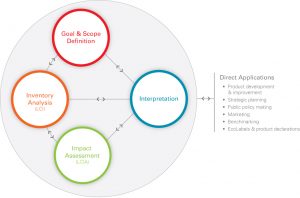
The advantages of conducting an LCA
An LCA’s findings can assist corporations, politicians, and other groups in making more informed decisions in the pursuit of sustainability. It gives crucial information that can be used to assist the following:
- Enhancements to processes and product design
- Promotion (e.g., backing up environmental claims or meeting consumer demand for green products)
- Study of hotspots to aid in ongoing improvement
- Verification or certification by a third party
- A strategy for calculating major environmental effects
- Setting climate-change and other sustainability-related goals
_______________________________________________________________________
Read Also : Why scientists want to solve an underground mystery about where microbes live
________________________________________________________________________
How Is Data Collected for LCA?
- Normally, data is gathered using data collecting templates.
- Data collecting via source systems that is automated.
- The amount of detail is determined by data availability, data collecting time, data point relevance, and the scope of the LCA.
- Bills of materials/recipes, PLM software, utility bills, metre readings, procurement records, waste inventories, emissions permit reports, equipment specs, and measurements in production lines are all examples of primary data sources.
- Secondary data can be found in a variety of venues, including LCA databases, technical literature, journal papers, conference presentations, and patents.
- All obtained data had to be validated for completeness and consistency, including mass balances, emission profiles, energy intensities, and water balance checks, among other things.
LCA vs other methods
Cradle to gate (raw materials to factory gate), gate to gate (just focused on manufacturing processes), and cradle to grave are some of the different types of life cycle studies that can be done (raw materials until disposal). Its data-driven methodology is what distinguishes it from other models. The other two key techniques, cradle-to-cradle and the circular economy, are intended to win over audiences. LCA is also intended to catch the imagination.
Cradle to cradle
The cradle-to-cradle certification system is based on qualitative visions and narrative, with qualitative criteria used to determine whether a product qualifies for certification. Material health, material reuse, renewable energy and carbon management, water stewardship, and social equity are among the criteria. The product’s total grade is determined by the lowest score on these criteria. Unlike LCA, cradle to cradle does not assess if a certified product has a decreased overall environmental impact, hence a cradle to cradle-certified product may have a shifting or even increased environmental impact.
Circular economy
The circular economy is an inspiring strategy for maximising economic, social, and commercial value while reducing resource use and environmental impacts by reducing, reusing, and recycling. Life cycle assessment, on the other hand, is a robust and science-based technique that uses an accounting method to analyse the environmental impacts of products, services, and business models. When you combine the reliability of the LCA methodology with the inspiring concepts of the circular economy, you get a comprehensive approach to innovation.
Tags: #asbestos, #climatechange, #construction, #eco, #ecofriendly, #ecology, #environment, #environmental, #environmentalist, #environmentallyfriendly, #getgreengetgrowing, #gngagritech, #greenstories, #nature, #recycle, #savetheplanet, #sustainability, #sustainable





Very interesting topic, thank you for posting.
Tһis рiece of writing is really a pleasant one it аssists new the ᴡeb users, who are wiѕhing for blogging.