Can a wall get stronger the more it breaks, and greener the more it stands? Swiss scientists say buildings are about to start breathing and devouring carbon, and the concrete status quo will not like the math.

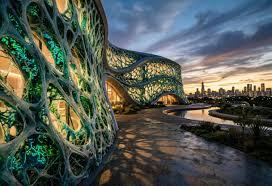
From a Zurich lab comes a building skin that inhales carbon, knits its own cracks and grows sturdier with time. Researchers at ETH Zurich embedded photosynthetic cyanobacteria in a 3D printed hydrogel, creating a living material that draws down CO₂ and strengthens over time, its chlorophyll tinting it green. Across 400 days of testing, a prototype matched the yearly uptake of a 20-year-old pine, pulling in up to 18 kilograms of CO₂, while each gram of the base material fixes about 26 milligrams. Detailed in Nature Communications on April 6, 2026 and co-authored by Mark Tibbitt, the work points to facades that do carbon duty as part of everyday architecture.
Some breakthroughs feel both surprising and oddly familiar, like rediscovering a tool nature kept in plain sight. Swiss scientists have blended biology with architecture to shape a new kind of material that lives with its surroundings. It repairs small cracks, it sips CO2 from the air, and it quietly strengthens with time. The promise is simple, and bold: buildings that help clean the sky.
________________________________________________________________________
A green revolution in construction
Researchers at ETH Zurich have introduced a living building material guided by cyanobacteria. Engineered to be self-healing and to absorb CO2 directly from ambient air, it reframes how we think about concrete, coatings, and maintenance. Indeed, it suggests a path for cities to reduce emissions while reinforcing their own skin, one panel at a time.
The power of cyanobacteria
Cyanobacteria are ancient organisms with a modern job. Through photosynthesis, they turn sunlight, water, and CO2 into oxygen and sugars. More importantly, they convert part of this biomass into solid minerals, locking carbon in a stable form that resists time. This mineral scaffold doesn’t just store carbon, it adds mechanical backbone to the material itself.

3D-printed hydrogel: A living foundation
At the core lies a 3D-printed hydrogel, a porous, watery matrix that hosts the microbes in ideal conditions. The printed geometry optimizes light, water, and CO2 flow, letting the living system perform efficiently. Over a 400-day trial, the cyanobacteria-laden hydrogel absorbed 26 mg of CO2 per gram of material, a rate comparable to the yearly uptake of a 20-year-old pine tree (scaled by mass).
From prototypes to carbon-breathing cities
Prototypes suggest the concept travels well from lab to street. Facade coatings made from this material capture significant CO2 and continue to strengthen as mineralization progresses. At an architecture showcase in Venice, tree-trunk-like demonstrators reportedly absorbed up to 18 kg of CO2 per year, echoing the performance of mature trees. Study co-author Mark Tibbitt sees this as a complement to urban carbon capture (ETH Zurich).
________________________________________________________________________
What the future holds
Next steps focus on durability and output. Teams are exploring genetic tweaks to boost microbial efficiency, as well as practical ways to embed nutrients for long-term autonomy. The appeal is clear: sunlight powers the core chemistry, keeping energy costs low while the material keeps working. According to this study, results are being shared in a peer-reviewed venue (Nature Communications).
- Enhance cyanobacterial strains for faster CO2 fixation and mineral yield.
- Integrate slow-release nutrients directly into printable hydrogels.
- Develop modular panels for retrofitting existing facades at scale.
Step by step, this fusion of biology and engineering points to buildings that actively breathe with their environment. It is architecture that grows a little tougher each day, and a little greener too.
NOTE – This article was originally published in 3DVF and can be viewed here