On top of all the other dazzling biology, mangrove forests are massive carbon sinks.
In fact, according to new research on a Mexican mangrove forest, they can keep carbon out of the atmosphere for millennia.
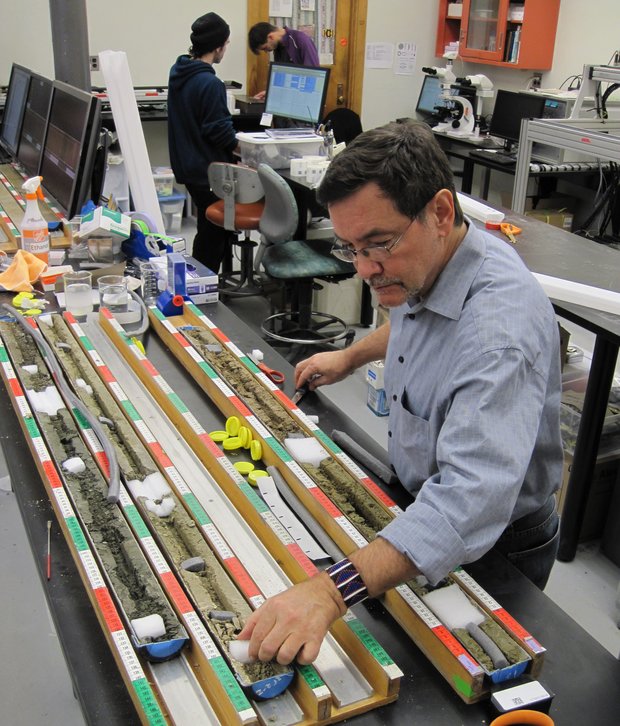
A study published in Marine Ecology Progress Series has found that the carbon stored in peat under the mangrove forest is over 5,000 years old.
___________________________________________________________________________________________________________________
Read Also: Waste management a grave problem in Dharamsala
____________________________________________________________________________________________________________________
“What’s special about these mangrove sites isn’t that they’re the fastest at carbon storage, but that they have kept the carbon for so long,” says co-author Emma Aronson, an associate professor in microbiology and plant pathology at the University of California, Riverside, US.
“It is orders of magnitude more carbon storage than most other ecosystems in the region.”

It’s well-known that mangroves, like other plant ecosystems, are good at absorbing CO2 from the atmosphere and storing it in soil, with the help of a range of different microbes.
In a wet, oxygen-low environment – like under mangrove forests – the organic matter can form carbon-rich peat.
_________________________________________________________________________________________________________
Read Also : Implementing Artificial Intelligence in Waste Management
__________________________________________________________________________________________________________
But soil carbon storage is rarely permanent: over decades or centuries, the carbon is cycled back into the atmosphere. (To learn more, read our explainer on soil carbon storage.)
The researchers set out to examine the microbial life, as well as the carbon and nitrogen storage, of marine mangrove forests near La Paz in Mexico.
They used radiometric dating to figure out the age of the peat, placing the oldest at 5000 years, give or take about a century.
This extreme age surprised the researchers – while it’s not as old as the peat under Artic or Antarctic permafrost, it’s much older than surrounding ecosystems.
They’re now hoping to examine other mangrove sites in North and Central America to see whether they have similarly ancient carbon.

“These sites are protecting carbon that has been there for millennia. Disturbing them would cause a carbon emission that we wouldn’t be able to repair any time soon,” says first author Dr Matthew Costa, a coastal ecologist at University of California, San Diego, US.
_________________________________________________________________________________________________________________
Read Also: Soil carbon is a valuable resource, but all soil carbon is not created equal
__________________________________________________________________________________________________________________
Costa says that protecting mangroves from disruption would have a significant effect on the climate.
“If we let these forests keep functioning, they can retain the carbon they’ve sequestered out of our atmosphere, essentially permanently.
“These mangroves have an important role in mitigating climate change.”
NOTE – This article was originally published in cosmosmagazine and can be viewed here
Tags: #carbon, #climate, #environment, #forest, #getgreengetgrowing, #gngagritech, #greenstories, #microbiology, #nature, #plant, #soil