In the first three seconds after “Little Boy” detonated over Hiroshima, temperatures soared to 7,000 degrees Fahrenheit, reaching as far as two miles from ground zero.
For context, the temperature of the lava that emerges from a volcanic eruption is about 2,400 degrees Fahrenheit. A spacecraft re-entering the earth’s orbit might encounter temperatures of up to 4,000 degrees Fahrenheit. The surface of the sun clocks in at a cool 6,000 degrees Fahrenheit.
Anyone who was within the blast radius died instantly, buildings melted and most of the city turned to ash in a raging firestorm. However, for six Ginkgo biloba trees growing just about a mile away from the hypocenter of the blast, this was just another event to overcome.
Stripped of leaves and charred by the explosion, these trees sprang back to life within months, defying all odds. This is but one chapter in the astonishing saga of Ginkgo biloba, a species that has weathered not only nuclear devastation but also the ice age, mass extinctions and eons of environmental upheaval.
________________________________________________________________________
Read Also: 30 Ocean Pollution Facts, Stats, and Solutions
________________________________________________________________________
These arboreal ancients are more than trees—they are living monuments to resilience, evolution and survival.
Ginkgos Haven’t Changed Much Since The Age Of The Dinosaurs
Ginkgo biloba is often called a “living fossil,” and with good reason. Its lineage dates back over 290 million years to the Permian period, predating even the dinosaurs. With their distinctive fan-shaped leaves and hardy structure, ginkgo trees have remained virtually unchanged over millennia.
While many species succumbed to this mass extinction, ginkgos persevered. However, their dominance waned in the following millennia as flowering plants emerged and diversified, competing for resources and space.
By the end of the Pleistocene, wild ginkgos were reduced to isolated populations in China. They teetered on the brink of extinction but managed to hold on, thanks to a combination of natural resilience and a surprising ally: humanity.
Humans Helped Keep The Ageless Ginkgos Alive
Many of the ginkgos living today are more than mere survivors—they are veritable ancients. In China’s Zhongnan Mountains, a 1,400-year-old ginkgo tree stands near Gu Guanyin Buddhist Temple, its golden leaves carpeting the temple grounds each autumn.
Over its lifespan, this tree has lived through some of the most defining events in human history: the rise and fall of the Tang Dynasty, the establishment of the Silk Road trade routes and the global upheavals of the Industrial Revolution.
Remarkably, ginkgos were thought to be extinct in the wild until the early 20th century when small populations were rediscovered in remote regions of China.
________________________________________________________________________
Read Also : Education – Influential Instrument for Social Change,
________________________________________________________________________

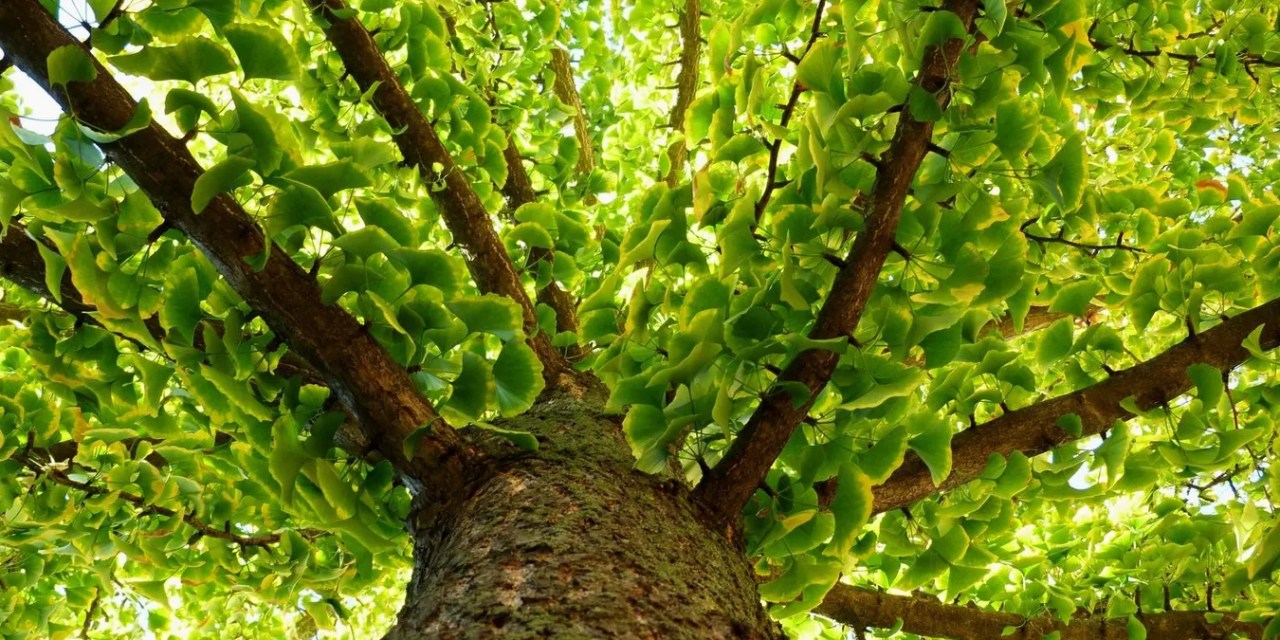
Once thought to be extinct, Ginkgo biloba trees can now be found gracing parks and temples the world … [+]
Researchers now believe that some of these populations were preserved and cultivated by Buddhist monks, who revered the trees for their beauty, resilience and medicinal properties. It’s an ironic twist—in an era when humans are often responsible for ecological destruction, we played a pivotal role in saving a species that predated us by millions of years.
Today, ginkgo trees grace city streets, parks and temple grounds worldwide. Their resilience makes them ideal for urban environments—they are resistant to pollution, pests and harsh weather. But their longevity isn’t just a matter of circumstance; it’s deeply rooted in their biology.
The Genetic Gift That Keeps On Giving—Even For Thousands Of Years
Unlike most organisms, ginkgos exhibit no clear signs of senescence, the biological aging process that eventually leads to death. Even 600-year-old ginkgo trees maintain the same vitality and immune responses as their younger counterparts, according to a January 2020 study published in Proceedings of the National Academy of Sciences.
At the cellular level, ginkgos continue to produce antioxidants and antimicrobial compounds throughout their lives, warding off disease and infection. Their cambium—a layer of stem cells in the trunk—remains active and robust, enabling continuous growth.
________________________________________________________________________
Read Also: 30 Ocean Pollution Facts, Stats, and Solutions
________________________________________________________________________
Intriguingly, some studies suggest that older ginkgos may even grow faster than younger ones, a phenomenon attributed to their increasing girth and ability to store and transport nutrients efficiently. This ability to sustain metabolic functions and structural integrity over centuries is unparalleled in the plant kingdom.
Moreover, ginkgos are remarkably adaptable. They can regenerate from damage—whether caused by natural disasters or, as Hiroshima demonstrated, nuclear blasts. Their deep root systems anchor them firmly in the soil, allowing them to access water and nutrients even in harsh conditions. This resilience is enhanced by their thick bark, which provides a natural barrier against pests, diseases and environmental extremes.
Interestingly, the ginkgo’s genetic makeup plays a crucial role in its longevity. Studies have revealed that genes associated with pathogen resistance and stress response remain highly active even in ancient specimens. This constant production of protective compounds is akin to an immune system that never falters, a trait that ensures these trees can withstand the tests of time.
The story of Ginkgo biloba and its perseverance over millennia is a testament to nature’s resilience that stands as tall as the trees themselves. How does it feel to see the natural world adapt and survive even in near-impossible circumstances? Take a 2-minute quiz to see where you stand on the Connectedness To Nature Scale.
NOTE – This article was originally published in forbes and can be viewed here
Tags: #climate, #dinosaurs, #earth, #environment, #getgreengetgrowing, #gngagritech, #greenstories, #life, #LivingFossil, #nature, #Temperatures, #trees