
Hilly and mountainous landscapes store significantly more carbon in their soil than scientists had previously estimated – roughly twice as much as existing global models predicted.
The finding flips a long-standing assumption: that rapidly eroding terrain would have thin, carbon-poor soils. The reality, it turns out, is closer to the opposite.
And getting this right matters, because soil holds more carbon than vegetation and the atmosphere combined.
The research was led by Brooke Hunter, who conducted the work as a doctoral student at the University of Oregon and is now an assistant professor at the Appalachian State University).
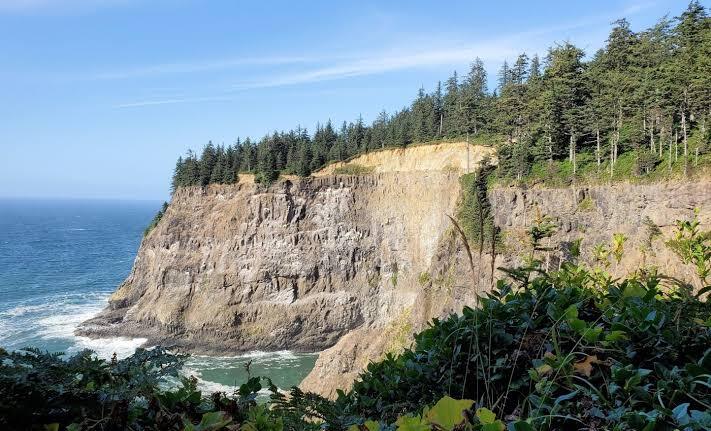
The team studied nearly 10,000 landslides in the Oregon Coast Range – ranging in age from 4 to 480,000 years old – and built a detailed picture of how carbon accumulates in the deep soils that landslides leave behind.
The misconception about mountains
The assumption that mountainous terrain is a poor carbon reservoir has a certain logic to it, since steep slopes erode quickly and soil doesn’t have time to accumulate.
That reasoning, it turns out, was missing something important.
“There was a misconception that mountainous areas would not hold much carbon because they’re so rapidly eroding and there’s not much soil,” said study co-author Josh Roering.
“What we’re saying is, it’s actually the opposite. These areas can be impressive reservoirs of soil organic carbon.”
The key is what happens after a landslide. When a slope fails and deposits its material, it creates a stable pocket of deep, fine-grained soil that can persist for hundreds of thousands of years.
Over time, that soil weathers and thickens, and the older and deeper it gets, the more carbon it holds.
________________________________________________________________________
Going deeper than the models
Previous estimates of soil carbon storage have typically assumed soil depths of around 30 centimeters.
That’s roughly the depth of a standard agricultural field, the kind of landscape that has dominated carbon research for decades, because flat terrain is easier to study and measure.
What the Oregon Coast Range data showed was something different. Landslides in the study area contained soil deposits more than five meters deep in many cases.
And thicker soils, the researchers found, don’t just hold more carbon by virtue of their volume. They also contain higher concentrations of carbon per unit.
This is because the fine-grained particles produced by thousands of years of weathering are exceptionally good at binding organic carbon and holding onto it.
“These deep weathering zones are really good at holding carbon,” Roering said. “The older they are, the more weathered they are and the thicker they are, and the more carbon they can store.”
To build their estimates, the team drilled into a representative sample of six landslides and measured carbon density directly. From that data they constructed a timeline covering all the landslides in the study area and extrapolated a model for the entire region.
The result: carbon stocks in deep-seated landslides are roughly twice what the leading global model had predicted.
Carbon budgets and climate solutions
The implications extend beyond getting the numbers right. Soil carbon is increasingly central to discussions about natural climate solutions – approaches that work with existing landscapes to remove carbon from the atmosphere rather than relying purely on technology.
Some of those approaches involve sprinkling minerals across land to enhance the natural weathering of rock, which draws down CO2.
Others involve managing soils to increase how much carbon they absorb and retain – but both methods depend on knowing what’s already in the ground.
“When we think about terrestrial carbon, soil contains more carbon than vegetation and the atmosphere combined,” Hunter said.
“In order to have an accurate understanding of carbon budgets, we need to know how much carbon is in the soil and where it’s most concentrated.”
Rethinking mountain carbon
Better maps change what’s possible. If you don’t know where the carbon is, you can’t protect it and you can’t accurately model what natural interventions might achieve.
“When it comes to soil management and natural climate solutions, there isn’t one miracle fix,” Hunter said.
“Incorporating these models can help determine what specific methods might be effective at specific sites.”
“If you are going to manage the landscape for carbon, you would want to know where the areas with high amounts of carbon are and prioritize management practices that preserve them,” Roering concluded.
The study is published in the journal Science Advances.
NOTE – This article was originally published in Earth and can be viewed here