Mars and everything around it have remained a topic of fascination for humanity since antiquity. The red planet, the hue of which is visible even with the naked eye has been a god, a planet of aliens, a planet of invaders and whatnot. Scientific study over decades has led to the conclusion that Mars indeed had water on its surface millions of years ago and possibly life. But conclusive proof of the latter is still to be found. But scientists are sure that Mars was a watery world once upon a time.
Perseverance, NASA’s rover that’s roaming on the Martian surface carrying out important observations, recently found evidence of gushing water.
________________________________________________________________________
Read Also : Why climate change is still the greatest threat to human health
________________________________________________________________________
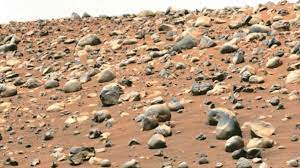
NASA released a photo earlier this month. The image, captured by Prserverance’s Mastcam-Z camera, shows a curious collection of rocks and pebbles strewn around in Mars’ Jezero Crater.
The exact location? ‘Castell Henllys’ in the Jezero Crater. NASA has said that the rocks and pebbles visible in the photo were brought in by ‘strong flood waters billions of years ago’.
Among the important objectives of the Perseverance mission are those that deal with Astrobiology, which involves conclusive evidence of life on another planet.
The ‘life’ may not always be the antenna-bearing aliens we’ve come to know through popular media but even conclusive proof of micro-organisms, or their fossils on Mars will be a groundbreaking discovery.
________________________________________________________________________
Read Also : Climate science is supporting lawsuits that could help save the world
________________________________________________________________________
Why do we always search for water on other planets?
The answer is around us on our own planet. After the lifeless phase Earth endured in the very early years of its formation, life started in water in the form of microorganisms which then led to the formation of complex aquatic organisms. Scientists believe that animals and plants on land developed afterwards.
It is then almost a given that if a planet has water, there are greater chances of it developing life forms. Other than Mars, one of the favourite candidates for search for life is Europa, the satellite of Jupiter. Europa is a frozen world and scientists believe that there is a vast liquid ocean below the thick ice cover which may harbour life.
NOTE – This article was originally published in wionews and can be viewed here
Tags: #climate, #climatechange, #climatecrisis, #climaterisk, #earth, #environment, #floodwaters, #getgreengetgrowing, #gngagritech, #greenstories, #life, #mars, #NASA's, #planet, #rover, #water