There are serious environmental challenges facing our planet, but there are also researchers, communities, and organizations developing new solutions every day.
Learn, hope, and share this news with your friends.
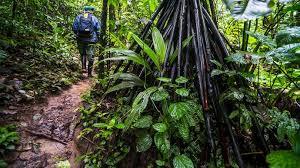
Rainforest Biodiversity Can Rebound Within A Single Generation

Tropical rainforests are some of the most biologically diverse ecosystems on the planet, harboring more than half of the world’s plant and animal species in less than 6% of Earth’s surface. But decades of deforestation and harmful agricultural practices have left many forests heavily damaged. However, new research from Ecuador’s Chocó region is offering encouraging new evidence that these systems can recover – and recover more quickly than we’ve previously understood.
The study examined more than 10,000 plant species across 62 different sites, comparing agricultural land, regenerating forests, and the area’s intact primary forests. Their findings showed that around 90% of plant species diversity returned within 30 years, while approximately 75% of the original species makeup came back during the same period.
Animals themselves play an important role in this recovery. Birds, monkeys, bats, and other mammals transport seed back into recovering forests, while insects help with pollination and seed dispersal. Rather than simply benefiting from forest regeneration, these animals are actively helping to rebuild the ecosystem.
The researchers emphasize that natural regeneration doesn’t replace damaged forests, but that the intact forests are providing the seeds and species needed for the surrounding areas to recover. In this scenario, the conservation of these keystone species, like the birds, monkeys, and bats that transport seeds throughout the forests, are a complementary strategy to restoration as a whole.
Together, these findings offer a hopeful reminder that, when given the chance, tropical forests and their wildlife can show a remarkable capacity to recover and thrive.
Microbial Treatments Help Heat-Stressed Corals

Coral reefs are particularly vulnerable to rising ocean temperatures, which can cause coral bleaching, a process where stressed corals turn completely white as they weaken, and threaten the ecosystems that depend on reefs. Now, researchers are demonstrating that microscopic organisms could help coral reefs withstand extreme heat in our oceans.
In a field experiment based in the Red Sea, scientists treated Acropora cf. valida coral with both probiotics, containing live beneficial bacteria, and postbiotics, made from inactive microbial products. In addition, the experiment took place during a natural marine heat wave, where water temperatures reached as high as 89.5°F.
After 15 days, researchers found that one of each of the probiotic and postbiotic treatments significantly improved coral health. The treatments also changed the microbial communities associated with the corals, introducing bacterium that helps corals tolerate heat stress to the microbial system.
Previously, research on coral probiotics had taken place in controlled aquarium environments. In this experiment, the natural scenario during an actual heat wave suggests that microbial treatments are a viable tool for protecting reefs from climate-related stress.
There’s still substantial research to be done before these treatments could be used on a larger scale, but the experiment provides new possibilities for helping coral reefs survive a warming ocean.
When an innovative idea like this actually works — particularly under field conditions—we are positively surprised. The most exciting takeaway is that this study opens a new avenue for coral microbial therapies.
Erika Santoro, co-lead author and postdoctoral fellow at the King Abdullah University of Science and Technology in Saudi Arabia
A “Pac-Man” Enzyme Could Help Break Down Plastic

Plastic pollution is persistent, and may take between 100 to 1,000 years to fully break down, but scientists are discovering microorganisms capable of breaking down materials thought to be too difficult for nature to digest.
Researchers at the University of Konstanz recently identified an enzyme produced by bacteria that’s capable of breaking down certain polyester plastics and bioplastics. Because of the enzyme’s structure and its ability to “eat” its way through plastic materials, researchers have nicknamed it the “Pac-Man enzyme.”
The researchers discovered the enzyme by studying bacteria living in soil where pieces of biodegradable plastic had been buried. After being investigated, they found that certain bacteria in the soil were breaking down the material into smaller molecules.
Typically, it takes between 250 to 330 days to break down regular biodegradable plastic. When tested, the Pac-Man enzyme was able to break down an even tougher type of plastic, a high-density polyethylene, into smaller components in a similar period.
At the surface level, this discovery demonstrates how quickly microorganisms adapt to human-made materials, but the “Pac-Man enzyme” could also signal a turning point. With further research, scientists believe that certain microorganisms may be able to specialize in breaking down plastic.
A New Theological Call To Care For The Planet

Environmental action isn’t limited to laboratories and engineering projects. Around the world, religious communities are also exploring how environmental stewardship fits into their traditions.
On September 2, the International Theological Commission, under the authorization of Pope Leo XIV, released “Caring for Our Common Home – A Responsible and Fraternal Response to the Triune God.” The document examines environmental protection through the lens of Christian theology and emphasizes how humanity, nature, and society are all interconnected.
The document calls for what it calls ecological conversion, arguing that addressing environmental issues requires not only changing our technology and production systems, but also our cultural values and individual choices.
It also connects environmental degradation with its effects on vulnerable and marginalized communities, explaining that the impacts of pollution, biodiversity loss, resource exploitation, and climate change are often experienced most severely by the people who have the fewest resources to respond.
In addition, the Vatican’s broader Season of Creation initiative similarly encourages Christians around the world to participate in prayer and actions focused on protecting and rehabilitating the environment.
Whatever one’s religious tradition, the growing attention to environmental stewardship across faith communities represents another successful avenue for encouraging people to care for the natural world.
These developments offer a reminder that environmental progress can take many forms. Forests can regenerate, coral can be helped to withstand heat, bacteria can break down new materials, and communities can redefine how they stand up for our planet. The environmental future is still being written, and scientists and communities around the world are helping write a better one.
NOTE – This article was originally published in Earthday and can be viewed here