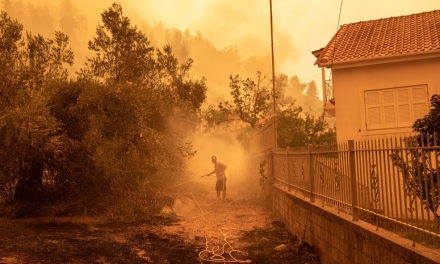
Money could come from carbon markets, donor countries and philanthropists, but radical action is also needed from legislators
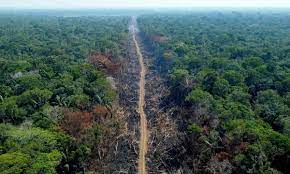
At least $130bn (£100bn) a year is needed to protect the most at-risk areas of tropical forest by the end of the decade, alongside reductions in beef and dairy consumption and government bans on deforestation, a thinktank has warned.
From the Amazon to the Siberian taiga, financing dedicated to forests must be rapidly scaled up if governments are to meet their target of halting and reversing deforestation by the end of this decade, a nonbinding aim agreed by more than 140 world leaders at Cop26 in 2021, which is crucial to limiting global heating well below 2C and halting biodiversity loss.
________________________________________________________________________
Read Also: Climate Change Around The World: A View From The UN Regional Commissions
________________________________________________________________________
Currently, finance to protect forests averages between $2bn and $3bn a year, according to Financing the Transition: The Cost of Avoiding Deforestation, one of a series of reports by the Energy Transitions Commission on meeting 1.5C and building a net zero global economy.
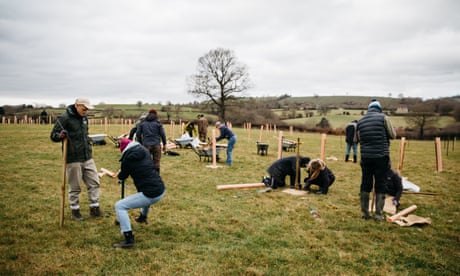
The report estimates that eliminating the economic incentive to destroy forests for cattle ranching, agriculture and other uses would cost at least $130bn a year. The money could come from carbon markets, wealthy governments and philanthropists, but there must also be urgent actions such as a ban on clearing forests, developing businesses that rely on standing forests and reducing demand for commodities linked to deforestation, such as palm oil, soya, beef and cocoa.
Lord Turner, a former head of the CBI and ex-chair of the UK government’s Committee on Climate Change, who now chairs the Energy Transitions Commission, said governments should not delude themselves about the scale of the challenge.
________________________________________________________________________
Read Also: Impacts of Climate Change on Coral Reefs and the Marine Environment
________________________________________________________________________
“As long as the world consumes more red meat, there will be an incentive to deforest more areas of tropical rainforest. If we have that $130bn coming forward, it could make a material difference. But it would not put a total or permanent stop to it. The danger would be that it would come back in future years,” Turner said.
“This is an area where robust quantification of what you spend and what you get is much more difficult than anywhere else. When we work out how much to spend to decarbonise the electricity system, we can come up with a figure. [With deforestation], there is extreme uncertainty. If you really wanted to spend your way to turning off the deforestation, with a trillion a year you’d probably do it. If you’ve allocated $10bn, which is the kind of figure that comes out of the G7, don’t fool yourself,” he said.
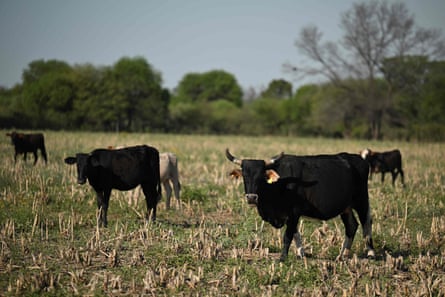
Land use change is the second largest source of human greenhouse gas emissions, with deforestation accounting for about 15% of the total. It is also a major driver of biodiversity loss and ecosystems degradation, and has continued at a relentless pace despite scientific warnings that ecosystems such as the Amazon could soon collapse.
Protecting and expanding forests is key to limiting global heating, alongside massively reducing the consumption of fossil fuels.
Many leading companies buy carbon credits based on protecting rainforests, and governments are increasingly pursuing country-level agreements to prevent forest loss, such as the 2022 deal between Norway and Indonesia. But analysis has found that many rainforest offsetting projects have had little success at stopping deforestation.
Find more age of extinction coverage here, and follow biodiversity reporters Phoebe Weston and Patrick Greenfield on Twitter for all the latest news and feature
________________________________________________________________________
Read Also: The Adverse Ecological Impacts of Light Pollution: LEDs’ Role in Mitigation
________________________________________________________________________
… this Monday, we have a small favour to ask. With 2023 gathering pace, we’re hoping this new year gives rise to fresh opportunities, better stability and much-needed progress. Whatever happens, the Guardian will be there, providing clarity and fearless, independent reporting from around the world, 24/7, including in India.
Times are tough, and we know not everyone is in a position to pay for news. But as we’re reader-funded, we rely on the ongoing generosity of those who can afford it. This vital support means millions can continue to read reliable reporting on the events shaping our world. Will you invest in the Guardian this year?
Unlike many others, we have no billionaire owner, meaning we can fearlessly chase the truth and report it with integrity. 2023 will be no different; we will work with trademark determination and passion to bring you journalism that’s always free from commercial or political interference. No one edits our editor or diverts our attention from what’s most important.
With your support, we’ll continue to keep Guardian journalism open and free for everyone to read. When access to information is made equal, greater numbers of people can understand global events and their impact on people and communities. Together, we can demand better from the powerful and fight for democracy.
Whether you give a little or a lot, your funding is vital in powering our reporting for years to come. If you can, please support us on a monthly basis from just $2. It takes less than a minute to set up, and you can rest assured that you’re making a big impact every single month in support of open, independent journalism. Thank you.