Discovered in England, this ancient creature has no modern match, and its secrets have only just been uncovered.(Ancient Snake)

A fossil specimen stored for decades in a London museum has recently been recognized as a distinct and previously undocumented species of ancient snake. The vertebrae, long overlooked, were found in southern England in the early 1980s but remained unidentified for over 40 years. Their reexamination is prompting renewed scrutiny of snake evolutionary history and how early snake lineages diversified during the Eocene epoch.
The Natural History Museum in London confirmed in late 2025 that the fossil represents a unique genus and species, revealing a set of anatomical traits that do not align with known snake families. Its discovery raises questions about existing classification systems and signals the potential for further finds in long-held collections.
________________________________________________________________________
A Snake That Doesn’t Fit the Mold
The species, named Paradoxophidion richardoweni, was described in a peer-reviewed study published in Comptes Rendus Palevol by Dr. Georgios L. Georgalis of the Polish Academy of Sciences and Dr. Marc E.H. Jones of the Natural History Museum. It is based on 31 tiny vertebrae recovered from Hordle Cliff on England’s south coast. The bones were originally excavated in 1981 but remained unstudied due to their fragmentary nature.
Researchers used high-resolution microtomography (μCT) to create three-dimensional models of the vertebrae. Their analysis revealed features not previously seen together in any known snake. The bones are compact and robust, with pronounced hypapophyses running throughout the vertebral column, a combination not typical of burrowing or fully aquatic species.

The morphology shows superficial similarity to extinct russellophiids and modern acrochordids, or elephant trunk snakes. However, the fossil differs significantly from both groups in key structural traits. The genus name reflects this ambiguity: Paradoxophidion, meaning “paradox snake,” points to its conflicting anatomical signals.
As detailed by the Natural History Museum, the fossil likely represents an early branch of caenophidian snakes. This lineage includes more than 80 percent of modern snake species. The authors proposed that Paradoxophidion may even be the earliest known member of the Acrochordidae family, which until now had no known fossil record in Europe from this period.
Pulled from a Drawer, Back into the Record
The fossil was recovered from Eocene-age sediment dated to approximately 37 million years ago. At that time, southern England had a much warmer climate, with elevated atmospheric carbon dioxide levels and a position closer to the equator. These conditions supported a subtropical environment, with a variety of reptiles thriving in the region.
Hordle Cliff has been a key site for British paleontology since the 19th century. As noted in the NHM feature on the site’s fossil history, it yielded early specimens of Paleryx, the first constrictor snake formally named in the fossil record. The specific epithet richardoweni honors Richard Owen, who not only studied these early finds but also established the museum where the specimen was preserved.

The newly described fossil remained in museum storage until Georgalis reexamined it during a research visit. Its small size, with vertebrae measuring only a few millimeters, likely contributed to its decades-long delay in recognition. The reassessment demonstrates how historic museum collections, when reanalyzed using modern imaging and comparative methods, can yield scientifically significant discoveries.
In the technical description published in Comptes Rendus Palevol, researchers confirmed that all 31 vertebrae belong to a single individual based on their internal consistency and gradual variation along the spinal column. Digital μCT scans of the vertebrae have been archived and made available for open-access study.
________________________________________________________________________
No Skull, No Easy Answers
No skull or limb elements were recovered with the fossil, which limits interpretations of the species’ ecology. The vertebrae lack the elongation found in burrowing snakes and do not exhibit adaptations typically associated with aquatic locomotion.
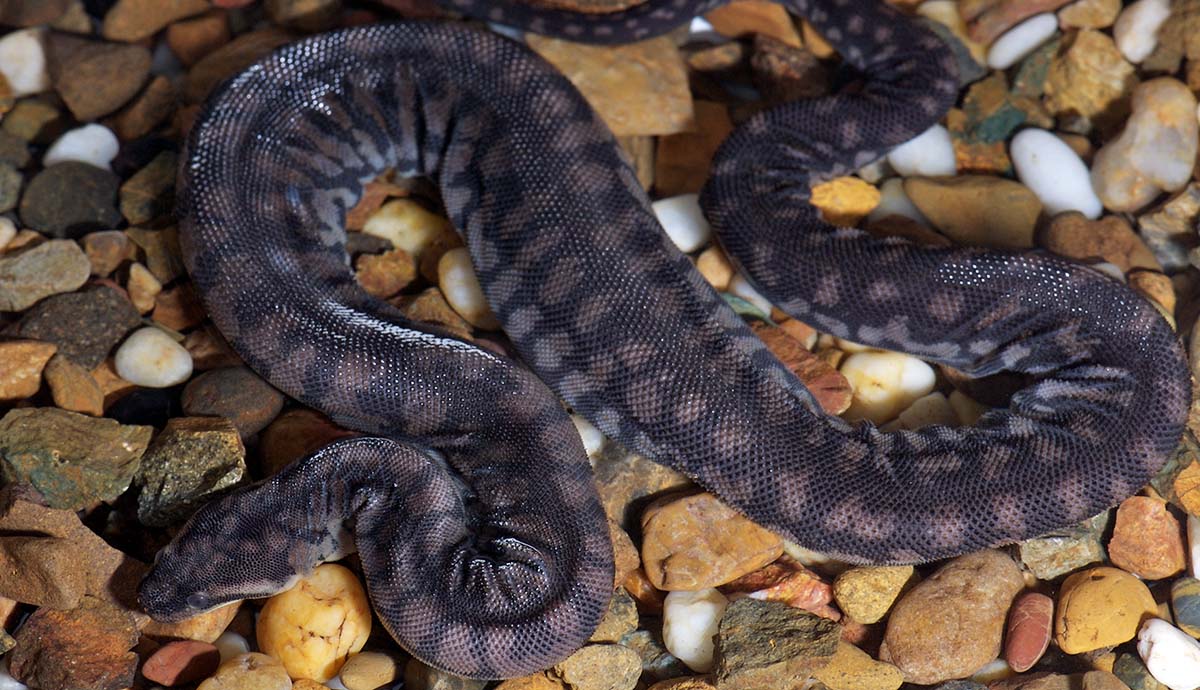
Although some features resemble those of Acrochordus, a genus of aquatic snakes found today in Southeast Asia and northern Australia, the presence of Paradoxophidion in Eocene-era England creates a paleobiogeographic anomaly. If the fossil is ultimately confirmed as a member of Acrochordidae, it would push the group’s origin back by over 15 million years and significantly expand its historical range.
As reported by IFLScience, researchers noted that the unusual combination of traits complicates efforts to place the species within any established clade. The incomplete nature of the fossil highlights broader limitations in snake paleontology, which relies heavily on vertebral features that may not capture the full diversity of extinct lineages.
Museum Drawers May Hold the Next Breakthrough
The study highlights the potential for discoveries in long-standing museum collections, particularly among microvertebrate fossils. Thousands of specimens gathered throughout the 20th century remain unanalyzed using modern imaging techniques. Curators and researchers are increasingly calling for systematic reevaluation of legacy archives to uncover hidden or misidentified taxa.
Georgalis and Jones have signaled plans to continue their work with snake fossils in the Natural History Museum, including remains attributed to Palaeophis, a giant aquatic snake with a sparse fossil record in Western Europe. The team’s focus on underexamined historical specimens is part of a broader effort to reconstruct evolutionary patterns in early caenophidian snakes.
The classification of Paradoxophidion is expected to influence how scientists interpret early diversification in snake evolution. Additional finds, either through new field excavations or the reanalysis of existing collections, will be necessary to determine whether the fossil represents an isolated evolutionary experiment or the first evidence of a broader lineage.
NOTE – This article was originally published in Indian Defence Review and can be viewed here