
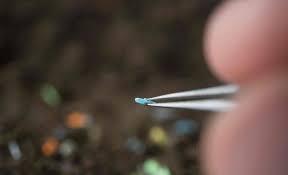

Researchers in Xi’an, China found that levels of microplastics in the city’s air tripled over the course of their study.
They measured these particles within PM2.5, the fine pollution that can penetrate deep into the lungs, comparing samples collected before and after the COVID-19 pandemic.
The study was led by Fobang Liu of Xi’an Jiaotong University (XJTU) in western China. His work focuses on aerosols – airborne particles from sources like dust, smoke, and vehicle exhaust – and how they affect the respiratory system.
At XJTU, Liu’s team analyzed air filters gathered in both summer and winter to see whether the pandemic shifted seasonal patterns or overall microplastic levels.
Source of airborne microplastics
During COVID-19, disposable masks became daily gear, and many ended up as litter or in crowded waste bins.
One lab study found that used masks released mostly transparent polypropylene, a common plastic in mask fabrics, after abrasion and aging paper.
Masks are not the only source, because synthetic clothing, tires, and packaging also shed fibers that ride on winds.
To track airborne particles, researchers draw air through filters, then examine what sticks under microscopes and spectrometers.
They identified polyethylene terephthalate, a polyester used in drink bottles and clothes, among the fibers found on filters.
By sorting colors and shapes, could they see whether the air carried many plastic types or mainly mask-like fibers?
Before, during, and after
Before 2020, Xi’an samples showed a wider mix of plastic types and colors, which hints at many everyday sources.
That variety matters, because it suggests the city air already carried fibers from textiles, packaging, and road wear. It also sets a baseline, so later changes point to new inputs rather than normal ups and downs.
After masks entered daily life, transparent and white fibers dominated the samples, matching materials commonly used in face coverings.
The team linked that pattern to discarded masks, which often fray as they rub against pavement, dirt, and water.
“Transparent and white polypropylene and polyethylene terephthalate fibers dominated during and after the pandemic,” wrote Liu, replacing the broader mix of plastic types and colors seen in earlier samples.
Ozone and plastic aging
The Xi’an data also showed microplastics tracked with ozone, a reactive gas formed from pollutants in sunlight, at times.
Other researchers saw ozone exposure crack plastic surfaces and boost microplastic release in lab tests.
That chemistry matters for cities, because hot, sunny days often raise ozone, and aged litter sits outdoors longer.
Sunlight drives photodegradation, plastic breakdown caused by ultraviolet light, and each crack makes it easier for fibers to detach.
Wind, footsteps, and vehicle tires grind litter against rough surfaces, sending lightweight fragments upward during dry spells.
Field work found microplastics deposited in remote mountains after traveling up to about 59 miles.
Breathing microplastics from the air
Airborne fibers can enter the body with every breath, so inhalation adds to the plastic exposure people already face.
A research review warned that inhaled microplastics may irritate airways and trigger inflammation in sensitive people.
Particles stuck to PM2.5 may also carry chemicals and microbes, which complicates efforts to pin down harm.
The team used particle dosimetry, math that predicts where inhaled particles settle, to map microplastics inside airways.
Inside the extrathoracic region, the nose and throat above the windpipe, inhaled particles meet a first checkpoint.
Some fibers reached tracheobronchial airways, the branching tubes leading into lungs, and even the deeper pulmonary region.
Measuring lung health
Children and teenagers breathe more air per pound of body weight than adults, so small changes can matter.
However, modeling showed that teenagers and younger individuals were more susceptible to particle deposition in the tracheobronchial and pulmonary regions.
That does not prove disease, but it flags a group scientists often watch closely when studying air pollution.
Researchers still struggle to link a measured particle count to a real health outcome, because people inhale mixtures.
Microplastics come in many sizes and shapes, and that variety can change where they lodge and how cells react.
Better toxicology, lab tests that track biological harm, will help separate harmless small fibers from dangerous ones.
Indoor air and water quality
Many people spend most hours indoors, where carpets, upholstery, and clothing can shed fibers into enclosed air.
Ventilation, humidity, and cleaning habits influence indoor particle levels, so one city outdoor study cannot cover everything.
Still, outdoor air flows indoors through doors and windows, and PM2.5 often tracks personal exposure over a day.
The World Health Organization (WHO) data showed 1 in 3 health facilities lacked safe health-care waste handling.
Extra disposable gear from COVID-19 outbreaks can overload systems, especially where landfills and incinerators already run near capacity.
When disposal fails, lightweight plastics escape into streets and waterways, and fragments can return as airborne particles.
Removing microplastics from city air
Cleaner streets and better trash collection reduce the plastic that weathers outdoors, and that can limit future shedding.
Some cities now promote reusable masks when appropriate, and hospitals use tighter protocols to track contaminated waste.
Air monitors that test for plastics could become part of routine pollution checks, adding a new marker to public health tools.
The XJTU results connect pandemic habits to what floats in city air, and they raise new questions for prevention.
Researchers will need long-term sampling, better toxicity tests, and smarter waste plans to reduce what people inhale.
The study is published in the Journal of Geophysical Research.
NOTE – This article was originally published in Earth and can be viewed here








Trackbacks/Pingbacks