What is Permaculture
https://www.tenthacrefarm.com/what-is-permaculture/
Permaculture is defined as the self-sufficient and long-term development of agricultural ecosystems.
This type of farming takes its cues from nature to create symbiotic agricultural systems based on crop diversity, resilience, natural production, and long-term sustainability. Nonetheless, since the early 1980s, the preconceived notion of permaculture has grown to encompass a systemic approach that extends far beyond the agricultural area.
________________________________________________________________________
Read Also : Padmashree Awardee from Haryana who generates around Rs 4.5-5 crore per annum from Baby Corn Farming,
________________________________________________________________________
Permaculture is a worldwide ethic technique for building integrated systems based on the notion of sustainable development that is now associated with permanent culture in its fullest definition. As a result, human activities must take into account natural ecosystems and work in harmony with them.
Permaculture depends on non-fixed ways of design that are adaptive to the areas of application, based on careful study of how ecosystems operate (especially in terms of productivity and efficiency). The outcome is “permacultural design,” a system based on universal principles.
Permacultural design (the term design here covers the concepts of project and process of realisation) is based on three ethical principles:
Environmental and biodiversity preservation; willingness to form a community for personal and social well-being; resource sharing and equitable transfer of excesses (for the benefit of humans and the environment).
________________________________________________________________________
Read Also : EVOLVING FURTHER WITH NEW TECHNOLOGIES IN FARMING,
________________________________________________________________________
The approach is based on the following:
- An grasp of issues and systems as a whole;
- The study of the ways of connectivity between the constituents of a system;
- The application of solutions gained from operating and proven systems to inadequate systems;
- The study of natural ecosystems in order to identify and remedy faults in the placement of human activities and to prepare for optimal integration;
- People who are new to permaculture are included in the process.
Many solutions influenced by scientific ecology, , and empirical methods acquired over time by traditional civilizations are implemented in permacultural design.
Permaculture Definitions and Practices
- No-till farming, for example, ensures that soil balance and long-term fertility are preserved.
- Buildings composed of biodegradable local materials that are energy-efficient and have a small ecological imprint are an example of habitats (individual houses made of straw and clay in the Netherlands)
- Short circuits, social linkages, solidarity, and community cohesiveness are all generated through the establishment of community groups like SEL (Local Exchange System).
Permaculture Permaculture Definitions and Practices permaculture definitions and practises
No-till farming, for example, ensures that soil balance and long-term fertility are preserved.
Buildings composed of biodegradable local materials that are energy-efficient and have a small ecological imprint are an example of habitats (individual houses made of straw and clay in the Netherlands)
Short circuits, social linkages, solidarity, and community cohesiveness are all generated through the establishment of community groups like SEL (Local Exchange System).
Permaculture Definitions and Practices permaculture definitions and practises
No-till farming, for example, ensures that soil balance and long-term fertility are preserved.
Buildings composed of biodegradable local materials that are energy-efficient and have a small ecological imprint are an example of habitats (individual houses made of straw and clay in the Netherlands)
Short circuits, social linkages, solidarity, and community cohesiveness are all generated through the establishment of community groups like SEL (Local Exchange System).
________________________________________________________________________
Read Also : Impending extreme summers 2021 – climate change
________________________________________________________________________
Permaculture VS Organic Agriculture
https://permaculturevisions.com/the-difference-between-organic-farming-and-permaculture/
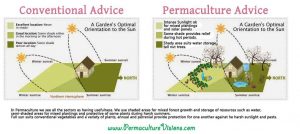
The goal of a permaculture design is to finish the energy cycle and aid nature’s capacity to create abundance.
Both nature and we, the customers, benefit from organic farming. It also supports the use of natural fertilisers and values soil health as the cornerstone for sustainable farming methods. The natural carbon cycle is optimised through organic farming. Plant waste generates food (fertiliser) for other plants. Animals are often used by organic farmers to offer fertiliser and pest control.
The purposeful act of design to close the energy flows is the primary advantage of Permaculture thought for organic farming.
Design Thinking
Permaculture is a science of design. We examine how energy is gathered, utilised, and re-used in our attempts to feed, clothe, transport, and educate our society in Permaculture. We maximise the use of natural resources, engage and empower people to satisfy their own requirements, and recycle and reuse garbage. Basically, we’re looking for a mechanism to shut down the system. Permaculture designers have been adapting farms all over the planet. Permaculture farming pioneers Darren Doherty, Rosemary Morrow, and Mark Shepard have become international leaders. The Chikukwa project is the world’s largest permaculture farm.
Open Flow and Closed Cycle Production
Energy is not lost in a genuinely closed system (one in vacuum or space); it is just moved from one entity or element to another. In a permaculture system (which can never be completely closed), the design seeks to reuse as much energy and resources as possible before they leave the system.
The energy cycle is the most significant distinction between permaculture and farming. A farm is a source of energy. A permaculture site, on the other hand, produces an energy loop.
Because agricultural nutrients are constantly exported to market, there is a continuing need to rejuvenate the soil through proper soil-building methods and resource importation.
Is Permaculture Somehow Not Organic?
When permaculture farmers employ non-organic products, they are not considered organic farmers. They may opt to recycle non-organically certified materials rather than import organic material from afar.
Some permaculture designs are tailored to contaminated locations, with the goal of rehabilitating the area as part of the overall output. This would be in violation of organic regulations.
Local products that aren’t certified organic are frequently used. Naturally, we prefer organic sources, but if there are large transportation costs and social benefits to buying or receiving local inputs, we may opt for non-certified or riskier inputs to save energy.
Tags: #agricultural, #biomimicry, #environment, #environmental, #farming, #getgreengetgrowing, #gngagritech, #greenstories, #naturalecosystems, #nature, #Permacultural