Overcollection as an ornamental plant, habitat destruction, and low seed production are threatening the Cycas pectinata

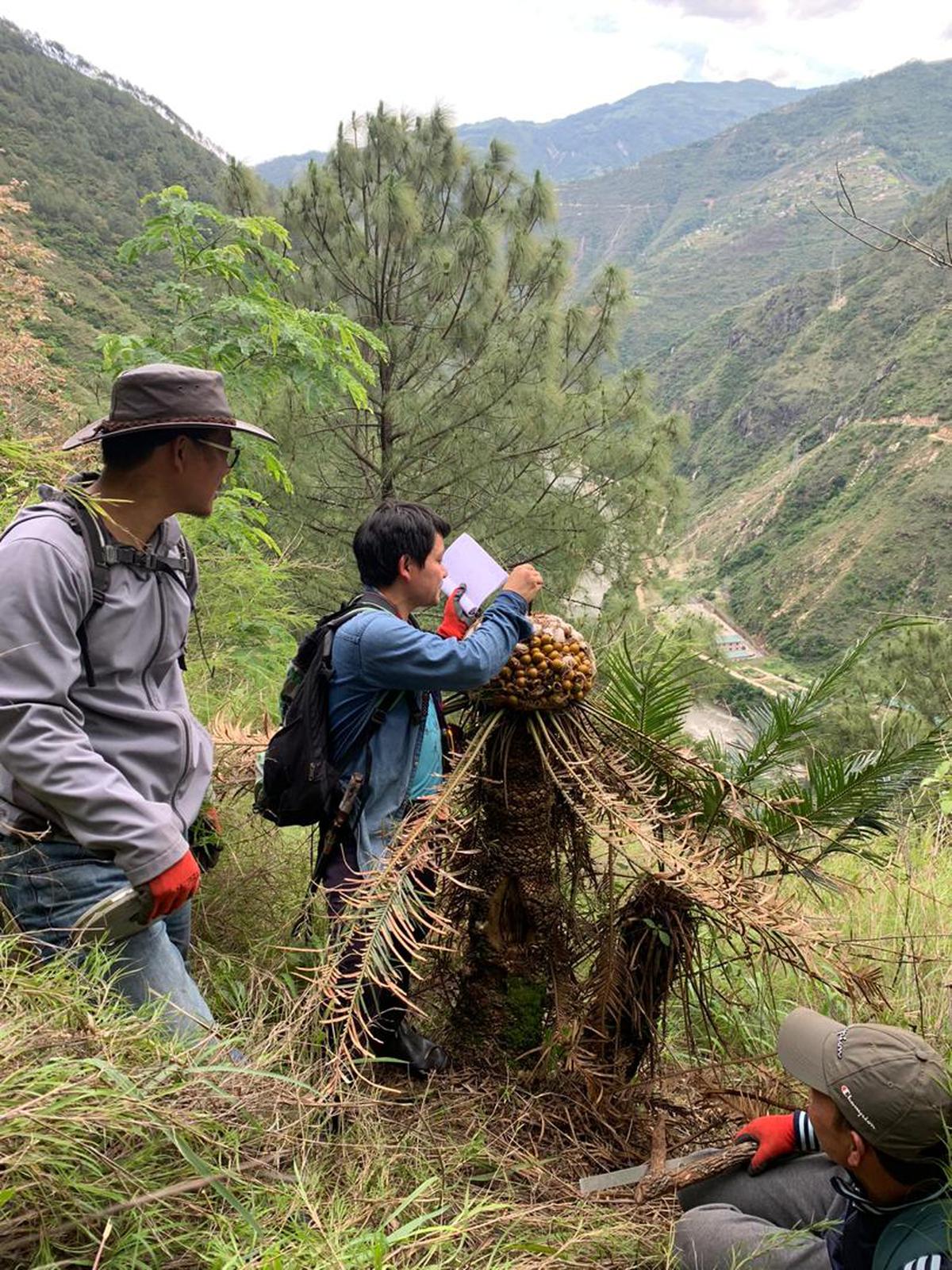
An evergreen, palm-like plant with a Jurassic link is under stress in Bhutan, a new study has said.
Cycas pectinata, listed as vulnerable in the International Union for Conservation of Nature’s Red List, is the only cycad species found in Bhutan. A new study by five botanists has revealed that its existence in the Himalayan country is threatened by overcollection as an ornamental plant and habitat destruction.
_______________________________________________________________________
Read Also : Worst mass extinction event in Earth’s history was caused by global warming analogous to...
________________________________________________________________________
Low seed production and predators such as wild boars could also be checking the expansion of the plant’s population, the study published in the March edition of the Journal of Threatened Taxa said.
The authors of the study are Sonam Tobgay, Karma Wangchuck, Jamyang Dolkar, and Tshering Nidup of the Sherubtse College’s Department of Environment and Life Science and Tenjur Wangdi of the Royal University of Bhutan’s Department of Research and External Relations.
Cycads are one of the most ancient gymnosperms, possibly originating in the late Carboniferous period 300-325 million years ago and reaching the greatest diversity during the Jurassic-Cretaceous period when dinosaurs roamed the earth. Gymnosperms have open-to-air unfertilised seeds to be directly fertilised by pollination.
Loaded with genetic data
The genetic information contained in cycads makes them valuable for scientific research and conservation. Cycads are bridges in major evolutionary transitions in plants and remain indispensable for understanding the origin and subsequent evolution of seed plants.
Cycas pectinata belongs to the family Cycadaceae with 118 accepted species. Scottish surgeon and botanist Francis Buchanan-Hamilton first described Cycas pectinata in 1824 from what is believed to be a part of modern-day Assam.
“Cycas in general are culturally and economically significant for native populations. Some locals in northeast India use the plant for religious ceremonies. Locals in some places (of Bhutan) use its seeds as a supplement to their diet and young leaves are eaten as a substitute for vegetables,” Mr Tobgay told The Hindu.
The study of the plant at elevations of 787-1,394 metres above the mean sea level was conducted in known locations of two districts— Trashi Yangtse and Mongar.
_______________________________________________________________________
Read Also : Things You Can Do to Reduce Global Warming
_______________________________________________________________________
An evergreen, palm-like plant with a Jurassic link is under stress in Bhutan, a new study has said. | Photo Credit: Special Arrangement
In Trashi Yangtse, the location at Ramjar on the eastern bank of the Dangme Chhu (river) is called Bawoongshing-pek, meaning the hill of Cycas pectinata. The populations of the plant studied in the Lingmethang and Kurizampa areas of the Mongar district are on the bank of the Kurichhu.
Kurichhu sports an India-developed 60 MW hydropower plant, one of several infrastructure projects including new and widened roads, tunnelling, and electric transmission lines in the Cycas pectinata domain. Human population resettlement driven by such development and associated economic activities has added to the threat to the species.
_______________________________________________________________________
READ ALSO : MUSHROOM THAT EATS PLASTIC MAY HELP IN FIGHT AGAINST PLASTIC WASTE
_______________________________________________________________________
Ornamental trade
According to the botanists, the threat to Cycas pectinata is not a good sign for Bhutan, a part of the eastern Himalayan global biodiversity hotspot known for species richness.
What alarmed them the most was the “very recent event” of the loss of Cycas populations from Kurizampa; the plants were removed by collectors for their ornamental value.
The collection of plants was not evident in the Ramjar site except for a few translocated to gardens by the local people.
“God forbid, the disappearance of such species from its natural habitat will be marked by the IUCN as extinct in the wild,” Mr Tobgay said, adding that cycads are the most threatened plants with 62% of them featuring in the Red List.
More than 30 million Cycas were traded between 1977 and 2001 for ornamental purpose.
- Cycas pectinata, listed as vulnerable in the International Union for Conservation of Nature’s Red List, is the only cycad species found in Bhutan. A new study by five botanists has revealed that its existence in the Himalayan country is threatened by overcollection as an ornamental plant and habitat destruction.
- Cycads are bridges in major evolutionary transitions in plants and remain indispensable for understanding the origin and subsequent evolution of seed plants.
- According to the botanists, the threat to Cycas pectinata is not a good sign for Bhutan, a part of the eastern Himalayan global biodiversity hotspot known for species richness.