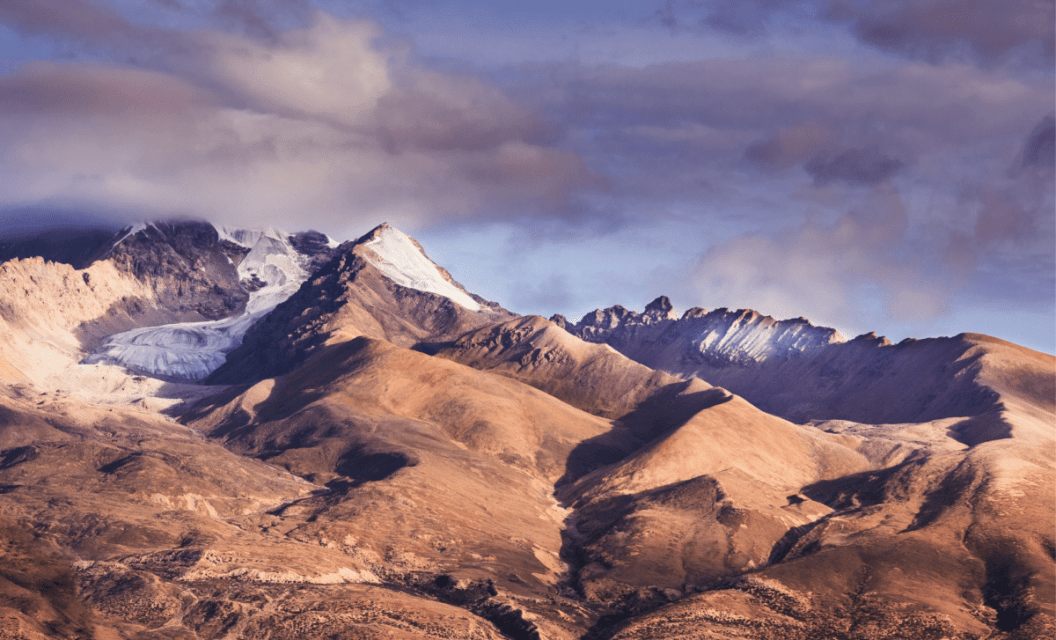
Scientists have uncovered compelling evidence that coal pollution is crossing the Himalayas, reaching the remote Tibetan Plateau through seasonal monsoon winds.

The Himalayas have long been viewed as one of the planet’s greatest natural barriers, shielding the remote Tibetan Plateau from the dense industrial pollution generated across South Asia. A new study published in Geophysical Research Letters challenges that assumption with direct evidence that fine particles produced by coal combustion can travel across the mountain range during the summer monsoon. The discovery reshapes scientists’ understanding of how far industrial emissions can spread and raises new concerns about pollution reaching one of Earth’s most environmentally sensitive regions.
Moss Revealed A Pollution Path Scientists Had Never Clearly Traced
For years, researchers suspected that airborne pollution could occasionally reach the Tibetan Plateau, yet proving exactly where those contaminants originated remained a major scientific challenge. Instead of relying solely on air samples, the research team turned to an unexpected natural recorder: moss. Unlike most plants, moss absorbs water and nutrients directly from the atmosphere rather than through roots, allowing it to capture microscopic airborne particles over long periods. This makes it an exceptional archive of atmospheric pollution.
________________________________________________________________________
Scientists collected moss samples along an elevation gradient stretching from approximately 750 meters to more than 4,100 meters in the Yarlung Tsangpo Grand Canyon, one of the deepest river valleys on Earth. The samples were analyzed for heavy metals including lead, arsenic, zinc, nickel, and cobalt. Researchers also measured stable zinc isotopes, subtle chemical variations that act like fingerprints because different industrial activities leave distinct isotopic signatures. Coal combustion typically produces relatively heavy zinc isotopes, while high-temperature metal smelting generates lighter ones. By combining these measurements, the team reconstructed how pollution sources changed as altitude increased, revealing a remarkably detailed picture of atmospheric transport across the Himalayas.
Isotopic Analysis Reveals The Dominant Pollution Source
The study, published in Geophysical Research Letters, uncovered a striking transition in pollution sources across the mountain landscape. At lower elevations on the southern slopes of the Himalayas, mosses contained relatively high concentrations of heavy metals alongside lighter zinc isotope signatures. These chemical fingerprints indicated that metal smelting accounted for roughly 42% to 50% of local pollution, reflecting emissions transported from nearby industrial regions.
As researchers climbed higher into the mountains, the chemical story changed dramatically. Heavy metal concentrations gradually declined, while zinc isotope signatures became progressively heavier, matching those typically associated with coal combustion. At these higher elevations, coal burning contributed approximately 35% to 50% of detected pollution. North of the Himalayan crest, where pollution levels were generally lower overall, moss samples collected above 3,500 meters consistently displayed the same heavy isotope signatures linked to coal emissions. There, coal combustion represented between 43% and 54% of the pollution reaching these remote locations, while smelting sources became relatively insignificant. The findings provide some of the clearest chemical evidence yet that coal-derived particles are capable of traveling hundreds of kilometers across one of Earth’s tallest mountain ranges.

Credit: Geophysical Research Letters
Summer Monsoon Winds Carry Fine Particles Across The Mountains
The researchers identified the Indian summer monsoon as the primary mechanism responsible for transporting pollution across the Himalayas. Every year, powerful seasonal air currents move northward from heavily populated regions of South Asia toward the Tibetan Plateau. These air masses are funneled through deep valleys, particularly the Yarlung Tsangpo Grand Canyon, creating an efficient atmospheric corridor that allows fine particles to cross terrain previously thought to block much of the pollution.
________________________________________________________________________
Particle size appears to play a decisive role in determining which contaminants survive the journey. Emissions from coal combustion consist largely of extremely fine particles capable of remaining suspended in the atmosphere for extended periods. These particles are carried high above the landscape before eventually being deposited through clouds, rainfall, and fog. By comparison, pollutants released during metal smelting are often attached to larger particles that settle more rapidly and are removed from the atmosphere before crossing the mountain barrier. Local environmental conditions also influence where contaminants accumulate. Dense forests covering the southern slopes intercept airborne particles and transfer them onto mosses during rainfall, while the drier northern slopes receive less precipitation, allowing mosses there to more directly reflect atmospheric deposition.

Credit: Geophysical Research Letters
Even The “Third Pole” Is Feeling The Effects Of Distant Industrial Activity
The implications extend well beyond atmospheric science. The Tibetan Plateau, often called the “Third Pole”, contains the largest reserve of ice outside the Arctic and Antarctica and supplies freshwater to billions of people across Asia. Although the region remains far cleaner than many industrialized areas, the new findings demonstrate that its apparent isolation does not guarantee protection from distant human activities.
Heavy metals such as lead, arsenic, and nickel can accumulate in soils, rivers, vegetation, and wildlife over long periods. Once introduced into fragile mountain ecosystems, these contaminants may enter food chains and persist for decades. While the current study did not evaluate ecological or human health impacts directly, it establishes an important foundation for future investigations into how long-range pollution could influence high-altitude environments that are particularly sensitive to environmental change.
Beyond ecological concerns, the research offers valuable data for improving atmospheric transport models. Better understanding how seasonal weather patterns move pollutants across the Himalayas could help scientists produce more accurate forecasts of contaminant deposition throughout Asia. As industrial activity, energy demand, and climate patterns continue to evolve, identifying the pathways that carry pollution into some of Earth’s most remote landscapes will become increasingly important for protecting these unique environments.
NOTE – This article was originally published in indiandefencereview and can be viewed here
Tags: #climate, #climatechange, #CoalPollution, #discover, #Earth’s, #environment, #getgreengetgrowing, #gngagritech, #greenstories, #himalayas, #nature, #Pollution