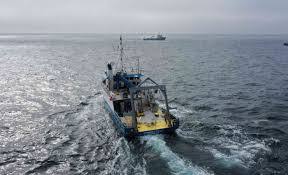

Researchers report that adding sodium hydroxide to seawater triggered measurable uptake of carbon dioxide from the atmosphere within days.
This result shows that deliberate changes to ocean chemistry can draw carbon from the air without detectable harm to nearby marine life.
Inside the red patch
A drifting patch of chemically altered seawater in the Gulf of Maine revealed the change as scientists tracked how carbon moved between air and ocean.
By measuring those shifts, Adam Subhas at Woods Hole Oceanographic Institution demonstrated that the surface ocean began drawing carbon dioxide out of the atmosphere.
Within days, the surrounding water became less acidic while carbon dioxide levels there dropped measurably.
That outcome showed the chemical release had altered ocean conditions in a way that allowed the sea to take up additional carbon, raising new questions about how such reactions might scale.
What the chemistry does
Researchers call this ocean alkalinity enhancement, adding alkaline material so seawater can absorb more carbon dioxide.
Sodium hydroxide, a strongly alkaline liquid, works by reducing acidity in seawater, which lets the surface hold more carbon.
Once that carbon reacts in water, it becomes bicarbonate, a stable dissolved form related to baking soda.
Under normal ocean conditions, extra carbon dioxide forms carbonic acid, which leaves shell-building species under greater stress in the ocean.
In this case, however, the added alkalinity helps buffer the formation of carbonic acid, limiting acidity in the surrounding water.
Testing beyond the lab
Tank experiments can show chemistry, but only the ocean reveals how fast a plume mixes, spreads, and weakens.
Earlier dye-only work gave the team a monitoring framework for separating a real signal from daily background noise.
That preparation helped scientists tell whether changing chemistry came from the release itself or from ordinary ocean variability.
Without that kind of baseline, any carbon claim would rest on guesswork instead of evidence strong enough to scrutinize.
How they followed it
To keep the patch visible, the crew mixed in rhodamine, a red tracer dye used to follow moving water.
Behind the release vessel, a second ship watched chemistry, while gliders, underwater robots, and satellites tracked movement.
Modeled paths and measured paths matched closely, and both acidity and dye readings later returned to normal.
Such a quick return showed the change was trackable, temporary, and not running out of control.
What life showed
Scientists compared water inside and outside the patch for microbes, tiny algae, small drifting animals, fish larvae, and lobster larvae.
Because those drifting communities respond quickly, they offered the earliest test of whether the chemistry was hurting life.
Even so, the team did not directly measure adult fish, marine mammals, or longer-lasting ecological effects.
Measuring carbon removal
During the first several days, the chemistry appeared to pull between two and ten tons (1.8–9.1 metric tons) of carbon dioxide into seawater.
Modeling suggests the same patch could keep drawing gas for months, reaching about 50 tons in a best-case year.
Full climate value still depends on life-cycle accounting – counting emissions from making and moving the chemical.
“We need independent, transparent research to determine which solutions might work,” said Subhas, the project’s principal investigator.
Why scale changes
A working patch is not a working industry, because larger releases would spread farther and demand tighter oversight.
Bigger operations would also need proof that carbon stays accounted for after the visible plume disappears.
Scientists therefore care as much about verification as chemistry, especially once projects move beyond research scale.
For that reason, small, tightly measured trials come first, even when the carbon totals look modest.
Who approved the test
Before anything reached the water, the U.S. Environmental Protection Agency (EPA) spent months reviewing permits, comments, and wildlife consultations.
That process ended with a permit after the agency decided the trial would not unreasonably degrade marine systems or ocean uses.
Along the coast, more than 50 meetings brought fishers, tribal representatives, and other local stakeholders into the plan.
Those steps did not erase controversy, but they made this test more public, regulated, and answerable than an unannounced experiment.
Next steps for research
Now the hard part begins, because researchers must turn a vivid field result into numbers regulators and critics can test.
That means modeling how long the plume keeps drawing carbon after ships leave and the color disappears.
Future studies also need wider ecological windows, especially for fisheries, adult animals, and delayed biological responses. For now, the Gulf of Maine test stands as a proof of function, not a permission slip.
What this changed
In one carefully watched patch, scientists showed they can alter seawater in open water, follow the change, and detect carbon uptake.
Just as clearly, the test left the hardest questions open, from full climate accounting to longer ecological risks and public trust.
Photo credit: Daniel Cojanu, Undercurrent Productions, ©Woods Hole Oceanographic Institution
The information was obtained from a Woods Hole Oceanographic Institution research release.
NOTE – This article was originally published in Earth and can be viewed here