Soil is generally considered as a non-living entity, but contrary to popular belief, a teaspoon of fresh soil consists of more life than the global human population but sadly, in the present scenario getting that teaspoon of ‘healthy’ soil is something becoming increasingly unaffordable with time.(soil degradation)
Soil pollution is a generalized term that covers the overall pollution of soil or land. Under its pretext, the specific term of soil degradation can be found which takes into account the degradation of topsoil i.e. the part of the soil that is mainly responsible for agriculture & food production.
_______________________________________________________________________
Read Also: Impact of Overfishing
________________________________________________________________________
Reasons for soil degradation
When we go out in search of causes & reasons for degradation, we will find that the traditional socio-economic model of development followed by humankind presents an unprecedented list of the said reasons. The increase in demand for food production due to overpopulation stands out specifically in this list but it’s not only due to overpopulation but largely due to the practices carried out by that population upon the soil.
Soil as stated is a living entity with billions of micro life forms thriving within it. Disruption of this micro-ecosystem can be accustomed to human as well as environmental activities but contrary to human practices, the environment balances itself automatically & follows a sustained model whereas humans tend to overuse & abuse the present resources leading to the current situation.
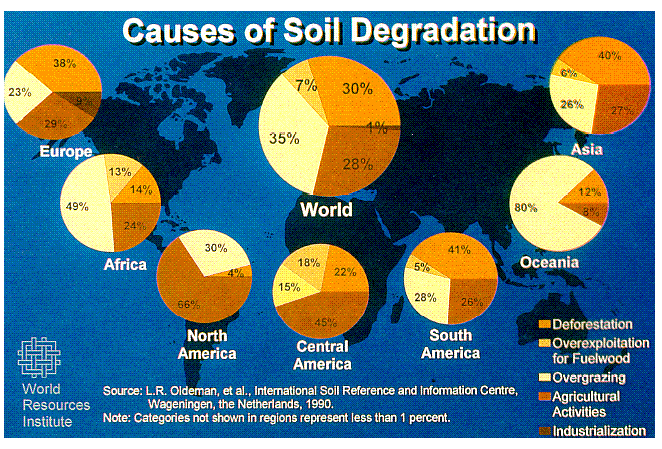
Overgrazing, deforestation & overexploitation of forest & natural resources stand in the forefront when we start to talk about soil degradation, closely followed by extensive & uncontrolled chemical stimulants which are applied to increase production changing the very nature of soil into an artificial entity.
Complimenting these reasons, unchecked & over industrialization along with improper waste management also constitutes majorly in degrading the soil quality. All of these factors are also aiding in local as well as global climate change which is rapidly altering the set environmental pattern thus disrupting the natural cycle of regeneration that ground needs to restore itself by gaining proper nutrients.
Results of soil degradation
When undergoing degradation due to set practices, the then condition of soil can lead to general, chemical as well as biological repercussions related to the same which directly & indirectly impact the soil quality & also the quality of produce obtained from the soil.
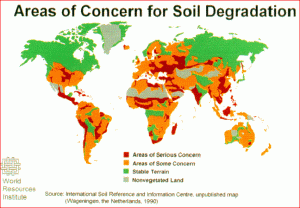
General impact:
- Loss of fertility
- Crusting & compaction
- Erosion & desertification
- Anaerobic
- Environmental pollution
- Unsustainable use of natural resources.
Chemical impact:
- Acidification
- Leaching
- Salinization
- Decrease in carbon retention property
Bio/ecological impact:
- Loss in local biodiversity
- Reduction in biomass
- Decline in total carbon storage of soil
- Decrease of microbial population & action
The presented list are some of the direct & noted results of soil degradation. If continued at the present rate, the world would face a type of food crisis never seen before. Soil will be rendered useless for any kind of agricultural activity for 50 to 100 years resulting in severe food security-related setbacks.
________________________________________________________________________
Read Also : Build a Bee Hotel to Help Homeless Wild Bees
________________________________________________________________________
The resulting impact will be in terms of reduction or total loss of potential productivity & utility of the soil.
Topsoil runout
As per the researched data, 95% of global food is cultivated upon topsoil thus making it the basis for our food & agricultural system. Topsoil generally consists of the top 5 to 10 inches of any land agriculture-worthy land & contains the maximum amount of organic matter of the soil providing the plants with all the required nutrients through that.
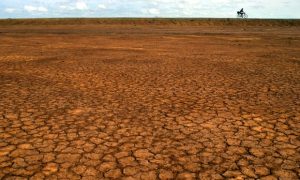
Topsoil is the part where most of the earth’s biological activity occurs & due to which agriculture is a reality & not a fiction but owing to unchecked human practices, the earth is losing its topsoil at an all-time high rate severely impacting global food security.
The combination of overgrazing, erosion due to deforestation, heavy chemical usage & intensive tilling is stripping the earth of its most valuable resource. According to various stated studies, the earth has lost half of its usable topsoil in the last 150 years & currently it is losing the most fertile soil with a rate of 10 to 40 % topping the rate of replenishment. If this continues, the earth would lose its fertility by 90% which can result in an extreme famine-like situation.
Furthermore, if the trend continues, the earth will lose all of its topsoil in the coming 60 years rendering the agriculture sector useless & humankind will not be able to produce enough food to meet the already growing demand. As per data, humankind will have to suffice with approximately 30 to 35% less food over the next 20 to 50 years in a future where demand is likely to go up by 50%. So, preserving topsoil is not an option but a necessity.
________________________________________________________________________
Read Also : How to tackle climate change, food security and land degradation
________________________________________________________________________
Ways to counter soil degradation
Soil degradation is one of the most serious challenges humankind is currently facing aside from rising pollution overall level. Although the damage is extensive on the ground, many innovative ways have been implemented to replenish the soil & maintain it for further use. Some of which are:
- Afforestration
- Sustainable waste management
- Discontinuation of heavy, industrial & over farming on the expense of our future generations
- Use of sustainable agricultural practices to reduce dependency upon chemical stimulants.
- Innovative alternatives for traditional practices. For example, biochar, crop rotation, etc.
- Resource management in the agriculture sector.
- Overall reduction in degrading practices & reducing them with soil health-enhancing practices.
- A comprehensive & global plan to counter rising pollution levels & commitment to work towards a sustainable future.
The above-stated practices form only about 1% of the possible ways we can look up to save our future & despite facing such bleak situations & tough odds, we cannot allow ourselves to become disoriented in our approach towards a sustainable as well as hopeful future.
Reference links
- https://www.environment.nsw.gov.au/topics/land-and-soil/soil-degradation
- https://www.worldwildlife.org/threats/soil-erosion-and-degradation
- https://www.sciencedirect.com/science/article/pii/B9780128147191000252
- https://en.wikipedia.org/wiki/Soil_retrogression_and_degradation
- https://youmatter.world/en/definition/soil-erosion-degradation-definition/
- https://blog.agrivi.com/post/soil-degradation
- https://en.wikipedia.org/wiki/Topsoil#Erosion
- https://www.theguardian.com/us-news/2019/may/30/topsoil-farming-agriculture-food-toxic-america#:~:text=If%20we%20continue%20to%20degrade,carbon%2C%20and%20feed%20people%20plunges
Image links
- https://blog.agrivi.com/post/soil-degradation
- https://blog.agrivi.com/post/soil-degradation
- https://www.permaculturenews.org/2015/06/11/soil-degradation-another-carbon-story/
- https://www.theguardian.com/us-news/2019/may/30/topsoil-farming-agriculture-food-toxic-america#:~:text=If%20we%20continue%20to%20degrade,carbon%2C%20and%20feed%20people%20plunges.
Tags: #agriculture, #farming, #farmland, #getgreengetgrowing, #gngagritech, #gogreen, #greenstories, #healthysoil, #planting, #soil, #soilbiology, #soilfoodweb, #soilgrown, #soilhealth, #soilpollution, #soils, #soilscience, #soilwork, #stopsoilpollution, #tillage, #zerohunger