Emphasising that not all pest problems require chemical solutions, the AEO explained that overuse of pesticides has not only reduced biodiversity but also led to frequent pest outbreaks due to monoculture practices

In a move aimed at encouraging sustainable farming, Agricultural Extension Officer (AEO) of Yellareddypet cluster in Siddipet district T. Nagarjun has introduced biocontrol agents and biofertilisers to promote eco-friendly pest and nutrient management methods. The AEO recently organised demonstrations at Rythu Vedhika and on the field of farmer Ilapuram Anil Reddy in Pedda Masanpally village of Thoguta Mandal.
_______________________________________________________________________
Read Also : Farmers make time for social media to network, share and solve
________________________________________________________________________
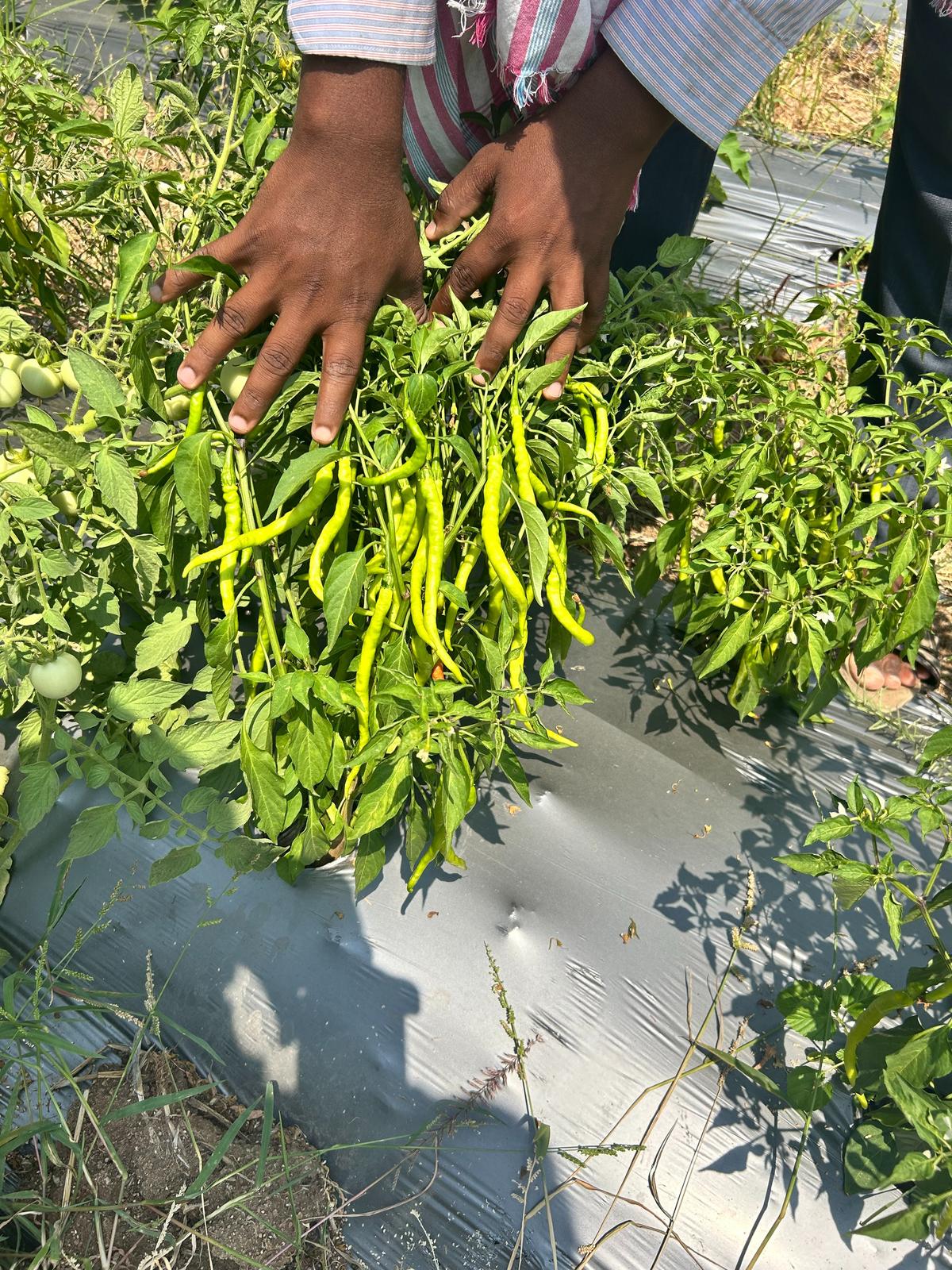
Chilli crop at Anil Reddy’s farm at Pedda Masanpally village.
Speaking to The Hindu, Mr. Nagarjun emphasised that not all pest problems require chemical solutions. “The overuse of pesticides has not only reduced biodiversity but also led to frequent pest outbreaks due to monoculture practices. Monitoring tools like pheromone, sticky traps, and light traps help detect pest thresholds before crop losses occur,” he said.
During the field demonstrations, biocontrol techniques were applied to tomato, chilli, and brinjal crops. Chemical fertilisers were replaced with biofertilisers including Azotobacter (for nitrogen), phosphorus and potash-solubilising bacteria, and zinc-solubilising bacteria — microorganisms that naturally enhance soil fertility and reduce the dependency on synthetic inputs.
________________________________________________________________________
Read Also : HOW TO GROW POTATOES IN RAISED BEDS: THE COMPLETE GUIDE
________________________________________________________________________
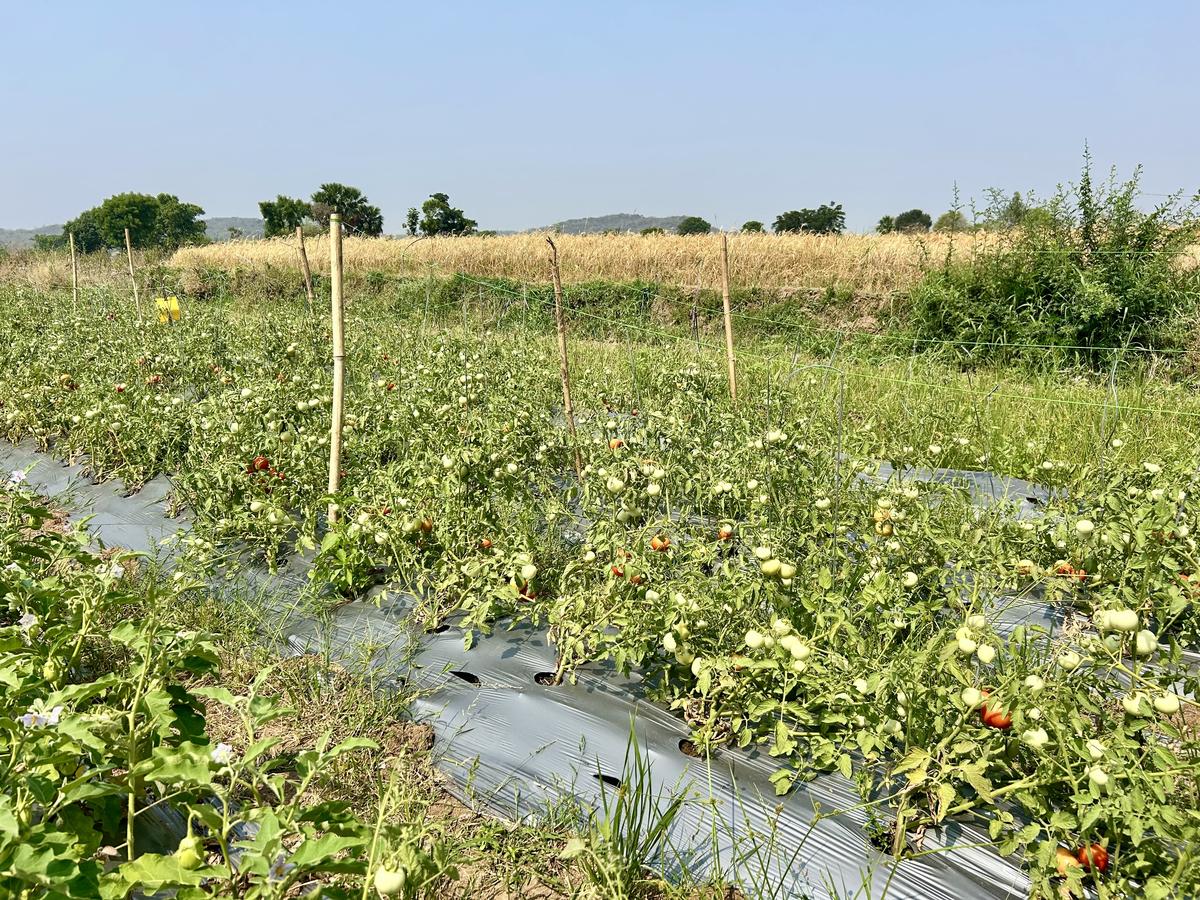
Tomato crop at Anil Reddy’s farm at Pedda Masanpally village.
To control plant diseases, microbial agents such as Trichoderma viride, Pseudomonas, and Bacillus subtilis were used. These microbes exhibit antagonistic activity by inhibiting plant pathogens through enzymes and antibiotics.
For managing sucking pests like thrips, whiteflies, and jassids, farmers employed biopesticides including Beauveria bassiana, Verticillium lecanii, and Isaria. Insect pests such as caterpillars, borers, and leaf miners were tackled using Metarhizium and Bacillus thuringiensis.
________________________________________________________________________
Read Also : Climate Change and how can YOU fix it
________________________________________________________________________
Other beneficial microbes, such as Nomuraea and Bacillus subtilis, were also introduced to bolster plant immunity and resilience. “These eco-friendly methods reduce pollution, conserve soil biodiversity, and improve long-term soil health,” Mr. Nagarjun said.
Farmer Anil Reddy reported significant benefits from the initiative. “Pests in tomato and chilli crops were eliminated, though a few were still seen in brinjal. The bio-inputs we received from Krishi Vigyan Kendra (KVK), Medak, helped us save around ₹5,000 on fertilisers and pesticides,” said Mr. Reddy, who cultivates crops on half an acre (20 guntas) of land. He is also using modern farming methods like use of mulching sheets to check the weed in the field and is anticipating a good yield.
NOTE – This article was originally published in thehindu and can be viewed here