
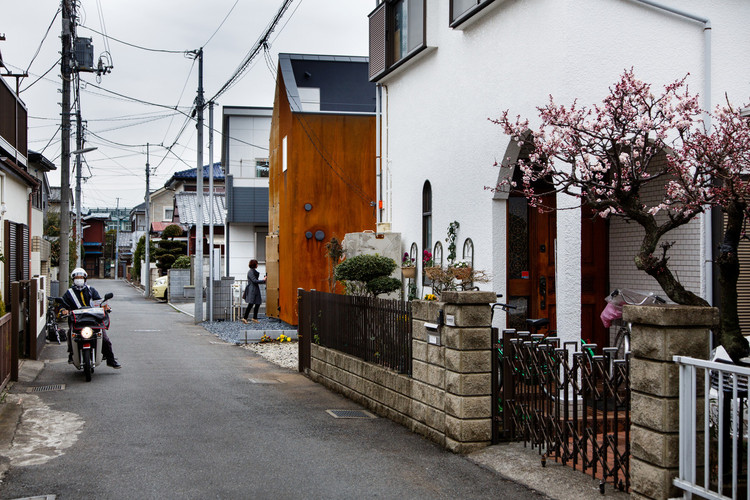
The tech industry in Japan has continued to serve as a pivotal driving force in Japan, with the whole country being well known for its technological innovations in various industries. As of late, most industries and companies have begun to shift their focus to the topic of sustainable development, with the inclusion of using these very technologies to work towards zero energy goals.
In April 2014, the Japanese government approved an energy policy to encourage Zero Net Energy Houses (ZEH) to become the standard for new house construction by 2030. Zero energy housing is designed to consume as much energy as it can create using renewable energy on-site.
________________________________________________________________________
Read Also : Ancient dog-size sea scorpion unearthed in China
________________________________________________________________________
Combining the greatest technological innovations with inexplicable beauty, Japan is continuously moving towards a greener future. Formerly, residential architecture in Japan was only built to last around 35 years before being torn down and rebuilt, however, the country is presently moving forward with the implementation of sustainable eco-homes. This sustainable development is wholly injected with the effect of great innovation, ensuring that new homes in Japan will be tried and tested for the foreseeable future.
The following projects are examples of eco-homes that have undergone significant energy efficiency improvements as a result of a handful of simple sustainable home features, including the use of energy-efficient LED lights, heat insulation, and air conditioning which reduces household energy use by half. Sekisui House, one of Japan’s largest homebuilders, is also a leader in pioneering the movement towards zero-energy houses. The company’s Green First Zero global initiative aims for energy self-sufficiency without sacrificing comfort, as they are designed to offset energy use, whilst achieving the ultimate goal of achieving zero energy consumption. In 2015, the ratio of net-zero energy homes to all newly built Sekisui House detached homes increased to 74%.

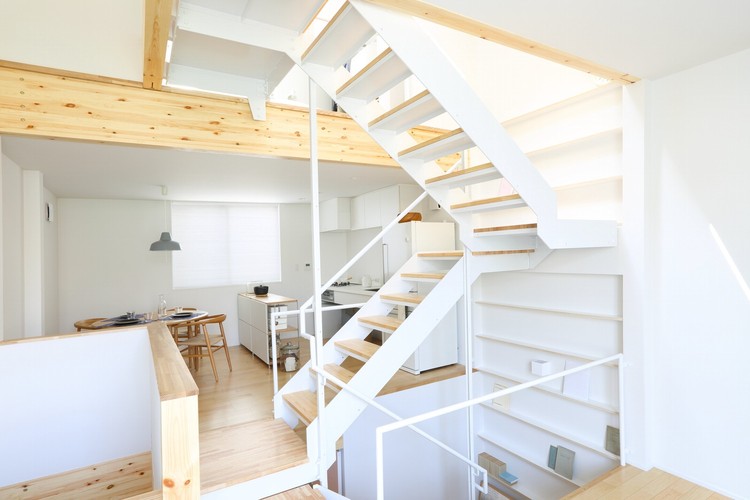
MUJI House stands as one of the forerunners in the zero-energy house movement, taking a bold step into architectural territory as they have come forth with a Vertical House based in Tokyo, Japan. The home accommodates all the demands of residential living within a small plot of land. Designed for the dense urban context of Tokyo, the three-story prefabricated home is completely devoid of interior walls and doors, accompanied by large north-facing windows to usher ample sunlight indoors. The split levels and open floor design encourages connection and help establish a logical flow of movement within the space.

Following the release of Vertical House, MUJI displayed yet another set of ready-made living spaces in the series of minimalist ‘huts’ at varying scales, with each hut intended to be habituated as a form of retreat from the hustle and bustle of everyday urban activity. Each hut explores a different material: an aluminum hut by Konstantin Grcic, a cork hut by Jasper Morrison, and a wooden hut by Naoto Fukasawa.
_______________________________________________________________________
Read Also : As floods hit western Europe, scientists say climate change hikes heavy rain
________________________________________________________________________

Asagaya Light Eco House by KH Architects is also a great example of energy-efficient housing located in Tokyo, Japan. When considering the build for this home, high air tightness and high heat insulation specifications were required so that the entire three-story space could be used without the added stress of temperature differences. There is significant use of eco-technologies within the home, such as the likes of high insulation resin shashes, additional insulation, and a ventilation system for total heat exchange to ensure high insulation performance.

What appears to be a trend in urban houses built in Japanese urban areas are the restrictions within construction for floor area ratios, diagonal lines, and fire restrictions. Although there is a pivotal focus on energy-efficient construction, the vision to achieve a cozy living space was also considered and achieved by using wood finishes in each part of the house whilst still considering these regulations. This home showcases an admirable balance between design and performance by utilizing a light court and void to allow wind, light, and heat to pass through without the dependency on equipment specifications.

Transustainable House by SUGAWARADAISUKE Architects is another example of residential architecture built with the intention to keep sustainability at the heart of its design, aiming to respond to the four main features of urban housing: small building site, diverse style of living, endlessly updating townscape, and artificial thermal environment. This project conveys a new solution for sustainable architecture that metamorphoses its existence over time.
_______________________________________________________________________
Read Also : Moon ‘wobble,’ climate change may drive coastal flooding in 2030s: Nasa scientists
_______________________________________________________________________

These elements to consider make interior and exterior durable to different contexts of the site, as the interior responds to transitions of residents’ lifestyles, whilst the exterior responds to the transitions surrounding the site. The home is not brought to perfection in the moments of its completion but aims to enrich the quality of the environment by engaging in intimacy with the long lapse of time.
Architecture fails to exist when it doesn’t provide any influence to its surrounding context. Transustainable House and the other projects described above explore the possibility to have a unique appearance by having a strong relationship with context. The establishment and development of zero-energy homes are becoming increasingly frequent throughout Japan, and as the demand for zero-energy standards becomes increasingly sought after, even more sophisticated, structural solutions will continue to form.

This article is part of the ArchDaily Topics: The Road to Net Zero Architecture presented by Randers Tegl.
Randers Tegl aims to take responsibility and think sustainable as a part of reaching the goal of Net Zero. Both in terms of how building materials impact the climate and how the materials age, but also with a focus on architecture. That is why Randers Tegl created their sustainable series GREENER, which comes with full documentation in the form of EPD, so it is possible to use the product in technical calculation programs.




