
Visiting farmers’ houses in 1984, the yr Frontline was born, virtually the very first thing I used to be met with in every single place was a glass of recent milk. In some elements of western Maharashtra, you’ll be given a further tumbler as you left the family. In coastal Andhra Pradesh, the milk usually got here in a silver tumbler—an indication of respect for the visitor, and a press release of the standing of a farmer doing properly.
In farm households in Tamil Nadu, you bought the milk in pure brass tumblers. Generally, that brass tumbler would have fabulous filter espresso. By the Nineteen Nineties, throughout many States, the silver tumblers had given strategy to chrome steel ones. After 1991, they nonetheless gave you recent milk, however now it usually got here in a cracked piece of crockery, perhaps a cup chipped on the edges. By the mid-Nineteen Nineties, I discovered myself ingesting out of glass tumblers.
_______________________________________________________________________
Read Also : Arctic methane release due to melting ice is likely to happen again
________________________________________________________________________
By 2000, the milk had been changed by chai. In Maharashtra’s Vidarbha area, by 2003-04, it was black chai. The quantity of sugar within the tea—conventionally an indication of affection and respect—additionally saved shrinking. By the center of that decade, the glass tumbler had disappeared. The small amount of black chai now got here in these hideous plastic cups you get aboard trains and at bus depots.
In 2018, I met the liberty fighter Ganpati Bal Yadav at his residence in Sangli, Maharashtra. After an interview lasting some hours, he noticed me off with recent milk. In an aluminium tumbler.
Decline of farm financial system
The tumbler and its downward journey is a metaphor for the decline of the farm financial system. It additionally displays the disastrous influence of financial insurance policies which have allowed personal corporations to push down milk costs (and that of all different farm produce) on the very time we unleashed “market-based pricing” that allowed value gouging on the shopper finish.
Additionally Learn | A saga of drought, debt, and deaths in Maharashtra
These have been consciously crafted insurance policies. Together with some that led to tens of millions of very younger, weak youngsters in farm households going with out milk. Farm youngsters denied animal milk as a result of each drop was offered to finance different necessities. In fact, it’s not simply milk. Have a look at cotton. Within the mid-Nineteen Seventies, a farmer within the Vidarbha area might promote a quintal or two of cotton and purchase 10-12 grams of gold. That got here in useful on the time of his daughter’s marriage. In the present day, that farmer can’t purchase 10 grams of gold even when he or she sells 10 quintals of cotton.
Though the minimal help value (MSP) declared in Maharashtra is Rs.7,122 a quintal, few get greater than Rs.6,500. Even with full MSP, they’d get Rs.71,220 for 10 quintals—nonetheless lower than the price of 10 grams of gold at present. Merely put, they will be unable to purchase even 1 gram by promoting 1 quintal.
Damaging insurance policies
Once more, a decline and “transformation” pushed by financial insurance policies. The insurance policies and processes set in movement affected many different lessons too, right here and in most different nations on this planet. We noticed these, although, in full-blooded show from 1991. Worldwide these included the next:
The withdrawal of the state from sectors and programmes that mattered to the poor. Large cuts in subsidies to the poorer sections whereas big subsidies (renamed “incentives”) have been directed in direction of the wealthy and the company world.
________________________________________________________________________
Read Also : The Science of Climate Change Explained: Facts, Evidence and Proof
________________________________________________________________________
A fall in public funding in agriculture. The fast diversion of agricultural credit score from agriculturist to agribusiness. A large switch of sources from poor to wealthy. An enormous rise in farmer indebtedness. And the unprecedented rise of company energy. The privatisation of many public sources, together with a 19 km stretch of a river in Chhattisgarh.
The privatisation of nearly the whole lot, even mind and soul. And the undermining of native governance, the place panchayati raj squared up in opposition to company energy, and misplaced. As the previous RBI Governor Y.V. Reddy may put it: We’ve seen extra of rural developments, much less of rural growth.
Rise in inequality
And, in fact, we proceed to see a shocking rise in inequality. The mixed worth of India’s 217 greenback billionaires, as on December 10, 2024 (in accordance with Forbes) was $1,041 billion. We’re speaking a trillion {dollars} right here. That determine is a few 58 instances India’s agricultural price range of $17.91 billion. And near 1.8 instances our complete Price range expenditure of $562 billion. Consider it: 217 people (0.000015 per cent of the inhabitants) maintain wealth equal to roughly a 3rd of the GDP.
Over the many years from 1991, we noticed the undermining of life-support measures for farmers. The regular undermining of the state-regulated mandis. The deliberate, chaotic destruction of the general public sector, which, in flip, badly broken farming and farmers. A horrible influence on meals output and availability.
The Kafkaesque transformation of agricultural universities from the community-centred establishments they as soon as have been to laboratories of company agribusiness. The systematic diversion of formal credit score away from farmers, which pressured tens of tens of millions to show to the previous and new sahukars (moneylenders). A collapse of costs for the farmer, at the same time as they exploded on the shopper degree. A have a look at cultivation prices of cotton in Vidarbha between 2003 and 2013 confirmed that enter costs and the general value of cultivation of an acre of cotton rose by 250-300 per cent and, in some instances, much more. However what about farmers’ incomes? These moved, if in any respect, at a fraction of the crippling cultivation value will increase, significantly that of seeds.

Cyclone Amphan wreaked havoc in West Bengal in Might 2020, destroying greater than 10 lakh hectares of farmland, together with this discipline of pulses in South 24 Parganas district.
| Photograph Credit score:
RAJEEV BHATT
And revenue? Even the 77th spherical of the Nationwide Pattern Survey, or NSS, the final and newest on farm households, reveals that the common month-to-month revenue of farm households is round Rs.10,218. Are you able to consider a single job within the organised sector that doesn’t pay near double that? And bear in mind, that determine is family, not particular person revenue. And bear in mind, that in 2017, the Narendra Modi authorities promised to double farmers’ incomes in 5 years. Properly, revenue from cultivation truly noticed a decline of 10 per cent between 2012-13 and 2018-19. Farm households now get extra revenue from wages, salaries, and livestock.
As progressive economists have famous, we noticed a globalisation of costs and an Indianisation of incomes. By 2024, we all know that over 4,00,000 farmers have taken their very own lives, largely in policy-driven misery. That determine is an official one—and a horrible underestimate.
Exodus from farming
The wilful destruction of the farmer and the agricultural labourer noticed, between Censuses 2001 and 2011, the most important ever migrations in India. As farming and the bigger agrarian financial system tanked, tens of tens of millions of individuals left their villages for cities and small cities. This was not taken to be a foul factor. It was poorly coated, if in any respect, barring in Frontline and The Hindu. “We’ve to get tens of millions out of agriculture,” was the cry of neoliberal economists. High-quality. However have been these tens of millions consulted? Did they’ve a selection? What choices have been they supplied?
Even if you happen to really feel it important to maneuver many farmers out of agriculture, you don’t do it with out their participation within the decision-making. You don’t do it by destroying agriculture and the lives of agriculturists.

On the residence of Thimme Gowda (38), a farmer who dedicated suicide in Karnataka’s Hassan district, in August 2015. Nationwide, by 2024 over 400,000 farmers had taken their lives, largely in policy-driven misery.
| Photograph Credit score:
Okay. Murali Kumar
________________________________________________________________________
Read Also : Climate Change Performance Index 2021: India slips down by one position to 10th rank,…
________________________________________________________________________
The event economist Prof. Okay. Nagaraj says that you can imagine it when you have got “(a) enhancements in agricultural productiveness; (b) creation of fine high quality, first rate employment in each rural and concrete areas; and (c) provision of fine schooling and healthcare to all so {that a} expert, wholesome workforce develops. In actuality, precisely the other occurred. And then you definately use mass misery migration from rural areas as proof of ‘enhancements’ in agriculture!”
Observe that the inhabitants of farmers in India has gone up in each census after Independence, together with 1991. Then there’s a beautiful collapse. Census 2001 noticed a fall in full-time or “major cultivator” farmers of seven.2 million, sure million. Census 2011 recorded an extra fall of their numbers of seven.7 million.
In brief, within the first 20 years after we embraced the “new” financial insurance policies, India’s farmer inhabitants fell by virtually 15 million. That’s, on common, over 2,000 full-time (or “major cultivator”) farmers have been quitting agriculture each 24 hours. Had this occurred in virtually another occupation, definitely with urban-based companies and professions, you’ll by no means have heard the tip of it. However to the extent it figured in public discourse, it was the voices of corporate-friendly economists that dominated. And so they stated it was a superb factor.
DYING EVERY DAY
A complete of 11,290 individuals concerned in farming dedicated suicide in 2022, in accordance with NCRB knowledge. That is equal to at the very least 30 farmer suicides each day or multiple each hour. The 2022 determine was larger than the ten,881 suicides recorded in 2021, 10,677 in 2020, and 10,281 in 2019.
It did come up in a fairly perverse method throughout the “reverse migrations” of the COVID-19 pandemic. Tens of tens of millions of rural individuals doing menial jobs in cities—many amongst them expert farmers—headed again to their villages throughout the COVID-19 pandemic. In simply 25 days, in Might 2020, the Railways reported that their Shramik, or employee, trains had carried 9.1 million labourers again to their houses.
This sparked loads of bleeding-heart anguish. “Why are they going again? It’s too dangerous. They’ve a greater likelihood of survival within the cities….”However the anguish was actually over the lack of low-cost labour in our cities. “Why are they going again” was not the suitable query. A greater one was, why did they go away their villages to come back right here within the first place?
Widespread misery
The reply to that is in two phrases: agrarian disaster.
The reverse exodus couldn’t have occurred if there had been no misery migrations to the cities within the first place. The size of these migrations introduced the Mahatma Gandhi Nationwide Rural Employment Assure Scheme underneath enormous stress, and the federal government was pressured to spend extra money on it. However the scheme is once more being undermined, financially and in any other case.
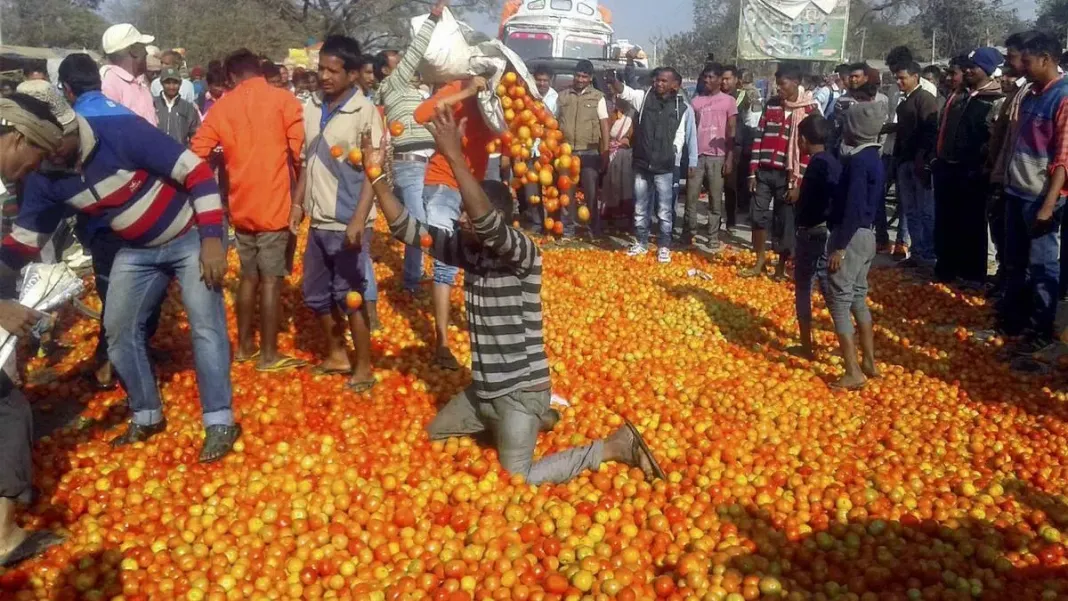
The scorching ranges of misery additionally noticed the rise of main farmer protests. The primary of those occurred within the final decade, with the historic march of 40,000 of among the poorest, primarily Adivasi, farmers from Nashik to Mumbai in March 2018. The more moderen one was the beautiful kisan andolan on the gates of Delhi in 2020-21. Did the mainstream media ever let you know that this was the most important peaceable, democratic, and constitutional protest anyplace on this planet up to now 30 years? The globally celebrated Occupy Wall Road motion concerned simply 1000’s of idealistic younger individuals who have been turfed out of New York’s Zuccotti Park after solely 9 weeks. The farmers’ protest in Delhi lasted 54 weeks and ended solely when three farm legal guidelines have been repealed.
Prime Minister Modi claimed it was as a result of he had failed to steer a “small part of farmers” that the legal guidelines have been of their curiosity. He didn’t point out that the instruments of persuasion had included tear gasoline, water cannons, concertina barbed wire, big container barricades, lathicharges, and digging up of the nationwide freeway to cease the tractors carrying the farmers from advancing.
Additionally Learn | Onion disaster: Maharashtra farmers are paying the worth for a misguided try to manage inflation
Within the three many years since 1991, the farm disaster has merged with the disaster within the bigger agrarian society. Accompanied by an employment disaster, a migrations disaster, and a water, well being, and schooling disaster. And extra. And all of the whereas, the suicides by farmers (together with agricultural labourers) has continued. The federal government’s reply is to grossly fiddle with the methodology of the Nationwide Crime Data Bureau. The result’s that the farm suicides knowledge after 2014 will not be comparable with that of the previous 19 years for which knowledge exist.
FACT: the suicides are NOT the agrarian disaster; they’re its most tragic end result. They’re its final result, not its origin. Its consequence, not its trigger.
Agrarian disaster and causes
Right here is the agrarian disaster in 5 phrases: Company hijack of Indian agriculture.
The method by which that’s achieved, to cite Prof. Okay. Nagaraj, in 5 phrases: predatory commercialisation of the countryside. The result of that course of in 5 phrases: largest displacements in our historical past. (Maybe in human historical past).
When the most important physique of landowning smallholders on this planet battles for survival, you sense that we might truly be taking a look at a civilisational disaster. A disaster that may not be measured merely when it comes to manufacturing misplaced, and even when it comes to the horrendous lack of human lives, however by our personal lack of humanity, of the shrinking boundaries of our compassion, our humaneness.
NOTE – This article was originally published in indianexpressalert and can be viewed here
Tags: #Agribusiness, #agriculture, #agriculturist, #animalmilk, #farmer, #farming, #fram, #getgreengetgrowing, #gngagritech, #greenstories, #Maharashtras, #milk