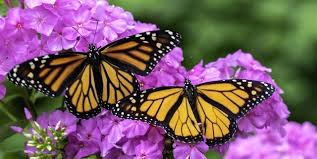
Enjoy these delicate pollinators in your garden with three seasons of blooming flowers!

While butterflies will visit lots of different flowers, there are some that actually draw them.
This can be for several reasons. Most commonly, there are some plants, such as dill, or milkweed, that the little fliers are prone to eat during multiple parts of their cycle: Certain butterflies will lay their eggs on these plants, and the caterpillars will consume the leaves and stalks, and even form cocoons on them. Later, the butterflies will drink from the flowers (and look for them to lay eggs on).
Other plants, such as the aptly-named butterfly bush produce flowers that attract plenty of species of pollinator, but don’t support the entire lifecycle of butterflies. These are great to supplement with, but planting them alone won’t bring nearly as many butterflies to your garden space.
As you decide which plants to include, note that some are annuals you’ll want to plant each year, while others are perennials. Make sure to find varieties that are right for your USDA Hardiness Zone—and be aware that the zones changed in late 2023 to account for warmer average temperatures so if you haven’t checked in a while, you may be in a new zone!

1
Asters (Aster spp.)
This collection of late-blooming beauties are great for a wide variety of pollinators and local critters. Birds enjoy the seeds while bees and butterflies love the nectar. Give them plenty of sun and they’re pretty easy to grow! They come in pink, purple, blue and white.
________________________________________________________________________
Read Also : How to do Pranayam: Yoga Breathing Exercises You Must Include in Your Routine
________________________________________________________________________
 leekris//Getty Images
2
Dill (Anethum graveolens)
Everyone’s favorite pickling herb is also a host plant for the swallowtail butterfly. The distinctive black and green caterpillar will feast on the plant, and the beautiful butterfly will come visit the tiny delicate flowers—so be sure to let some bolt!
 PRAKASH MATHEMA//Getty Images
3
Marigold (Calendula officinalis)
Colorful marigolds are known for keeping certain pests away from your garden, but they’re also known for attracting both butterflies and bees. Deadhead dry flowers to keep the blooms and butterflies coming!

4
Sage (Salvia spp.)
Both butterflies and hummingbirds adore the nectar produced by salvia plants. This genus of drought-resistant plants includes plenty of long-blooming spikes that look beautiful along a walk or at the corners of a garden.

5
Milkweed (Asclepias spp.)
If you’re a fan of monarchs, milkweed (also called butterfly weed) is a must-have. These plants are where the monarchs lay their eggs, and while the milky-white nectar can be toxic to humans (so don’t eat it!) it’s essential for the monarch caterpillars. Plant it in your sunniest spots
________________________________________________________________________
Also Read : This Farmer Won the Padmashri for His Zero Budget Natural Farming Model
________________________________________________________________________
 JudiParkinson//Getty Images
6
Shasta Daisy (Leucanthemum × superbum)
This cheerful flower will bloom all summer long and even into early fall! The classic beauties look great in a vase on the table, but pollinators also love them.
Plant in full sun 1 to 2 feet apart as they tend to spread as they grow.
 PrairieArtProject//Getty Images
7
Sunflower (Helianthus annuus)
The huge flowers, bright colors, and abundance of nectar attract and feed a wide variety of butterfly species. And as a bonus, the large amount of foliage is an excellent source of caterpillar food!
There are nearly two dozen varieties worth planting, as well, from giant flowers to tinier ones like “sunny bunch,” that cap out at 3 feet and are great for smaller gardens.

8
Snapdragon (Antirrhinum spp.)
A real standout in the early spring and fall, these cool weather-loving plants bring loads of color to your flower garden. Deadhead to extend the blooming cycle, and make sure to keep the soil moist during the hot summer months.
 Westend61//Getty Images
9
Stonecrop (Sedum spp.)
Stonecrop is actually a succulent that you can grow outdoors! It grows best in arid climates when planted in well-draining soil. Choose a spot for it in full sun for best results.

10
Buttonbush (Cephalanthus occidentalis)
Native to eastern and southern North America, the white flowers of this plant are an ideal for butterflies to rest atop.
 Katrin Ray Shumakov//Getty Images
11
Bee Balm (Monarda didyma)
The fragrant foliage of bee balm (also know as wild bergamot) will attract many pollinators to your garden—and the plant is a double-bonus, as it also feeds caterpillars. Plant in a sunny spot for spring and summer blooms.
In fact, you may want to plant a little for yourself! Bee balm is an edible herb that tastes great in salads, as a tea, or even in jellies!
________________________________________________________________________
Read Also : WHO warns Coronavirus Crisis is Going to Get Worse and Worse! Global Infections rose above 13 Million!,
________________________________________________________________________
 The Photography Factory//Getty Images
12
Daylily (Hemerocallis spp.)
Though not technically a lily, the daylily does attract butterflies with the nectar of its large tubular-shaped flowers.
Commonly available in warm colors (orange, red, and yellow), it spreads quickly, so it will need to be divided after a few years to maintain maximum flowering.
 patty_c//Getty Images
13
Phlox
There are many varieties of phlox, which range from low-growing ground cover to tall breeds that can add height to the backs of your flower beds. The dense collections of tiny flowers also come in a multitude of colors and are highly fragrant.

14
Goldenrod (Solidago spp.)
A member of the aster family, this yellow beauty brings all the butterflies to your yard, and it is known to have many health benefits, including pain and inflammation reduction.

15
Hollyhock (Alcea spp.)
These mid-summer bloomers are known to support the caterpillar life cycle of the painted-lady butterfly.
Available in an array of colors, this plant can grow to between 6 to 8 feet tall, so be sure you plant it in the back row of your flower bed. This classic flower is one of our favorites for planting in a midcentury-style old-fashioned garden.
 skhoward//Getty Images
16
Cornflower (Centaurea cyanus)
Also known as bachelor’s button, these blue wildflowers are very easy to grow, and will readily self-seed. Both bees and butterflies love them.
 pianoman555//Getty Images
17
Lavender (Lavandula spp.)
With silvery leaves and pretty purple flowers, this butterfly magnet looks great along garden borders. Added bonus: There are dozens of things you can do with the fragrant flowers. They can be dried and used in aromatic sachets or cooked into lemon bars.
 Jacky Parker Photography//Getty Images
18
Butterfly Bush (Buddleja davidii)
It’s called a butterfly bush for a reason. This lush shrub boasts pretty flowers that attracts butterflies and other pollinators. It’s a fast grower and delightfully low-maintenance.
Be aware: this fast grower can become invasive, and while butterflies love it, it’s not good for feeding caterpillars, so it can end up harming their lifecyle. It shouldn’t be the only pollinator plant in your garden.
 Aaron Hawkins//Getty Images
19
Yarrow (Achillea millefolium)
Plant this carefree perennial in a sunny spot in well draining soil. It is drought tolerant, so be sure not to overwater.
NOTE – This article was originally published in countryliving and can be viewed here