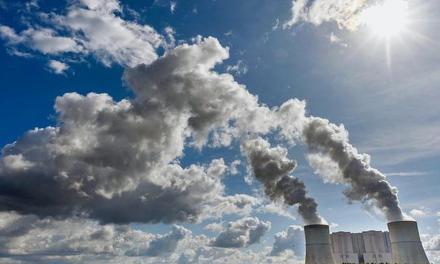
Wildfire seasons keep stretching longer across much of the world. The smoke that rides along with them can hang over a landscape for days, sometimes weeks.
For people, the drill is familiar by now. We shut the windows, check the air quality, and wait it out inside.
Wild animals breathe that same dirty air, only without any of those options. What they do about it has stayed a surprisingly open question.
Part of the reason is simple. Smoke has drawn far less notice than heat or flames as something that shapes how animals behave.
________________________________________________________________________
Read Also : “Earth is just not our Environment; We Are The Environment..
________________________________________________________________________
A team led by Jamie Cornelius set out to change that. Cornelius is a biologist at Oregon State University (OSU).
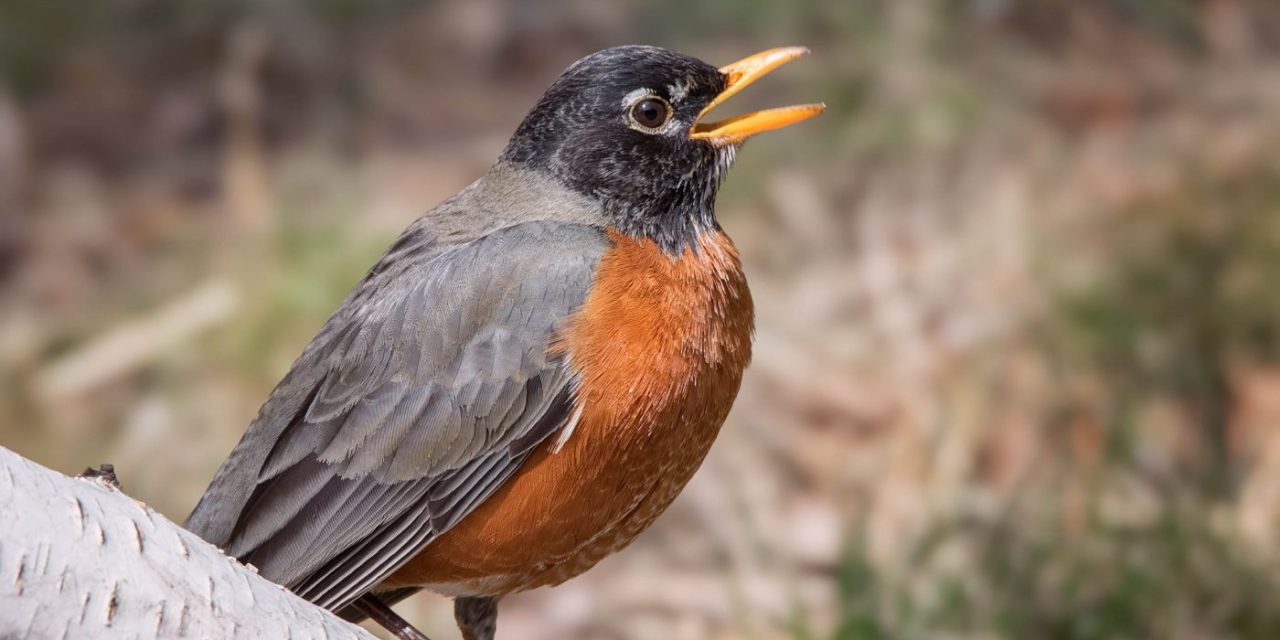
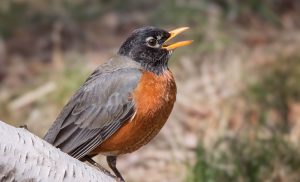
Her group turned to a bird almost everyone in North America knows. The American robin forages across lawns, parks, and woodland edges.
How robins handle wildfires
The effort stretched well beyond a single campus. Colleagues at the University of California, Los Angeles (UCLA) worked on it too.
A team at Cornell University rounded out the collaboration. Together they watched what the robins did as the smoke thickened.
“Wildfire smoke is an increasing disturbance across much of the globe yet it hasn’t received much attention as a driver of animal behavior,” Cornelius said.
“Animals may have evolved strategies to cope with smoke exposure, but what those strategies are and how they affect health outcomes are largely unknown.”
Robins stayed during wildfire smoke
Going in, the team expected the birds to run. Smoke gets thick, robins have wings, and clearing out for cleaner air seemed the obvious call.
The data pointed the other way. As the smoke grew heavier, most of the birds simply held their ground.
Even the post-breeding robins stayed, which caught the team off guard. With no nest to tie them down, they could have left at any point.
Slowing down instead of leaving
Staying put did not mean the birds ignored the smoke. Instead they changed how they went about their day as the air got worse.
“Robins in the post-breeding season, despite not being tied to a nest location, did not just leave when it got smoky,” said Cornelius, an ecophysiologist in the OSU College of Science.
“Instead they shifted behavior to reduce activity, presumably to limit the negative consequences of smoke inhalation, and oriented differently according to prevailing wind conditions.”
The logic is straightforward once you think about breathing. Less movement pulls less air through the lungs, so a bird that slows down takes in a smaller dose of what the smoke carries.
________________________________________________________________________
Read Also : What Kind of Life Do we Want On this Earth?
________________________________________________________________________
How robins responded to wildfire smoke
To make sense of responses like this, the team laid out a simple framework. They sorted the options into three paths, which they call stay, shift, and go.
An animal that stays keeps to its usual routine. Shifting means adjusting that routine to blunt the damage.
Going is the most drastic path, a move toward cleaner air somewhere else. Which route a species takes depends partly on how it gets around.
The robins settled firmly in the middle. They shifted, choosing neither to flee nor to carry on as normal.
Tracking robins through wildfire seasons
Reaching that conclusion took a stretch of patient field work. The team trapped 21 adult robins in fire-prone habitat in Oregon.
Each bird went home wearing a small band that beamed back data. Those tags let the team follow individual movements through the 2023 and 2024 wildfire seasons.
A clear pattern showed up as the smoke intensified. The birds made shorter trips, keeping close instead of striking out for distant ground.
Turning into the wind
One behavior in particular stood out when conditions were worst. It had to do with which way the birds chose to face.
Under light smoke, their orientation barely changed. Once the smoke turned heavy, though, the robins grew far more likely to point into the wind.
That small adjustment made a real difference. Facing the wind tended to cut the amount of smoke they took in.
Extreme wildfires may move robins
None of this means robins would never flee. Cornelius suspects there is a tipping point her study simply never reached.
“It’s possible that robins do attempt to flee high-density smoke with long-distance movements and that the levels of smoke that occurred during our study were not quite high enough to induce that response,” Cornelius said.
“There could be some threshold that triggers the ‘go’ response that was not reached.”
The smoke over Oregon in those two years may have stayed below the line that sends birds packing. Cross it, and the whole picture could look different.
What wildfire smoke carries
It helps to remember what smoke actually is. Far from a single substance, it is a shifting brew of gases and tiny particles that can hurt any animal that breathes or swallows it.
The scale of exposure is hard to overstate. Cornelius points out that billions of organisms can be caught up as the finest particles drift for hundreds or thousands of miles.
“Animals very close to wildfires are obviously at risk of serious injury or death from exposure to extreme heat and survive only through behavioral responses like fleeing or seeking shelter,” she said.
“We’re trying to understand the behaviors animals adopt when they are exposed to hazardous smoke but not in imminent fire danger.”
________________________________________________________________________
Read Also : The longest-living animals on Earth
________________________________________________________________________
Effects that reach predators
The consequences may not stop with the animal breathing the smoke. Cornelius expects some responses to ripple outward and nudge other species into changing too.
Prey behavior is the clearest example of that chain. When prey grow less active in smoke, the predators hunting them may end up shifting as well.
That knock-on effect can spread through an entire food web. The predator itself might never catch a whiff of smoke.
Questions that remain open
For all this, the biggest questions are still wide open. Can every animal even sense smoke to begin with?
And among those that can, which ones react in ways that truly lower their exposure? Much of the answer may come down to habitat, season, age, or a species’ long evolutionary history.
Smoke harms animal health
Research here is picking up speed as fire seasons intensify. Even so, the foundations are still surprisingly thin.
“Even though research on animal responses to wildfire smoke has accelerated as climate change alters fire regimes, there is a lot we don’t know,” she said.
“But emerging evidence definitely suggests that animal health is impaired by acute exposure to smoke.”
For the robins, holding their ground appears to carry a real cost to the body. Measuring the size of that cost is where this work heads next.
NOTE – This article was originally published in earth.com and can be viewed here
Tags: #animals, #birds, #climate, #dirtyair, #environment, #getgreengetgrowing, #gngagritech, #grenstories, #nature, #smoke, #wildfire, #wildlife, gng