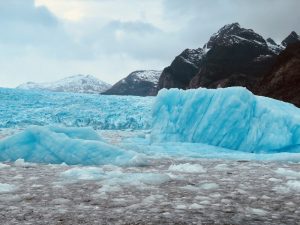
All-time high average air, sea and surface temperatures are being recorded from the past two decades. Ice melting has become a global subject. Melting glaciers are altering the ocean currents whereas sea ice melting deteriorates the ocean ecosystem through a chain of interconnected events. Due to warmer temperatures, the rate of ice melting is higher than the rate of snow accumulation.(Climate Change Indicator)
Ten per cent of the earth has a glacial cover. Communities are sustained by these two hundred thousand glaciers in the world.
Sea ice gives rise to a whole new ecosystem one of its kind which has an impact on the biodiversity of oceans of the world at a large scale.
_______________________________________________________________________
Buy Organic Products Online at best prices at https://www.getgreen.co.in .
_______________________________________________________________________
Some bleak and depressing facts:
- A recent study by U.K researchers depressingly revealed that 28 trillion tons of ice has melted and receded from the Earth’s surface since 1994.
- The arctic ice has been hastily receding from the last three decades. At this rate, the arctic would completely lose its ice cover in the next three decades.
- More than one-third of the world’s remaining glaciers could melt by the end of this century.
Causes of melting Sea Ice and Glaciers
Human interventions with the balance and flow of nature are solely responsible for these problems.
Greenhouse gases released by combustion of fossil fuels trap heat in the atmosphere. With increasing temperature, ice melts and the more of the surface gets exposed which in turn, soaks up more heat.
_______________________________________________________________________
Read Also : Can carbon removal save us?
________________________________________________________________________
Since the industrial revolution, the concentration of Carbon dioxide in the atmosphere has increased by an alarming 40 percent. In the process of oil and gas extraction methane is released which has an even greater affinity for heat than carbon dioxide and proves detrimental to the atmosphere.
Deforestation is one of the major reasons for the changing climate and its further implications.
Ice-breaking ships passing the Arctic Ocean in summers crush through the ice cover which results in water venting in the gaps.
Repercussions of the ice melting
The Andes mountains with the majority of all tropical glaciers in the world are vital for South America. Unfortunately, many floods and landslides happened after its size shrunk by 50 percent in the past forty years.
The Himalayan mountain range is well regarded as the Third pole for glaciers. It has humongous storage of freshwater in the form of glaciers
The Himalayas has a great significance for Asia and influences the lives of around 2.6 billion people in the Indian subcontinent and China.
Research published in the journal Nature Geoscience states that the Himalayan glaciers are melting at dreadful rates.
In Switzerland, glacial runoffs power the country’s hydroelectric plants but due to rapid glacier melts they have an excess of water flow at present and would actually face a shortage in the future. The regions with water surplus at present could face even droughts in the upcoming century.
Glaciers in the Rwenzori mountains in Africa protected the native communities from malaria as they created microclimates where malaria-carrying mosquitos could not survive. The glaciers were once so big that they fed the Nile river. Now when they are receding, the region is plagued by the disease.
Sea Ice melting eventually leads to a number of adversities.
Ominous darkness will prevail in oceans due to lack of ice as water is mostly translucent.
Recontamination of the water occurs since the toxic materials frozen into ice for decades get released in water with the melting ice.
The wind currents, sea levels, jet streams are disrupted due to ice melting, creating an imbalance in the climate which would result in extreme weather events like hurricanes, floods or drought.
________________________________________________________________________
Read Also : ALOE E-CELL, THE FUTURE OF GREEN ENERGY,
________________________________________________________________________
Solutions
There is a dire need of decarbonisation of the energy industry. Renewable energy and efficient optimisations would be a life-saver in the coming times. They have the potential to reduce emissions by 12 gigatonnes in the next thirty years. Carbon dioxide emissions from the transportation sector could reduce by a whopping 72 percent by 2050 with the help of electric vehicles. Innovations like data-driven solutions by logistics based companies are saving them hundreds of thousands of gallons fuel every year.
Governments and corporates must collaborate on a global scale to protect the planet’s invaluable resources.
Tags: #climate, #climateaction, #climatechange, #climatechangeisreal, #climatecrisis, #earth, #ecofriendly, #environment, #getgreengetgrowing, #globalwarming, #gngagritech, #gogreen, #greenstories, #nature, #savetheplanet, #sustainability, #sustainable, #zerowaste