An excerpt from ‘Voices in the Wind: Folktales, Folklore and Spirit Stories from the Himalaya’, edited by Namita Gokhale and Malashri Lal.
Bishbajit was a young man from a village in Tripura. He had just completed the period of service (chamaki kamani) in his father-in-law’s house. It was the month of Boishakh and Bishbajit was excited about celebrating Garia Puja, a festival observed by the people in his village. Early one morning, Bishbajit and his newlywed wife set out for the village.
They hoped to reach before sunset. The entire journey was through the forest, and they walked quickly to get through it before dark. Along the way, they noticed a sweet, unfamiliar fragrance in the air.
“What a sweet smell!” said the wife. “What flower is that?”
Bishbajit replied, “That’s the Kherengbar flower, a kind of orchid.”
“I’ve never heard of it,” said the wife. “And I’ve never known anything so fragrant in my life. Please bring me one, I want to put it in my hair.”
Bishbajit shook his head. “It’s not possible to pluck that flower. It’s a flower from heaven. It blooms only for God and brings bad luck to human beings.”
The wife became curious and asked Bishbajit, “How did such a heavenly flower come to earth then?”
Bishbajit replied, “It is said that a long time ago, a lovely apsara was sent down to earth because of a curse. She brought with her a seedling of her favourite flower and tended it with special care.” Bishbajit then pointed to the tree trunk and showed his wife how the plant was growing there, without touching the soil.
“The roots are wrapped around the tree, and it draws its food from there. These are the flowers of the Kherengbar,” he explained, pointing to the flowers.
________________________________________________________________________
The wife asked, “What harm can these flowers cause anyone?”
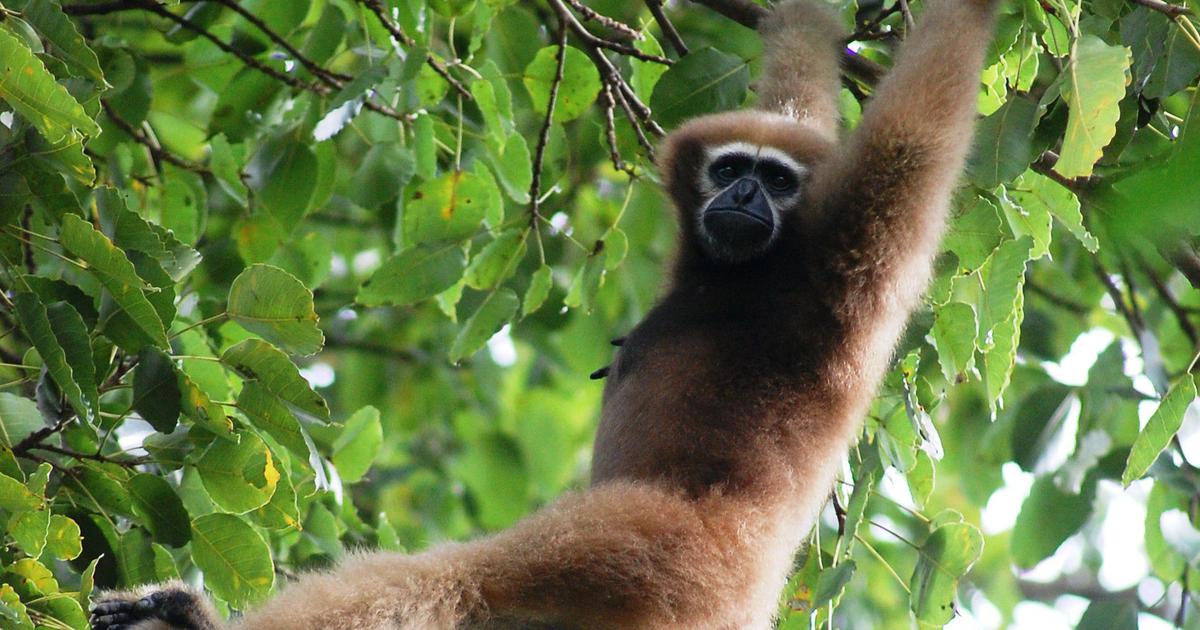
Bishbajit replied, “I’ve heard in my village that if anyone puts a Kherengbar flower in their hair, someone will immediately turn into a hoolock gibbon.”
The wife could not believe it. She kept staring at the flowers for a long time, saying nothing. Seeing her disappointed face, Bishbajit said, “Please don’t be sad. If you really want it, I shall pluck a Kherengbar flower for you. But don’t put it in your hair. If you do, I’ll turn into a hoolock gibbon.”
Bishbajit climbed the tree, picked some Kherengbar flowers, and gave them to his wife. She was thrilled. When she saw how beautiful the flowers were, she couldn’t resist the temptation and quickly put one in her hair. As soon as she did that, Bishbajit felt his hands stiffen against the tree.
“Did you put the flower in your hair?” he shrieked. “I feel like my body is changing.”
The wife realised her mistake, and immediately pulled the flower out of her hair and threw it away. It was too late.
She looked at the tree and saw that her husband was really changing. Terrified, she watched as he fully transformed into a gibbon.
She cried and pleaded, “Please, tell me how you can turn into a human being again.”
Bishbajit replied, “I can never become human again. I must live in the jungle with the other gibbons now. Walk quickly and reach the village before nightfall. Stay with my parents, and maybe in our next life, we’ll be together again.”
His wife was shocked. “I wanted a happy life with you, but God has not been kind to me. Where will I go now? I wish I could die,” she wailed. She then began to hit her head against the tree. She bled profusely and finally died beneath the tree.
Her husband saw this but could do nothing except groan, “Hu, hu … hoolock … huta.”
In her next life, the wife was born as a large lizard. She did not become a hoolock gibbon, as she had hoped, because she broke the rules of the Kherengbar flower.
________________________________________________________________________
Every year, in March and April, when the Kherengbar blooms, the gibbon chimes, “Hu, hu … hoolock … huta,” remembering his past life. And the lizard, still feeling the regret of her past actions, beats her tail against the tree trunk, expressing the unfulfilled longings of her previous life. Seeing the sad fate of the couple, God decided to take away the sweet fragrance of the Kherengbar flower from heaven.
That’s why, today, the beautiful Kherengbar no longer smells as it once did.
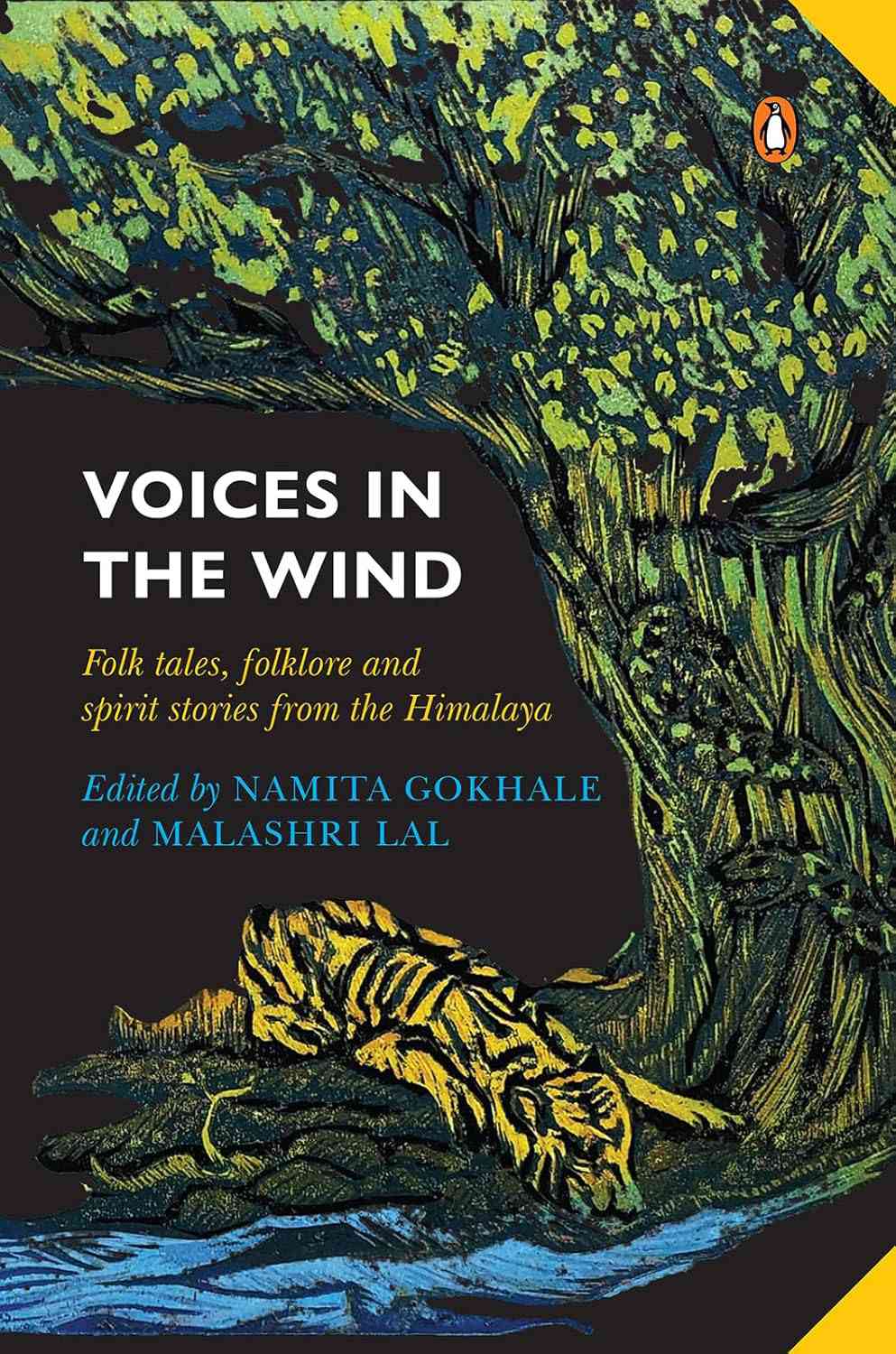
Excerpted with permission from ‘Kherengbar: The Heavenly Flower’ in Voices in the Wind: Folktales, Folklore and Spirit Stories from the Himalaya, edited by Namita Gokhale and Malashri Lal, Penguin Random House India.
We welcome your comments at letters@scroll.in.