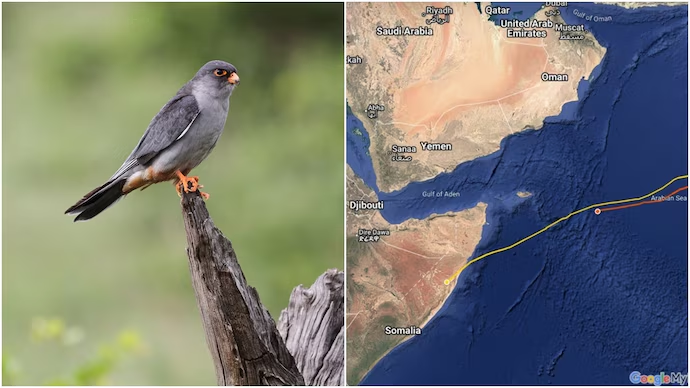
Weighing just 150 grams, Amur falcons undertake one of the world’s most gruelling migrations. New tracking data reveals the latest progress of two birds who began the long journey from Manipur.
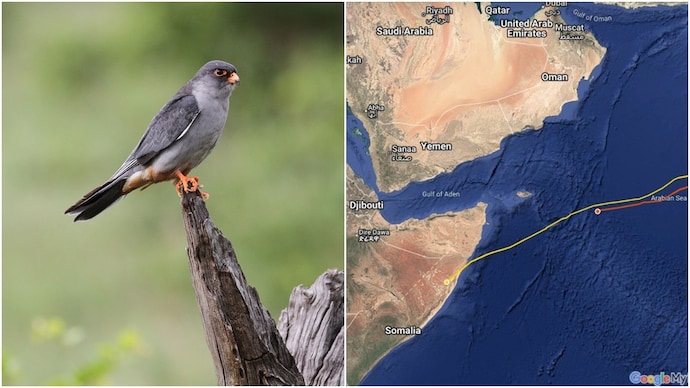
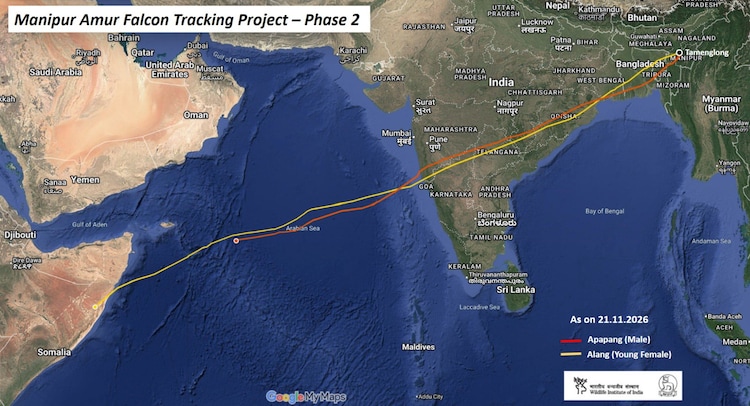
A young Amur falcon named Alang has completed an extraordinary nonstop journey of 5,700 kilometres from Manipur to Somalia in just 101 hours, or about four days and five hours, demonstrating the remarkable endurance of one of the world’s longest-distance migratory birds.
According to the latest satellite-tracking data shared by officials monitoring the birds, Alang reached the African coast without stopping to rest or feed.
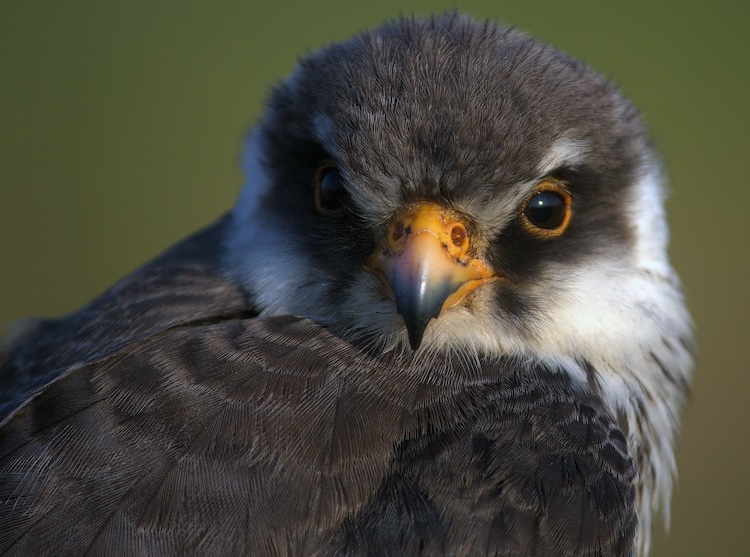
Meanwhile, her companion, an adult male named Apapang, had covered 4,100 kilometres in 95 hours and was still flying over the Arabian Sea.
________________________________________________________________________
Read Also : New microbes are discovered in Yellowstone that can do something life should not be able to do
________________________________________________________________________
The two birds began their journey from a roosting site in Tamenglong district of Manipur after spending nearly 25 days feeding and resting before their demanding ocean crossing.
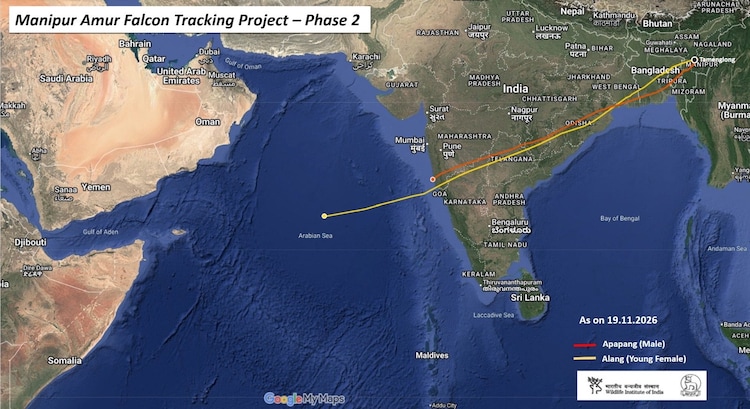
A 5,700 KM JOURNEY ACROSS SEA
Amur falcons are small birds of prey that weigh around 150 grams but undertake some of the most remarkable migrations in the animal kingdom.
Every year, they travel from breeding grounds in eastern Russia, northeastern China and Mongolia to wintering areas in southern and eastern Africa.
Their migration takes them through northeastern India, where large flocks gather in Manipur and Nagaland to feed on insects and build up energy reserves for the long journey ahead.
One of the most challenging stretches is the crossing of the Arabian Sea, where the birds fly thousands of kilometres without access to land for resting or feeding.
Alang’s journey is an example of that journey and the endurance it demands.
Her companion, Apapang, is still making the crossing, with thousands of kilometres already behind him.
TRACKING BIRD ACROSS CONTINENT
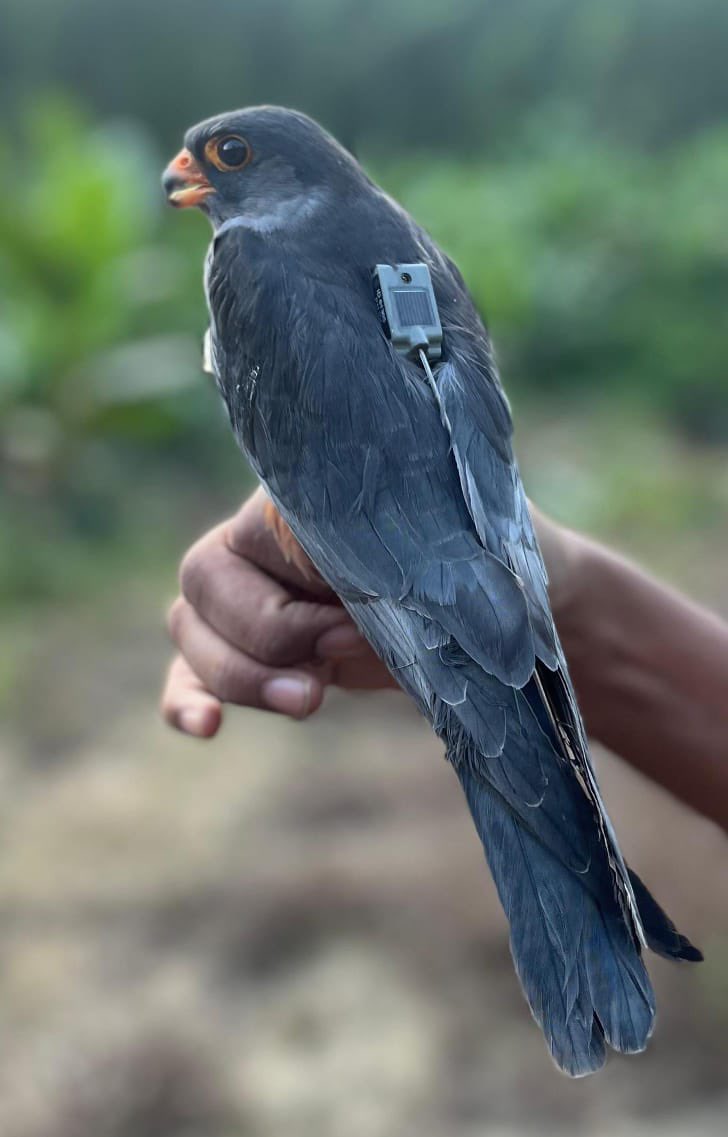
The two falcons were fitted with lightweight satellite transmitters by scientists from the Wildlife Institute of India (WII) in November 2025 under the Manipur Amur Falcon Tracking Project.
________________________________________________________________________
Read Also : Ancient microbes frozen for 40,000 years revive, reorganize, and begin to devour carbon
________________________________________________________________________
The devices allow researchers to follow their movements, identify migration routes and record how long the birds spend flying between stopovers.
Updates on their progress have been shared by Supriya Sahu, Additional Chief Secretary, EDII, Tamil Nadu.
Their journey is also a reminder of the importance of conservation efforts in northeastern India.
Communities in Tamenglong have played a crucial role in protecting the birds’ traditional roosting sites, helping ensure that thousands of migratory falcons can safely gather before continuing their journey.
Alang has now reached Africa after more than 100 hours in the air.
Apapang’s journey continues, and will allow researchers another opportunity to understand the extraordinary distances these tiny birds can cover.
NOTE – This article was originally published in indiatoday and can be viewed here