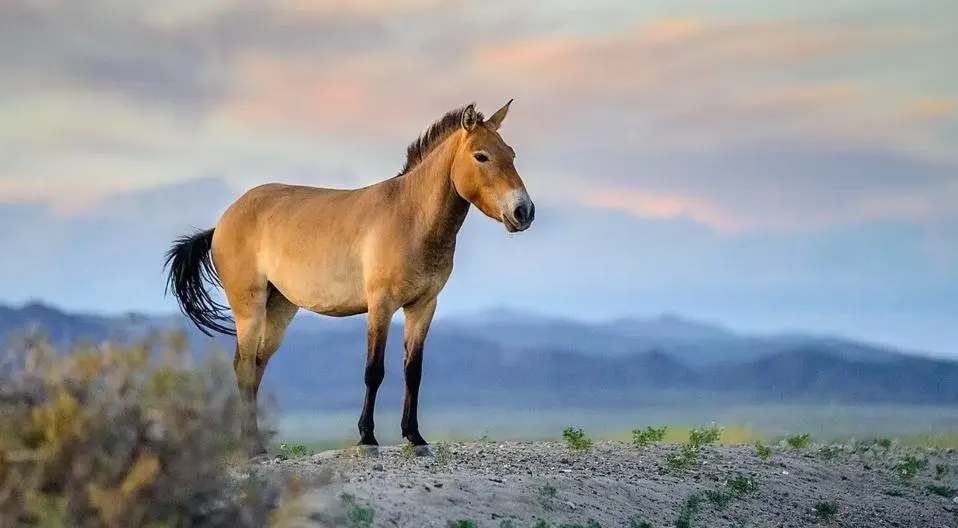
After it was almost driven extinct, the complete genome from an Endangered Przewalski’s horse has been mapped by a team from the University of Minnesota
A team of researchers report they have mapped the complete genome of the endangered Przewalski’s horse, Equus ferus przewalskii. Once extinct in the wild, there are now approximately 2,000 individuals of this species alive today in both captive populations and reintroduced herds, thanks to a variety of conservation efforts.
________________________________________________________________________
Read Also : How climate change plunders the planet
________________________________________________________________________
Przewalski’s horse was almost driven extinct
Przewalski’s horse, also known as the Asian wild horse, Mongolian wild horse or Dzungarian wild horse, is an Endangered species originally native to the high elevation grassy steppes of Central Eurasia. Historically, these horses were the subject of many Mongolian folk tales, and were recognized as the steed ridden by the gods, so the Mongolians named them, “takhi”, which translates to “spirit” or “holy”.
These horses were driven extinct in the wild by livestock grazing and agricultural competition as well as by other human conflicts, and by brutal winter conditions — and in fact, they were nearly wiped out entirely. Between between 1899 and 1902, an animal trader and several large landowners captured a large number of wild foals so they could set up a captive breeding program. Sadly, only 53 survived the harsh journey from Mongolia to Europe. After they arrived, the foals were dispersed to a number of zoos and privately owned parks. All of today’s captive Przewalski’s horses are descendants from just 13 of these ancestors that produced offspring.
________________________________________________________________________
Read Also : FARM GOODS TO ROOTS OF NATION – FARMING MADE EASY
________________________________________________________________________
A formal breeding program was initiated in 1959 but unfortunately, even then, there was not much of an official policy governing the exchange of Przewalski’s horses between zoos and private parks until 1980. This resulted in high levels of inbreeding, which led to the proliferation of a variety of genetic diseases throughout the population. The takhi’s average life span was considerably shortened, and foal mortalities increased. Few purebred Przewalski mares could give live birth.
In addition to captive breeding programs, multiple conservation efforts were initiated to preserve the species, including reintroduction and monitoring systems, protecting the wild horses’ native lands, and cloning. As a result, takhi were downlisted from Extinct in the Wild to Critically Endangered in 2008, and then to Endangered in 2011.
NOTE – This article was originally published in forbes and can be viewed here