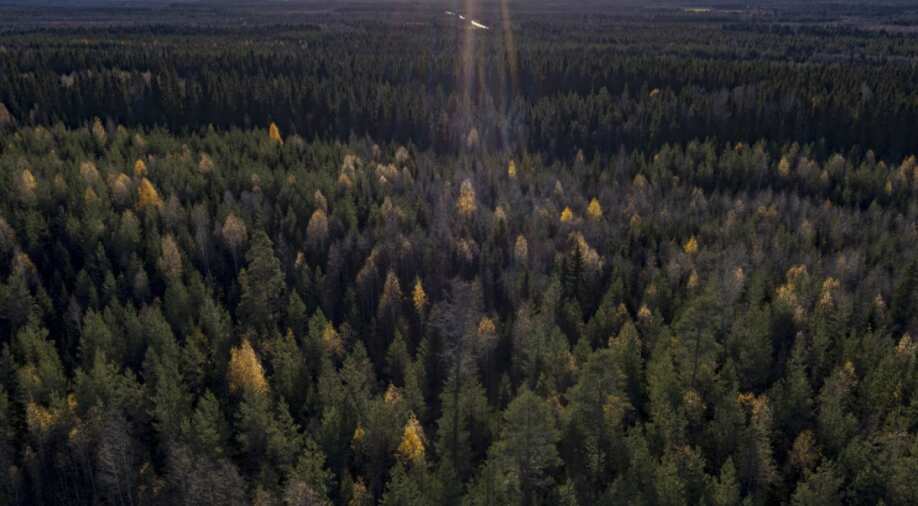
Second only to the South American Amazon forest, the Boreal forest is vital to ensuring the future of planet Earth, reports AFP. The forest which encircles the arctic and stretches across Canada, Scandinavia, Russia and Alaska has in recent times been weakened by forest fires, the melting of permafrost, an insect infestation, warming temperatures and drifting trees.
________________________________________________________________________
Read Also : 6 PRACTICAL WAYS WE CAN REDUCE OCEAN PLASTIC POLLUTION
________________________________________________________________________
Watch | WION Climate Tracker: Next pandemic to come from melting glaciers? New virus threat as Arctic melts
As per AFP experts have categorically warned that “the forest is encroaching on the tundra, and the prairies are slowly taking the place of the trees.”
With the rising temperatures “drunken trees” have become a common phenomenon; trees are tilted sideways due to the melting permafrost. Eventually, the soil will completely erode and the fauna will tumble down.
________________________________________________________________________
Read Also : Why ocean pollution is a clear danger to human health
________________________________________________________________________
Edmonton-based researcher for the natural resources ministry warns “You have the potential for large shifts,” adding that some areas might be flooded and even lose forests, which can eventually turn into bogs or swamps, and lakes.
The degradation of permafrost is behind this “buckling and sinking”, ground which for the past two years has remained frozen is thawing.
With it, bacteria are eating away at the biomass collected over thousands of years, generating carbon, and methane emissions which are then contributing to the acceleration of global warming.
Data collected by Global Forest Watch, the World Resources Institute, and the University of Maryland also revealed that extreme heat waves are five times more likely today than 150 years ago.
________________________________________________________________________
The higher temperatures have also brought on another problem: insect infestations, which are quickly eating away at the trees.
Fauna, already weakened by the droughts brought on by heatwaves struggle to fend off bugs that exploit the longer summers and warmer winters.
Scientists as per AFP say that for now there’s still hope for the ecosystem’s continued resilience, even as they ponder whether the forest’s “tipping point”, a threshold after which emissions will be inevitable and changes to the ecosystem irreversible is approaching.