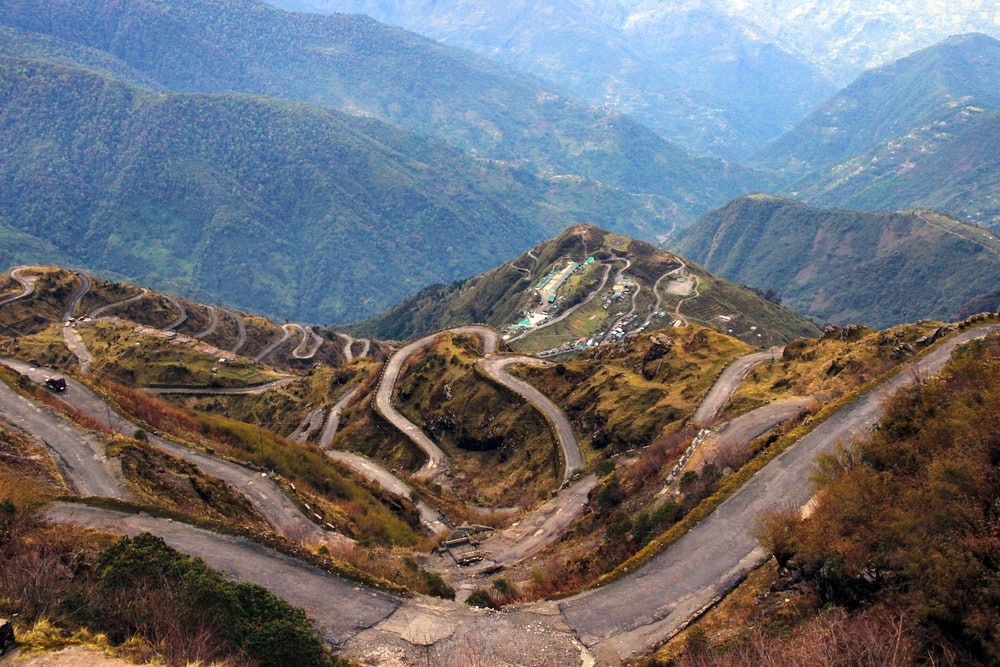
Himalayas plateau plays a crucial role in Asia. It generates the monsoon rains and
seasonal ice, that melts and feeds rivers, and half of the world population depends on
these rivers. The fragile ecosystem in the Himalayas has already been threatened by
climate change owing to various reasons. After the creation of independent India and
the Peoples Republic of China in the late 1940s, a competition started for the control on
high ground in the western and eastern Himalayas. The Great Himalayas mountain
range has been a natural strategic Defensive Barrier for India since times unknown.
Although the Indian army has a large presence in the Himalayas, the effectiveness of
this barrier has huge importance.
The Himalayas is the world’s third-largest ice pack or in biodiversity hot spots. It will be
degraded if there’s a substantial reduction of snow and ice cover over the Himalayas
due to climate change. The rise in temperature coupled with rapidly receding glaciers
and reduced snowfall will have catastrophic implications for India. Recently, China
unveiled a new mine in Lhunze, near Arunachal Pradesh, which has a deposit of Gold,
Silver, and other precious metals worth more than 60 billion dollars. The position of this
mine among the Brahmputra’s headwaters is very precarious. The contract of its mining
has already been awarded to Hua yu Mining co. from China. Any toxic leak from there
will flow into the Brahmputra and the lower Ganges. Moreover, China has already built
four major dams in the upper Brahmputra river basin.
On the other side, India has been concentrating on dams now. Between 2000 to 2016,
the Arunachal government approved the construction of 153 dams. So far only one dam
is completed. The rest of all the projects have been stalled. One of these stalled dams is
on the river Subansiri. It is the same river from which the Lhuze mine draws water. If it is
continued, the situation will be alarming soon as we are playing a dangerous game in a
seismic sensitive and an earthquake-prone region. It will do unprecedented harm in
case of any unfortunate event. In that situation, it will be very difficult to keep these
Asia’s major river free-flowing, and also keep them non-toxic.
The geology of the Himalayas is a record of the most dramatic, amazing, and visible
creations of the modern tectonic forces. The immense mountain range was formed by
tectonic forces and sculpted by weathering and erosions. Topographically, the belt has
many salient features. It has the highest rate of uplift per year, (10 millimeters), the
highest mountain (8848 Mrs at Mt. Everest), highest erosion rate (2 to 12 millimeters per
year), and the highest concentration of glaciers outside of the polar regions.
Gurudongmar is one of the highest lakes in the world at an altitude of 17800 ft. above
sea level. HIMALAYAS is a GOD-GIVEN GIFT to India and a marvel by nature. We
have been grossly failing to preserve it.
Since our army has a comprehensive, unavoidable, and permanent presence over
there, Col. C.P. Muthanna has raised certain concerns regarding the fragile and
sensitive ecosystem of the Himalayas and also gave strong suggestions in his report on
12th of May 2015.
As per his report, there's sufficient evidence that Black Carbon (BC) emissions caused
by insufficient combustion (because of weather conditions) are a key driver of climatic
changes in the Himalayan region. Black carbon or BC is the term used for AEROSOLS
in the atmosphere, which is responsible for up to 50% of climate change. Unlike CO2,
which lasts for several decades in the atmosphere, BC has a life span of only two
weeks and has a regional or local impact only. It is emitted because of cooking and
heating done on army posts, vehicle movements, construction and maintenance of
roads, use of kerosine Bukhari by army people on high altitude areas, and other issues
generated because of human presence and their activities. Since all these activities are
very important and unavoidable, but the use of technology can cut down the
consequential severity of all the perils, owing to the occurrence of these movements, to
a large extent.
Read Also : Is stevia a healthy alternative? Everything you should know,https://greenstories.co.in/is-stevia-a-healthy-alternative-everything-you-should-know/
The Himalayas have seen severe deforestation in the last few decades. Restoring the
Himalayas forests to their original glory will help in stabilizing the climate, rejuvenate the
mountain springs, and prevent siltation of rivers. Good forest cover on mountain slopes
will also reduce the incidents of avalanches. The Himalayas is not only the lifeline for
India only, it is critically important for the existence of the major part of Asia. To keep
this wonderful gift of nature alive and to keep all the major rivers of Asia flowing free
without any toxins in it, all the nations including India and China need to collaborate
instead of competing. Lives of fifty percent of the people of the world will be in danger if
we do not awaken now.