
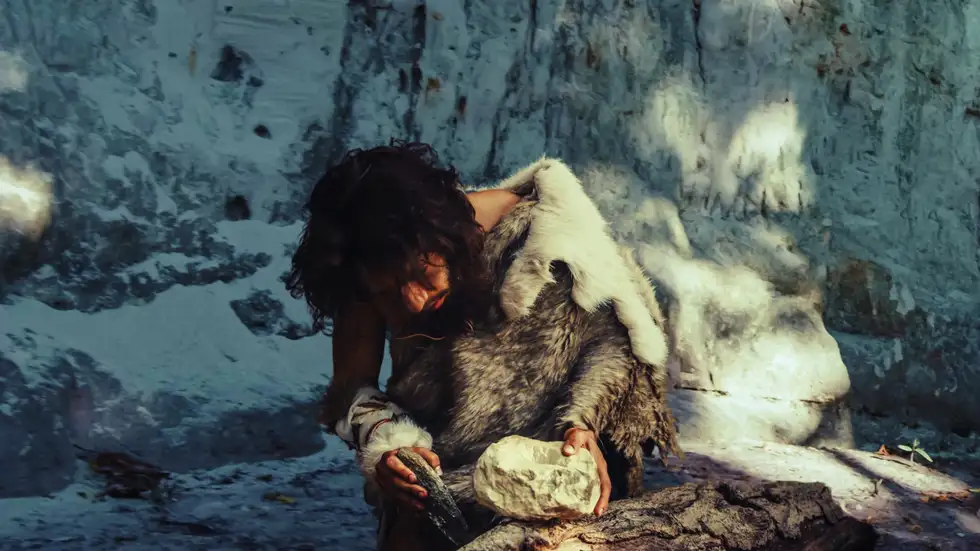
Just as climate change threatens the human race today, an eerily similar global event nearly wiped out our ancestors, slashing the early human population down to just 1,280 for over a hundred thousand years! By IUCN standards, these human ancestors would have been categorised as “endangered” or “critically endangered”.
For many years, scientists have been trying to map out human evolution — hardly a straight-forward journey — picking apart one fossil at a time. And while we have a fairly decent grasp on what transpired before modern humans evolved, we definitely have some gaps to fill.
One of the greatest mysteries of human evolution is the inexplicable gap in the African and Eurasian fossil record between 950,000 and 650,000 years ago. It was unlikely the species simply fell off the face of Earth, only to reemerge out of nowhere. But researchers have found shocking stuff that could explain this chasm in our fossil records.
_______________________________________________________________________
Read Also : East Africa’s banana farmers welcome new varieties that resist disease and drought
________________________________________________________________________
Scientists from the US, Italy, and China conducted a genomic analysis of 3,154 present-day humans to trace their characteristics backwards in time and create the population patterns most likely to have resulted in their existing genomes.
And this study revealed that the population of human ancestors plummeted between 800,000 and 900,000 years ago. Just over a 1,000 breeding individuals remained (compared to the 27,000 that lived before then) through this transition between the early and middle Pleistocene, meaning 98.7% of our ancestral population was lost. What’s more, the bottleneck lasted for about 117,000 years!
During this period of major genetic constriction, an estimated 65.85% of current genetic diversity in modern humans may have been lost. One intriguing finding is that this bottleneck might have contributed to a speciation event, where two ancestral chromosomes merged to form what we now know as chromosome 2 in modern Denisovans, Neanderthals, and Homo sapiens.
________________________________________________________________________
Read Also : How to do Pranayam: Yoga Breathing Exercises You Must Include in Your Routine
________________________________________________________________________
As for what caused this precarious die-off, the study’s authors think that an extreme cooling event might have been responsible. It was around this time in history that glaciation caused wild swings in temperature, severe droughts and the extinction of fauna that the ancestral species likely depended on for food.
However, further digging is required to understand where this ancient population lived during this challenging period, how they survived the changing climate, and if natural selection at the time of the bottleneck accelerated the human brain’s evolution.
NOTE – This article was originally published in weather and can be viewed here




