
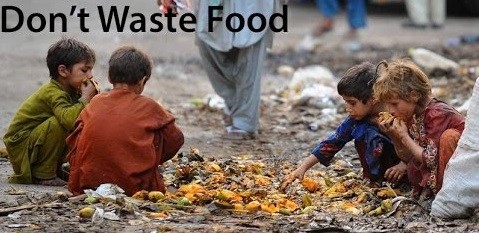

Image Courtesy – https://newsfirst.home.blog/2019/07/16/no-food-waste-india/
On the occasion of the 75th anniversary of India’s independence, let’s try to understand where India stands as a nation, with all its strength and weaknesses. A nation is the psychic state of the community of the people who are deeply connected by a common thread of common language, ethnicity, ideology, culture, food & lifestyle, and in some cases a shared territory.
________________________________________________________________________
Read Also : How Climate Change Is Fueling Extreme Weather
________________________________________________________________________
The idea of a nation brings together a homogeneous set of people and promotes uniformity among the people. A nation is more overtly political than an ethnic group. It has been described as “a fully mobilized or institutionalized ethnic group”.
But India is a unique country. Contrary to the above concept of a nation, the Indian concept of nation has evolved from diversity. Instead of one culture, one food, and one specific lifestyle, India is segmented in terms of culture, food, region, and religion, etc. Considering the diversity, it is often said that there are multiple nations among one Nation that is called India. In this era of innovative and fast-changing technology, we too have achieved a lot, but still, miles have to be covered. Let’s talk about the availability of food (which is a basic requirement to survive), to every human in this era of development. Between the ongoing farmer’s protest highlighting, India is 103rd in the Global Hunger Index. How can we claim to be a developing society with this kind of world ranking in fulfilling the very basic need of our citizens?
The UN estimates that one in nine people in the world doesn’t have access to sufficient food. An estimated 820 million people did not have enough food to eat in 2018, up from 811 million in the previous year. The number of moderately or severally food insecure people is two billion (26.4%). More people are reported to die from hunger every day, than from all the diseases combined in the world.
________________________________________________________________________
Read Also : 8 Nutrients and 16 Foods to Boost Your Mood — What to Eat to…
________________________________________________________________________
But at the same time, nearly one-third of the food that is produced in the world is lost or wasted due to one reason or the other. Food wastage which includes both food loss and food waste is not only morally irresponsible but also causes huge damage to the environment as well as economical losses. In addition to it, it causes severe damage to the environment around us.
Globally, 931 million tonnes of food waste were generated in 2019. Out of this 61% comes from households (nearly 570 million tonnes), 26% from food services, and 13% from retail. Indian households wasted around 68.7 million tonnes in 2019. The global average of food waste is 74kgs./capita/year. It is similar in lower-middle-income to higher-income countries. Slovenia and Austria produce the lowest waste 34 and 39 Kgs/capita/year respectively. Poor countries such as Nigeria generate food waste 189/capita/year, and Rwanda 164/capita/year. In India, it is 50kgs/capita/year. It’s very high keeping in view the population of India.
We in India, need to view hunger holistically. The reasons associated are lack of proper access to food, faulty distribution system, chronic poverty, political conflict, populous societies, and food wastage. The excessive purchase, stocking, and consumption of food are increasingly being projected as signifiers of wealth and ostentation of power. According to one estimate, about 20% of food at the great Indian weddings and possibly at all other such social occasions, is wasted. Lack of proper infrastructure between the field and the consumption stage is also one of the major reasons. If the 60% of the food losses that occur between farm and consumption is reduced by ensuring better transportation, proper stocking, and packing, etc, then it can help a lot in managing the problem of hunger in the country.
Food waste is the biggest source of greenhouse gas emissions in the world. Food waste accounts for 8 to 10% of greenhouse gas emissions. What is more shocking is that while millions of tonnes of food lay rotting in landfills or get wasted in transit, three billion people out of the total 7.8 billion (37.5% of the total population) people did not have access to safe and nutritious meals in 2019.
The situation is more alarming in Africa. In Eastern Africa particular, close to a third of the population (30.8%) is undernourished. Almost half the countries where rising hunger occurred due to economic slowdown were in Africa. The largest number of undernourished people (more than 50 crores) live in Asia, mostly in South Asian countries. In Southern Asia and sub-Saharan Africa, one in every three children is stunted. In addition to it, Asia and Africa are also home to nearly three-quarters of all overweight children worldwide. It is due to the consumption of unhealthy food.
________________________________________________________________________
Read Also : Foods to eat as you age
_______________________________________________________________________
Among the unimaginable chronic ills of food wastage, If we look at land usage, around 1.4 billion hectares of land, which is roughly 1/3rd of the world’s total agricultural land area, is used to grow food, that only goes to waste in the landfills to emanate greenhouse gases. Side by side, millions of gallons of oil and electricity, also go to waste every year to produce food, that is not eaten. It also harms biodiversity, due to converting the wildland into an agricultural area. With agriculture accounting for 70% of the water consumption throughout the world, food waste also represents a great waste of precious freshwater and groundwater resources. By throwing out one kilogram of meat/beef, we are wasting 50000 liters of water. In the same way, nearly 1000 liters of water are wasted, when we pour one glass of milk down the drain.
There’s a report, that just reducing food waste by half, would benefit the environment in a significant way. It will considerably help in reducing the need for agricultural land, water, oil, electricity, and other resources to grow food. It also states that cutting food waste in half would lower greenhouse gas emissions by 1.5 gigatons (1.5 billion metric tons of carbon dioxide equivalent) per year up to 2050. On individual levels also, reducing food waste will benefit to cut down the monthly expenditure. In the long run, it makes an individual’s habits much simpler and healthy. We don’t need to cut down our necessities as an average consumer is not a threat to the environment. But it is still crucial that people become more sensitive and take steps to reduce their environmental impact. Finding ways to reduce food waste can have a strong individual impact and help create a healthier food future for all.
Tags: #agricultureland, #environment, #ethnicity, #food, #Food Wastage, #getgreengetgrowing, #Global Hunger, #gngagritech, #greenstories, #ideology, #lifestyle, #oil, #waste, #water






I conceive this website has some rattling great info for everyone :D. “Nothing surely is so disgraceful to society and to individuals as unmeaning wastefulness.” by Count Benjamin Thompson Rumford.
Hey there, You have done an incredible job. I will certainly digg it and personally suggest to my friends. I am confident they will be benefited from this web site.